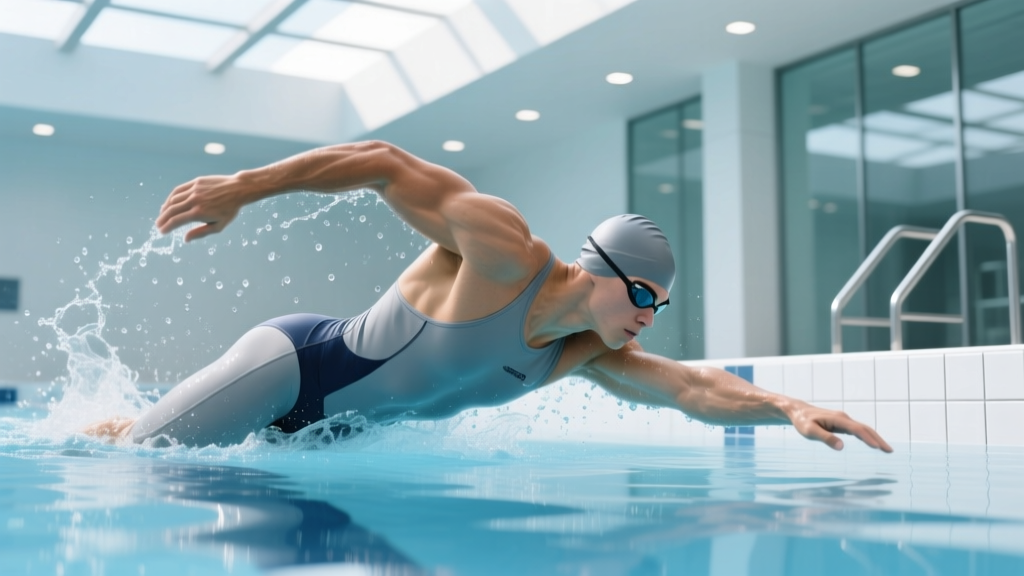
How Many Calories Does Swimming Burn? (By Weight & Stroke)
Swimming is a highly effective full-body workout that can burn between 400 and 700 calories per hour for moderate effort, and up to 1,000 or more during vigorous swimming, depending on body weight, stroke type, and intensity.
How Many Calories Do You Burn Swimming?
The number of calories burned while swimming varies significantly based on several factors including body weight, swim stroke, speed, and duration. On average, a 155-pound (70 kg) person can expect to burn:
- Approximately 400–500 calories per hour with moderate freestyle
- Around 600–700 calories per hour with vigorous freestyle
- Up to 800+ calories per hour with butterfly or sprint intervals
Because swimming engages nearly every major muscle group and requires constant resistance against water, it's one of the most efficient cardiovascular exercises for calorie expenditure.
Factors That Influence Calorie Burn in Swimming
Understanding how different variables affect energy output helps swimmers optimize workouts for weight loss or fitness goals.
Body Weight
Heavier individuals expend more energy to move through water. For example, a 200-pound person will burn significantly more calories than a 130-pound person performing the same swim routine.
Swim Stroke
Different strokes require varying levels of effort and muscle engagement:
- Butterfly: Most intense stroke; highest calorie burn
- Freestyle (front crawl): Efficient but high-output at speed
- Backstroke: Moderate intensity, consistent calorie burn
- Breaststroke: Slower pace, lower calorie expenditure
Intensity and Speed
Swimming faster increases heart rate and oxygen consumption, leading to higher caloric burn. Interval training—alternating sprints with recovery laps—can boost afterburn effect (EPOC), increasing total energy expenditure.
Duration and Technique
Longer sessions naturally burn more calories. However, poor technique can reduce efficiency and limit intensity. Proper form allows swimmers to maintain higher speeds with less drag, enhancing workout effectiveness.
| Activity | 130 lb (59 kg) | 155 lb (70 kg) | 200 lb (91 kg) |
|---|---|---|---|
| Leisurely Swim (30 min) | 180 | 214 | 276 |
| Freestyle, Moderate (30 min) | 240 | 286 | 368 |
| Freestyle, Fast (30 min) | 330 | 394 | 508 |
| Butterfly (30 min) | 360 | 428 | 552 |
| Breaststroke (30 min) | 210 | 250 | 322 |
The data shows a clear correlation between body weight and calorie expenditure across all swim activities. For instance, a 200-pound individual burns about 552 calories during 30 minutes of butterfly swimming—nearly double that of a 130-pound swimmer at 360 calories.
Additionally, stroke intensity plays a critical role: fast freestyle burns approximately 50% more calories than leisure swimming in all weight categories, highlighting the importance of effort level in maximizing energy output.
Comparing Swimming to Other Cardio Exercises
Swimming often outperforms land-based cardio in joint safety while matching or exceeding calorie burn rates.
- Running (6 mph): ~350–600 calories/hour (depending on weight)
- Cycling (moderate): ~400–600 calories/hour
- Swimming (moderate): ~400–700 calories/hour
Unlike running, swimming is low-impact, making it ideal for people with joint issues, obesity, or injuries. It also improves lung capacity, muscular endurance, and cardiovascular health simultaneously.
Maximizing Calorie Burn While Swimming
To get the most out of your swim session, consider these evidence-based strategies:
Use Interval Training
Alternate between high-intensity sprints (e.g., 1 minute fast freestyle) and low-intensity recovery (e.g., 2 minutes breaststroke). This approach elevates metabolism and increases post-exercise calorie burn.
Incorporate Different Strokes
Rotating strokes prevents adaptation and targets different muscle groups. A mix of butterfly, backstroke, and freestyle keeps the workout challenging and boosts overall energy use.
Increase Distance Gradually
Building endurance allows longer sessions, which directly increases total calories burned. Aim to add 100–200 meters per week until reaching 1,500–2,000 meters per session.
Improve Stroke Efficiency
Better technique reduces drag and enables faster swimming with less fatigue. Consider working with a coach or using video analysis to refine form.
Frequently Asked Questions About Calorie Burn in Swimming
Does swimming burn more calories than running?
At comparable intensities, swimming can burn as many or slightly more calories than running, especially for heavier individuals. However, running typically has higher impact and may lead to greater EPOC (afterburn). Swimming’s advantage lies in its full-body engagement and low injury risk.
Which swimming stroke burns the most calories?
The butterfly stroke burns the most calories due to its explosive movements and high demand on core, shoulders, and legs. It can burn over 400 calories in just 30 minutes for a 155-pound person, surpassing freestyle, backstroke, and breaststroke.
Can swimming help with weight loss?
Yes, swimming is an excellent tool for weight loss when combined with proper nutrition. Burning 400–700+ calories per hour makes it comparable to other aerobic exercises. Its low-impact nature also allows consistent training without joint strain, supporting long-term adherence.
Why do I feel hungrier after swimming?
Water conducts heat away from the body 25 times faster than air, causing a drop in core temperature during swimming. This can suppress appetite signals during exercise but trigger increased hunger afterward. Additionally, swimming may not raise body temperature enough to suppress appetite like running does.
How long should I swim to burn 500 calories?
A 155-pound person swimming freestyle at a moderate pace can burn 500 calories in about 60–70 minutes. At a faster pace, this time drops to around 45–50 minutes. Heavier individuals may reach 500 calories in less time, while lighter swimmers may need 75+ minutes.
More Articles
 Long Jump Technique Breakdown: Approach, Takeoff, Flight & Landing (2026)
 Bungee Jumping Equipment: Cords, Harnesses & Safety (2026)
 Best Running Shoes for Flat Feet (2026)
 How Does Simone Biles Jump So High? Explained
 How High Can Simone Biles Jump? Revealed
 How Much Water Evaporates from a Swimming Pool?
 What Does Icing Mean in Hockey? Explained
 How Much Does Renting a Jet Ski Cost? (2025 Rates)
 How High Does Ronaldo Jump? 78 cm Vertical Revealed
 Basketball Drills: Science-Backed Basics