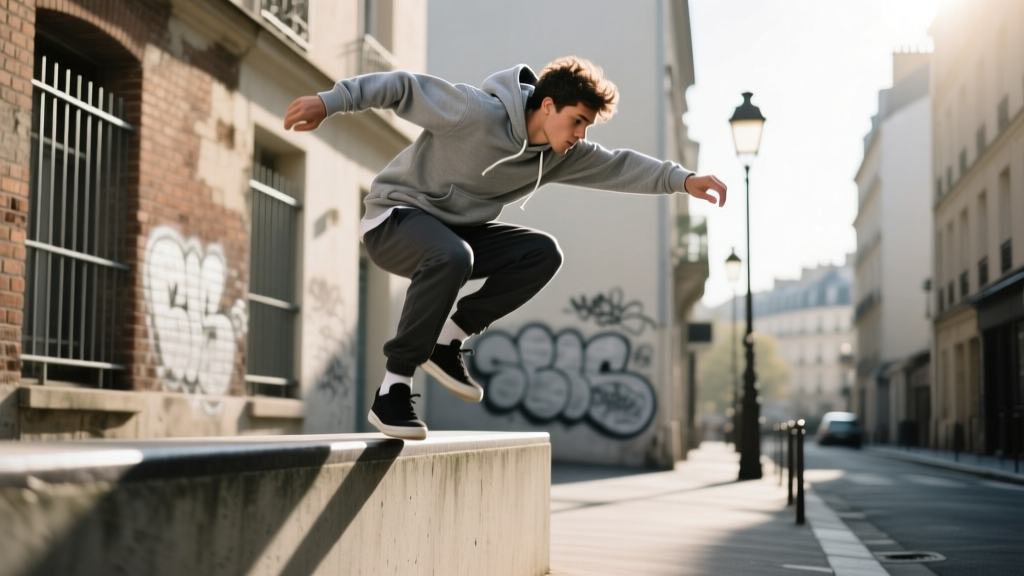
Who Started Parkour? David Belle's Origin Story
David Belle, a Frenchman inspired by his father's military training and the philosophy of efficiency, founded parkour in the late 1980s in Lisses, France. He developed the discipline alongside a group known as Yamakasi, formalizing movements focused on overcoming obstacles with speed and precision.
The Origins of Parkour: From Military Training to Urban Movement
Parkour, often described as the art of moving efficiently through any environment, traces its roots to early 20th-century physical education and military obstacle course training. However, its modern form began in the suburbs of Paris during the 1980s and 1990s. The foundation was laid by Raymond Belle, a firefighter and soldier who developed a personal method of physical training called le méthode naturelle, emphasizing strength, agility, and practical movement.
Raymond Belle’s Influence
- Raymond trained in Vietnam using natural environments for fitness and survival.
- He passed his knowledge to his son, David Belle, in France.
- David adapted these principles into a structured urban discipline.
David Belle: The Founder of Modern Parkour
David Belle is universally recognized as the founder of contemporary parkour. In the late 1980s and early 1990s, he began practicing and refining techniques that prioritized efficiency, fluidity, and mental focus. His goal was not performance or style, but functional movement—how to get from point A to point B using minimal effort and maximum adaptability.
Key Contributions by David Belle
- Coined the term "parkour" from the French word "parcours," meaning "the path" or "the way."
- Developed core techniques like the precision jump, vault, and roll.
- Filmed early demonstrations that went viral online, spreading global awareness.
The Yamakasi and the Spread of Parkour Culture
David did not practice alone. He joined forces with a group of friends—including Sébastien Foucan, Chau Belle-Dinh, and others—who called themselves Yamakasi, a term derived from Lingala meaning "strong in body and spirit." Though the group later diverged (Sébastien Foucan went on to create freerunning), their collective efforts were instrumental in shaping parkour’s identity.
Differences Between Parkour and Freerunning
| Aspect | Parkour | Freerunning |
|---|---|---|
| Primary Goal | Efficient movement from A to B | Expressive, acrobatic movement |
| Movement Style | Direct, minimalist | Creative, includes flips and tricks |
| Inventor | David Belle | Sébastien Foucan |
| Philosophy | Utility and discipline | Self-expression and artistry |
Global Expansion and Media Influence
By the early 2000s, parkour videos featuring David Belle and other traceurs spread rapidly across the internet. Documentaries like Jour de Fête (2004) and mainstream media features accelerated its popularity. Hollywood films such as Casino Royale (2006), which opened with a parkour chase scene starring Daniel Craig, further embedded it in global culture.
| Year | Event | Impact |
|---|---|---|
| 1980s | David Belle begins training in Lisses, France | Foundation of modern parkour |
| 1997 | Yamakasi formed | Group formalizes training and philosophy |
| 2003 | First major online parkour videos released | Global interest begins to rise |
| 2004 | "Jump London" documentary aired | Popularized parkour in the UK and US |
| 2006 | Casino Royale features opening parkour chase | Mainstream cinematic exposure |
| 2010 | World Parkour Championships held in UK | Formal competitive events emerge |
| 2025 | Estimated 150,000+ active practitioners worldwide | Recognition as a legitimate sport and fitness regimen |
The timeline shows how parkour evolved from a localized training method to a global phenomenon. Key milestones include media exposure and institutional recognition, with participation growing steadily each year.
Frequently Asked Questions About Who Started Parkour
Who officially started parkour?
David Belle officially founded parkour in the late 1980s in France, building on his father Raymond Belle’s training methods and developing a systematic approach to efficient movement through urban environments.
Was parkour created by one person or a group?
While David Belle is credited as the sole founder of parkour, he developed and popularized it with the help of the Yamakasi group. The collective training and documentation by this team were crucial to parkour’s early growth.
Did Sébastien Foucan start parkour?
No, Sébastien Foucan did not start parkour. He was part of the Yamakasi group and practiced alongside David Belle, but he later developed freerunning—a related but distinct discipline that emphasizes creativity over efficiency.
What does the word 'parkour' mean?
The word 'parkour' comes from the French term 'parcours,' meaning 'the path' or 'the way.' It reflects the discipline’s focus on navigating a route with speed, precision, and minimal interference.
Is parkour recognized as a sport today?
Yes, parkour is increasingly recognized as a legitimate sport and fitness activity. Organizations like the International Gymnastics Federation (FIG) have begun integrating parkour into competitive frameworks, with official world championships held since 2018.
More Articles
 How Long Are Water Polo Matches? Full Breakdown
 Ideal Chlorine Level for Swimming Pool (1.0–3.0 ppm)
 Best Volleyball Shoes for Liberos: Lightweight and Responsive Picks for 2026
 Where to Lap Swim Near Me: Best Pools & Tips
 Top Basketball Shoes for Ankle Support: 2026 Buyer's Guide
 Did Trudy Ederle Swim Through Jellyfish? Yes
 How Tall Are Olympic Hurdles? By Event & Gender
 Track Spike Selection: Sprint vs Distance
 How High Are Olympic Hurdles? Men's & Women's Heights
 How Many Periods in Ice Hockey? 3 Explained