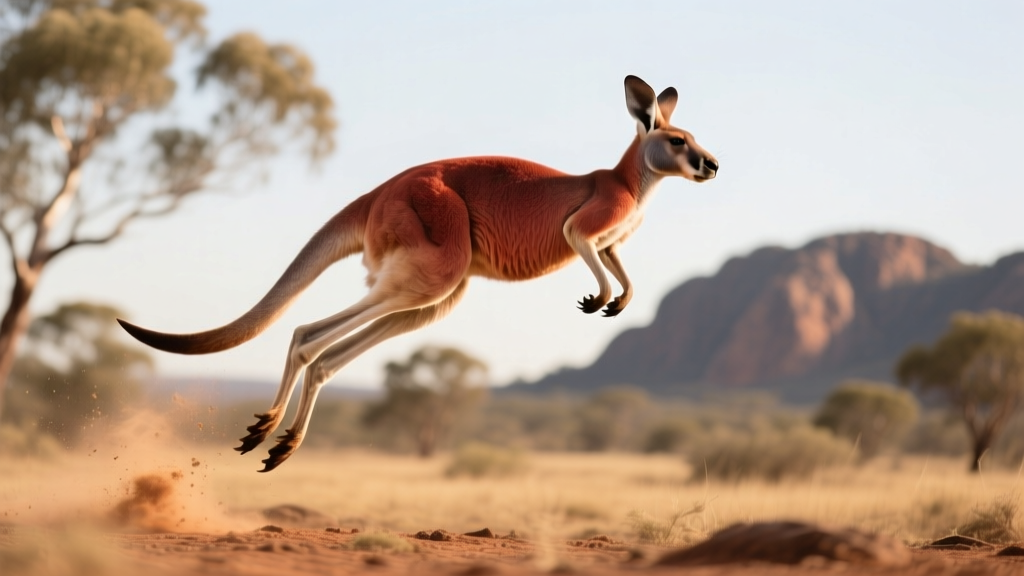
How High Can a Kangaroo Jump? Up to 10 Feet!
Kangaroos can jump up to 10 feet (3 meters) high from a standing position, with red kangaroos achieving the highest vertical leaps due to their powerful hind legs and specialized tendons.
How High Can a Kangaroo Jump? Understanding Vertical Leap Capabilities
Kangaroos are renowned for their exceptional jumping abilities, both in distance and height. Among all species, the red kangaroo (Macropus rufus) is the most impressive jumper, capable of clearing obstacles over 10 feet tall. This vertical leap is made possible by their large, muscular hind legs and elastic tendons that store and release energy efficiently, much like a spring. Unlike many animals that rely on continuous running motion, kangaroos can generate explosive upward force even from a standstill.
Their jumping ability isn't just for escaping predators—it's central to their locomotion, feeding habits, and social behaviors. In the wild, such heights allow them to navigate fences, rocky terrain, and dense vegetation across Australia’s varied landscapes.
Key Factors Influencing Jump Height
- Species type: Red kangaroos jump higher than eastern greys or wallaroos.
- Muscle-tendon efficiency: Their Achilles tendon stores up to 70% of energy during each hop.
- Body size and weight: Larger kangaroos generate more power but may have slightly reduced agility.
- Terrain and motivation: Threats from predators significantly increase jump performance.
Types of Kangaroo Jumps: Vertical vs. Horizontal
While vertical jumps are impressive, kangaroos are also known for their horizontal bounding. They typically use horizontal hops for travel, reaching speeds of up to 35 mph (56 km/h) and covering 25 feet (7.6 meters) in a single leap. However, vertical jumps are usually defensive maneuvers used to clear barriers or startle threats.
Differences Between Jump Types
- Vertical jumps prioritize height and immediate elevation.
- Horizontal hops emphasize energy-efficient long-distance movement.
- Both utilize the same biomechanical spring-like leg mechanism.
- Maximum effort occurs in short bursts, not sustained activity.
Kangaroo Species and Their Jumping Performance
Not all kangaroos jump equally high. The four largest species vary in mass, leg structure, and habitat, influencing their athletic performance. Below is a comparative analysis of their vertical jumping capabilities based on field observations and zoological studies.
| Kangaroo Species | Average Weight (kg) | Max Vertical Jump (m) | Max Vertical Jump (ft) | Habitat |
|---|---|---|---|---|
| Red Kangaroo | 85 | 3.0 | 10 | Arid inland Australia |
| Eastern Grey Kangaroo | 66 | 1.8 | 6 | Forests and grasslands |
| Western Grey Kangaroo | 54 | 1.5 | 5 | Southwest Australia |
| Antilopine Kangaroo | 70 | 2.1 | 7 | Tropical woodlands |
The data shows a strong correlation between body mass and maximum jump height, with the red kangaroo outperforming others due to its larger muscle mass and adaptation to open, predator-prone environments. Despite being lighter, the antilopine kangaroo achieves relatively high jumps, suggesting evolutionary pressure for mobility in dense woodland areas.
Interestingly, while eastern grey kangaroos are common and often observed, their vertical leap is nearly 40% lower than that of red kangaroos, highlighting how ecological demands shape physical performance.
Biomechanics Behind the Jump
The kangaroo’s leap is a marvel of biological engineering. When preparing to jump, it uses its tail as a fifth limb to stabilize and generate additional thrust. The sequence involves:
- Crouching low to stretch leg tendons.
- Storing elastic energy in the Achilles tendon.
- Releasing energy explosively through the foot and ankle.
- Propelling the body upward with minimal metabolic cost.
This energy-efficient system allows kangaroos to sustain high-speed hopping over long distances—something few mammals can match. Additionally, their respiratory and circulatory systems are synchronized with their gait, enhancing endurance.
Frequently Asked Questions About Kangaroo Jumping
How high can a red kangaroo jump vertically?
A red kangaroo can jump up to 10 feet (3 meters) high from a stationary position, making it the highest-jumping marsupial in the world.
Can kangaroos jump higher than other animals?
While not the absolute highest jumpers (fleas and bush babies exceed them proportionally), kangaroos are among the tallest jumpers relative to body size among large mammals.
Why do kangaroos jump so high?
Kangaroos jump high to escape predators, traverse rugged terrain, and assert dominance during social interactions. Their anatomy evolved specifically for powerful, energy-efficient leaping.
Do kangaroos jump higher than they run?
In terms of vertical clearance, yes—they can leap 10 feet high, but their horizontal speed peaks around 35 mph. However, they cover more ground per second when hopping horizontally at full speed.
What enables kangaroos to jump so high?
Elastic tendons in their hind legs act like springs, storing and releasing energy with minimal effort. Combined with strong muscles and a balancing tail, this allows explosive vertical propulsion.
More Articles
 Which Behavior Is Task-Oriented Style Linked To?
 How Long to Jump Rope for Cardio: Optimal Duration
 How Many Gallons in an Average Swimming Pool?
 How Fast Do F1 Cars Go? Top Speed & Acceleration Explained
 100m Sprint World Record: 9.58 Seconds by Usain Bolt
 How Much Are Jet Ski Rentals? (2025 Prices)
 Most Dangerous Sports in the World: Death Rates and Injury Statistics
 What Muscles Does Freestyle Swimming Work?
 How Many Calories Do You Burn Swimming? (By Stroke & Weight)
 How Much Does a Formula 1 Car Cost? (2025 Data)