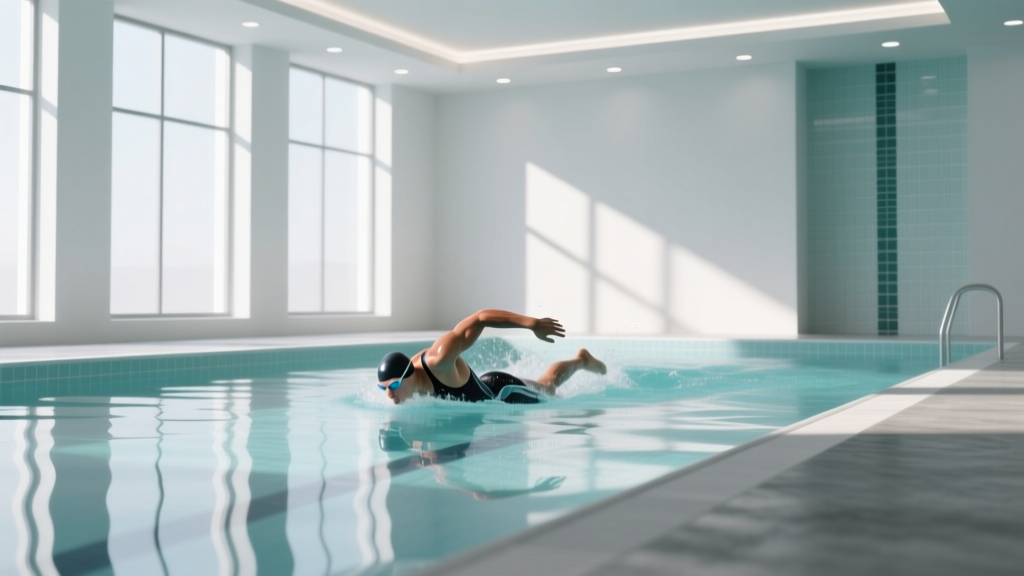
How Many Calories Do You Burn Swimming a Mile?
Swimming one mile typically burns between 400 and 700 calories for most adults, depending on stroke type, speed, body weight, and fitness level. This high-calorie burn makes swimming an excellent full-body workout that also improves cardiovascular health and muscle endurance.
Factors That Influence Calorie Burn While Swimming a Mile
The number of calories burned swimming a mile isn't the same for everyone. Several key factors determine how much energy you expend during your swim:
- Body Weight: Heavier individuals burn more calories due to increased effort moving through water.
- Swimming Stroke: Different strokes engage various muscle groups and require different levels of exertion.
- Intensity and Speed: Faster swimming or interval training significantly increases calorie expenditure.
- Fitness Level: More experienced swimmers may use energy more efficiently, slightly reducing calorie burn over time.
- Water Temperature: Colder water can increase calorie burn as the body works harder to maintain core temperature.
Calories Burned by Swimming Stroke
Each stroke demands different techniques and energy outputs. Here's how major swimming styles compare in terms of calorie expenditure per mile for a 155-pound (70 kg) adult swimming at moderate to vigorous intensity.
| Swimming Stroke | Avg Speed (min/mile) | Calories Burned (155 lb) | Calories Burned (185 lb) | MET Value |
|---|---|---|---|---|
| Freestyle (moderate) | 28 | 430 | 510 | 7.0 |
| Freestyle (fast) | 20 | 600 | 710 | 10.0 |
| Butterfly | 24 | 650 | 770 | 12.0 |
| Backstroke | 30 | 400 | 475 | 6.0 |
| Breaststroke | 32 | 380 | 450 | 5.3 |
| Tread Water (vigorous) | 25 | 610 | 725 | 11.0 |
The data shows that high-intensity strokes like butterfly and treading water burn nearly as many calories as fast freestyle, despite slower speeds. This is due to greater resistance and full-body engagement. Freestyle remains the most efficient stroke for covering distance while still burning a high number of calories, especially at faster paces.
Why Butterfly Burns So Many Calories
The butterfly stroke engages the core, shoulders, chest, and legs simultaneously, requiring explosive power and coordination. Its demanding nature results in one of the highest MET (Metabolic Equivalent of Task) values among common swimming strokes, making it a top choice for maximizing calorie burn.
How Body Weight Impacts Energy Expenditure
Calorie calculations are often based on metabolic equivalents (METs), which scale with body mass. For example, a person weighing 185 pounds will burn approximately 20% more calories than someone weighing 155 pounds performing the same swim workout, due to greater energy required for propulsion and drag resistance.
Maximizing Calorie Burn in the Pool
To get the most out of your swimming routine for weight management and fitness, consider these proven strategies:
- Use Interval Training: Alternate between high-speed laps and recovery periods to boost afterburn effect (EPOC).
- Vary Your Strokes: Mixing strokes prevents adaptation and keeps muscles challenged.
- Incorporate Resistance Tools: Fins, paddles, or drag suits increase water resistance and workload.
- Focus on Technique: Proper form allows for more powerful strokes and sustained effort.
- Track Your Effort: Use a waterproof fitness tracker to monitor heart rate and estimate real-time calorie burn.
Common Questions About Calorie Burn in Swimming
How long does it take to swim a mile?
For most recreational swimmers, swimming one mile takes between 25 and 40 minutes depending on skill level and stroke. Competitive swimmers can complete a mile in under 20 minutes using freestyle.
Does swimming burn more calories than running?
Running generally burns more calories per minute than swimming due to higher impact and less buoyancy. However, swimming is lower impact and allows longer workout durations, balancing total energy expenditure. For example, running at 6 mph burns about 600 calories per hour for a 155-lb person, similar to fast freestyle swimming.
Can swimming help lose belly fat?
While spot reduction isn't possible, swimming contributes to overall fat loss, including abdominal fat, when combined with a healthy diet. Its full-body nature and cardiovascular benefits make it effective for reducing body fat percentage over time.
Is swimming better than walking for weight loss?
Yes, swimming burns significantly more calories than walking. A 155-pound person burns around 300–400 calories per mile swimming, compared to roughly 100 calories per mile walking. Additionally, swimming builds more muscle and improves aerobic capacity faster.
How accurate are pool lap counters and fitness trackers for calories?
Most fitness trackers provide reasonable estimates but can vary by 10–20% depending on stroke recognition and user input accuracy. Devices that integrate heart rate data offer better precision. Manual tracking using known pace and stroke type tends to be more reliable for consistent swimmers.
Conclusion: Is Swimming a Mile Worth It for Calorie Burn?
Swimming a mile is a highly effective way to burn 400–700 calories, making it one of the best low-impact cardio workouts available. Whether you're using freestyle, butterfly, or interval drills, swimming engages multiple muscle groups while supporting joint health. By adjusting intensity, stroke, and technique, you can tailor your swim to maximize calorie expenditure and overall fitness gains. For those seeking sustainable, full-body exercise, completing a mile in the pool offers exceptional return on effort.
More Articles
 How High Can Horses Jump? Record & Competition Heights
 How Thick Is Ice Hockey Ice? NHL Standards Explained
 Why No Swimming at Apollo Beach? Safety Explained
 Mavericks Surf Spot: Directions, Parking & Views (2026)
 How Many Players on a Hockey Team on the Ice?
 How High Can a Kangaroo Jump? Up to 10 Feet!
 How Long Are Formula 1 Races? Duration Explained
 Cycling Helmets Safety Guide: How to Choose, Fit, and Wear a Bike Helmet Correctly
 How Much Does It Cost to Build a Swimming Pool? (2025)
 How High Is an Olympic Hurdle? Official Heights Explained