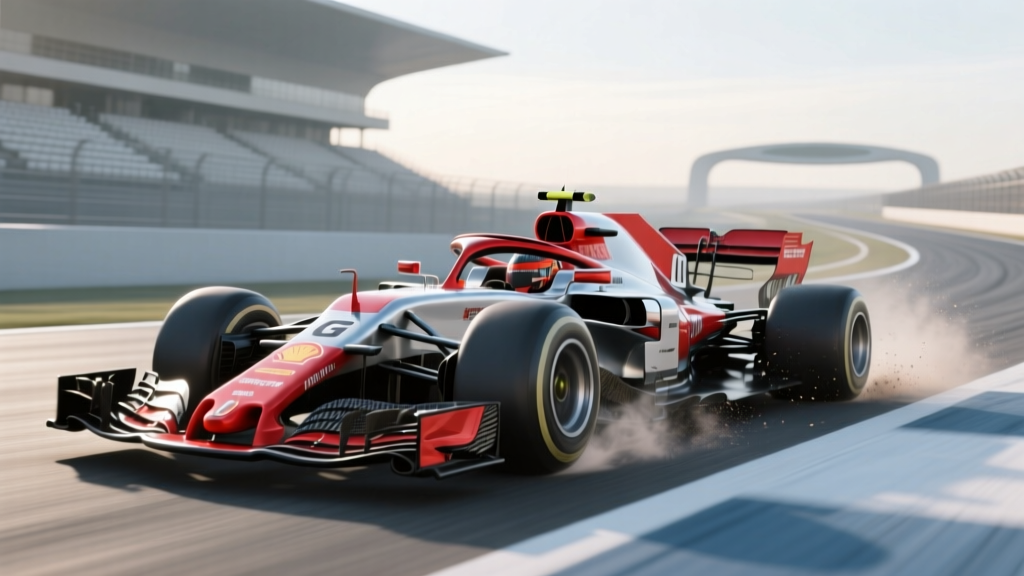
How Fast Do F1 Cars Go? Top Speed & Acceleration Explained
Formula 1 race cars typically reach top speeds between 360 and 380 km/h (224–236 mph), with the highest recorded speed in a race being 378.1 km/h (234.9 mph) set by Valtteri Bottas at the 2016 European Grand Prix. Acceleration from 0 to 100 km/h (0–62 mph) takes just 2.4 to 2.8 seconds, making F1 cars among the fastest accelerating machines in motorsport.
Understanding Formula 1 Top Speeds
F1 cars achieve extreme velocities due to advanced aerodynamics, lightweight construction, and powerful hybrid power units. While top speed varies by circuit layout, car setup, and regulations, modern F1 vehicles consistently exceed 350 km/h on long straights.
Factors Influencing F1 Car Speed
- Aerodynamic design: Downforce increases grip but creates drag; teams balance this based on track demands.
- Power unit output: Current 1.6L V6 turbocharged hybrid engines produce around 1000 horsepower.
- Track layout: Circuits like Monza and Baku favor high-speed configurations, while street circuits limit top speed.
- Drag Reduction System (DRS): Allows rear wing adjustment on straights, reducing drag and increasing speed by up to 20 km/h.
- Tire management: Optimal tire temperature and pressure are crucial for maintaining peak performance.
Acceleration and Performance Metrics
Beyond top speed, F1 cars excel in acceleration and cornering. Their ability to decelerate is equally impressive—braking from 200 km/h to 0 in under 2 seconds over approximately 55 meters.
0-100 km/h vs Real-World Racing Acceleration
While 0–100 km/h times are often cited, real-world racing involves higher starting speeds and gear shifts. F1 cars can accelerate from 0–300 km/h in about 10.6 seconds, outperforming most supercars.
| Year | Driver | Team | Top Speed (km/h) | Event | Circuit |
|---|---|---|---|---|---|
| 2016 | Valtteri Bottas | Williams | 378.1 | European GP | Baku City Circuit |
| 2023 | Max Verstappen | Red Bull | 372.5 | Saudi Arabian GP | Jeddah Corniche Circuit |
| 2022 | George Russell | Mercedes | 371.3 | Italian GP | Monza |
| 2021 | Pierre Gasly | AlphaTauri | 363.6 | Belgian GP | Spa-Francorchamps |
| 2019 | Sebastian Vettel | Ferrari | 372.3 | Mexico City GP | Autódromo Hermanos Rodríguez |
| 2018 | Kimi Räikkönen | Ferrari | 354.9 | Italian GP | Monza |
The data shows that top speeds have increased since the introduction of faster circuits like Baku and Jeddah. Baku's long straights allowed Bottas to set the unofficial record in 2016, while recent hybrid-era cars remain close despite tighter regulations. High-altitude tracks such as Mexico City also boost engine performance and top speed.
Notably, Ferrari and Red Bull have consistently achieved high speeds, reflecting strong engine and aerodynamic packages. The gap between fastest and average top speeds has narrowed due to standardized components and stricter technical rules post-2022.
Historical Evolution of F1 Speeds
F1 car speeds have evolved significantly over decades. In the 1950s, cars averaged around 200 km/h. By the 1990s, with turbocharging and improved aerodynamics, speeds approached 320 km/h. The 2000s saw further gains, and the hybrid era (post-2014) combined efficiency with performance, enabling faster lap times even if top speeds plateaued.
Impact of Regulation Changes
The 2022 aerodynamic rule changes aimed to improve overtaking by reducing turbulent air, slightly lowering top speeds initially. However, increased mechanical grip and better tire performance have offset losses, leading to faster overall lap times despite similar straight-line speeds.
How F1 Speed Compares to Other Racing Series
- IndyCar: Similar top speeds (380+ km/h), but lower downforce and less braking capability.
- NASCAR: Top speeds around 320 km/h; built for oval stability rather than agility.
- Le Mans Hypercars (LMH): Prioritize endurance; top speeds ~340 km/h.
- Electric GT (eGT): Emerging series with projected top speeds of 350 km/h.
F1 remains unmatched in cornering speed and acceleration-to-weight ratio, giving it superior overall performance despite not always having the absolute highest top speed.
Common Questions About Formula 1 Race Car Speeds
How fast do F1 cars go from 0 to 60 mph?
F1 cars accelerate from 0 to 60 mph (96.6 km/h) in approximately 2.1 to 2.7 seconds, depending on track conditions, tires, and launch control settings. This rapid acceleration is enabled by a power-to-weight ratio exceeding 1,350 hp/tonne.
What is the top speed ever recorded by an F1 car?
The highest officially recorded race speed is 378.1 km/h (234.9 mph), achieved by Valtteri Bottas during the 2016 European Grand Prix in Baku. Unofficial test runs have seen speeds over 397 km/h, but these were under special low-drag configurations.
Do all F1 cars reach the same top speed?
No, top speeds vary between teams and circuits. Cars with superior engine performance (e.g., Mercedes-powered teams) or optimized aerodynamics (e.g., Red Bull) often lead speed traps. Differences of 10–15 km/h are common between front and back markers.
Why don't F1 cars go even faster?
Safety concerns, fuel efficiency requirements, tire limitations, and aerodynamic trade-offs prevent unlimited speed increases. Higher speeds would require stronger materials, more energy dissipation during braking, and greater driver G-force tolerance, all of which are constrained by current regulations.
How does DRS affect F1 car speed?
The Drag Reduction System (DRS) opens a flap on the rear wing, reducing aerodynamic drag on straights. This typically increases top speed by 10–20 km/h, aiding overtaking. Its use is restricted to designated track zones and only when a car is within one second of the car ahead.
More Articles
 Badminton Court Dimensions: Official Size, Net Height, and Markings Explained
 Safe Chlorine Level to Swim In: Max ppm Guidelines
 Who Invented Swimming? Origins & History Explained
 How Fast Can a Penguin Swim? Top Speeds by Species
 How Many Seats Per Row in Yankee Stadium?
 Did Holly Rowe Play College Basketball? Yes, at UNC
 How Many Laps Is a 1500 Meter Swim?
 Where to Buy Swim Goggles: Best Online & In-Store Options
 Don Hume Rower: 1936 Olympic Coxswain & Legacy
 How Fast Can a Jet Ski Go? Top Speeds Revealed