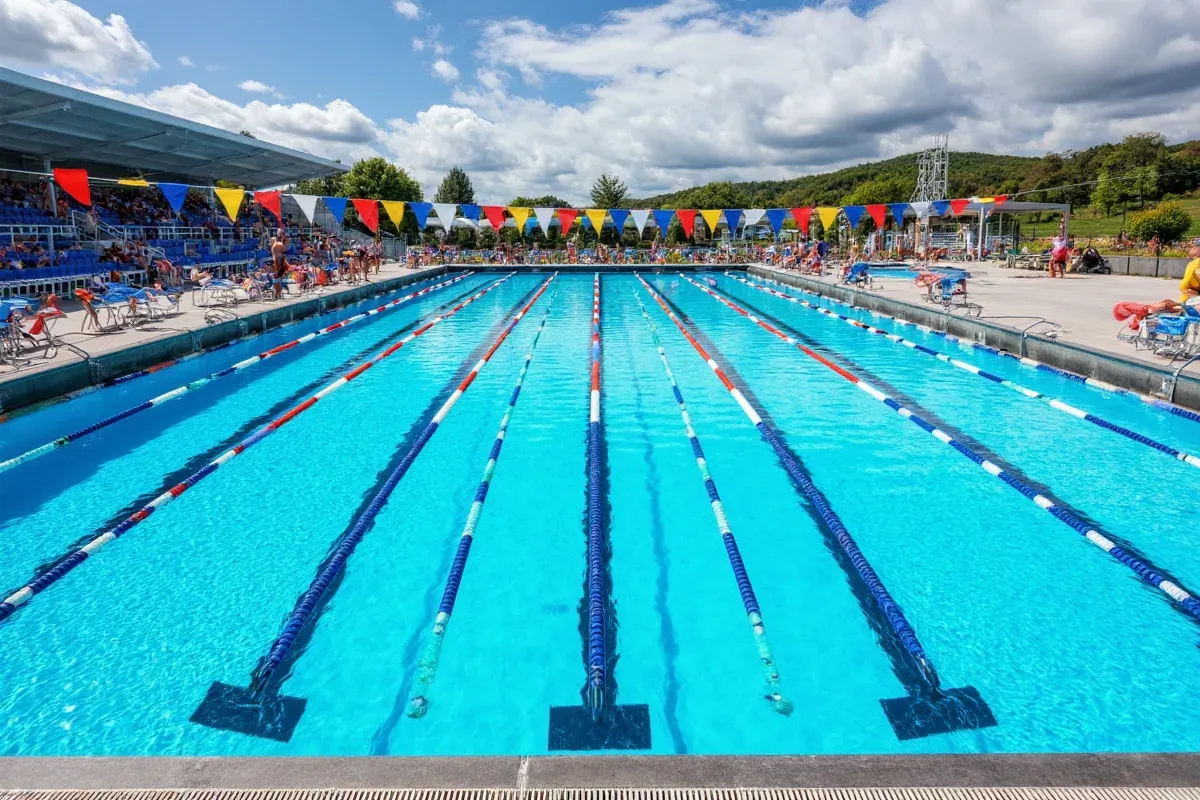
Olympic Size Swimming Pool Dimensions Explained
An Olympic-size swimming pool measures exactly 50 meters in length, 25 meters in width, and a minimum depth of 2 meters, creating a total volume of 2,500 cubic meters (about 660,430 gallons). This standard is regulated by the World Aquatics (formerly FINA) for international competitions.
What Defines an Olympic-Size Swimming Pool?
The term "Olympic-size swimming pool" refers to a standardized competition pool used in the Olympic Games and other elite aquatic events. These dimensions ensure fairness, consistency, and world-class performance across global venues.
Key Dimensions and Requirements
- Length: 50 meters (164 feet)
- Width: 25 meters (82 feet)
- Depth: Minimum 2 meters (6.6 feet), though many modern pools are deeper
- Lanes: 10 lanes, each 2.5 meters wide
- Water Temperature: Maintained between 25°C and 28°C (77°F – 82°F)
- Lighting: Minimum 1,500 lux for TV broadcasts
Why Are Olympic Pools Built to Exact Standards?
Standardization ensures that records set in one country are valid globally. Variations in depth, temperature, or wave resistance can impact swimmer performance.
Performance Factors Influenced by Pool Design
- Wave Dissipation: Gutters and lane ropes minimize water turbulence
- Starting Blocks: Angled design improves dive efficiency
- Underwater Lighting: Enhances visibility and broadcast quality
- Acoustic Environment: Sound systems help swimmers hear starts and turns
Detailed Specifications: Olympic Pool vs. Other Pools
| Feature | Olympic-Size Pool | Short Course Pool | Residential Pool |
|---|---|---|---|
| Length | 50 m | 25 m | 10–20 m |
| Width | 25 m | 12–25 m | 5–10 m |
| Depth | 2+ m | 1.35–2 m | 1–1.8 m |
| Lanes | 10 (8 competition + 2 buffer) | 6–8 | 1–2 |
| Volume | 2,500 m³ | ~625 m³ | 40–100 m³ |
The data shows that Olympic pools are four times larger in volume than short course pools and over 25 times larger than typical residential pools. The extra lanes and depth reduce turbulence, allowing swimmers to achieve faster times under consistent conditions.
Common Questions About Olympic-Size Swimming Pools
How many liters does an Olympic-size swimming pool hold?
An Olympic-size swimming pool holds approximately 2.5 million liters (2,500 cubic meters) of water, equivalent to about 660,430 gallons.
How deep is an Olympic swimming pool?
The minimum depth is 2 meters (6.6 feet), but many modern Olympic pools are built to 3 meters (9.8 feet) to improve performance by reducing wave resistance.
How many lanes are in an Olympic swimming pool?
Olympic pools have 10 lanes, each 2.5 meters wide. While only 8 lanes are typically used for competition, the two outer lanes act as buffers to reduce wave interference.
Can public pools be Olympic-size?
Yes, some public or university facilities feature Olympic-size pools, though maintenance and heating costs make them rare in recreational settings.
Are all Olympic pools the same size?
Yes, all pools used in Olympic and World Aquatics events must adhere strictly to the 50m x 25m x 2m standard, with precise tolerances enforced before certification.
Conclusion
An Olympic-size swimming pool is precisely 50 meters long, 25 meters wide, and at least 2 meters deep, holding 2.5 million liters of water. These strict specifications ensure fair competition and accurate record-keeping across international events. Whether you're an athlete, coach, or enthusiast, understanding these standards highlights the engineering and precision behind elite aquatic sports.
More Articles
 Olympic Swimming Pool Dimensions Explained
 How Much Is It to Rent a Jet Ski? (2025 Rates)
 How Many Yards in a Mile Swim? Exact Conversion
 The Best Safety Story: How a Single Decision Saved 247 Lives at DuPont’s La Porte Facility
 How Much Is a MotoGP Bike? Cost Breakdown 2025
 How Much Water in an Olympic Swimming Pool?
 Launch Framework: Zero to First Project Guide
 Running Foam: EVA vs TPU vs PEBA
 How Many Players in a Field Hockey Team? Full Breakdown
 How Long to Jump Rope for Best Results