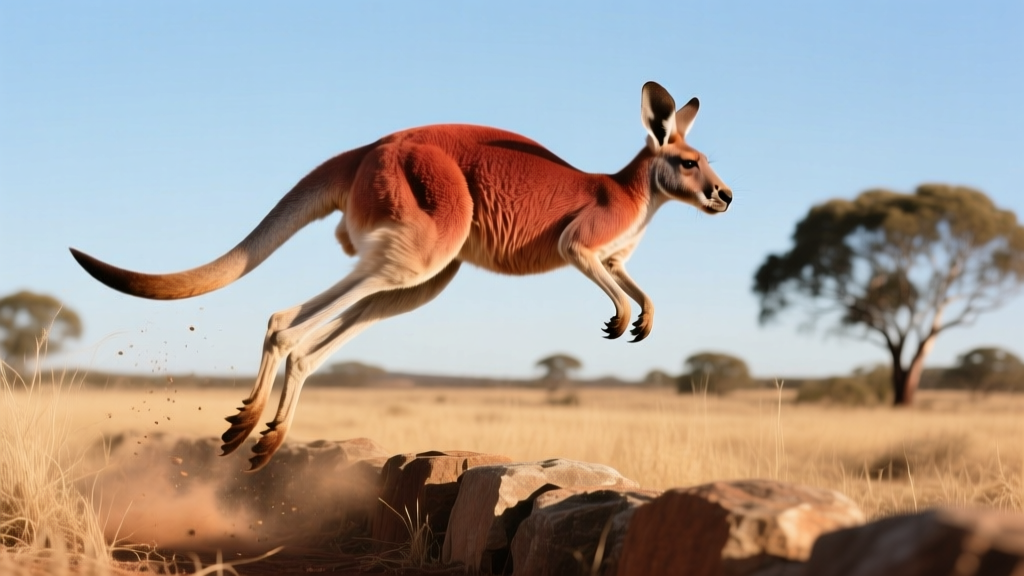
How High Can Kangaroos Jump? Up to 10 Feet!
Kangaroos can jump up to 10 feet (3 meters) high in a single leap, with red kangaroos achieving the highest vertical jumps due to their powerful hind legs and unique physiology.
How High Can Kangaroos Jump? Understanding the Basics
Kangaroos are renowned for their exceptional jumping ability, which is central to their survival in the Australian wilderness. Among all species, the red kangaroo (Macropus rufus) is the most impressive jumper, capable of reaching heights of up to 10 feet (3 meters) when motivated by threats or terrain. This vertical leap is made possible by specialized tendons in their hind legs that store and release energy efficiently, much like a spring.
Their jumping isn't just about height—it's also about endurance and speed. Kangaroos use hopping as their primary mode of locomotion, allowing them to cover large distances with minimal energy expenditure.
Why Do Kangaroos Jump So High?
- To escape predators such as dingoes and eagles
- To navigate vast, uneven terrains across Australia
- To assert dominance during mating competitions
- To conserve energy while traveling long distances
- To access food sources on elevated ground
The Science Behind Kangaroo Jumps
The biomechanics of kangaroo movement are fascinating. Unlike most mammals, kangaroos rely on elastic energy storage in their Achilles tendons. When they land, the tendons stretch and store kinetic energy, which is then released in the next hop—making high jumps both powerful and energy-efficient.
Anatomy That Enables Extreme Leaps
Key physical traits contribute to their jumping prowess:
- Hind Legs: Long, muscular legs act as levers for propulsion
- Tail: Acts as a counterbalance and fifth limb during slow movement
- Feet: Large and narrow, providing stability upon landing
- Pelvis: Adapted to support massive leg muscles
- Lack of Flexibility in Spine: Enhances forward momentum during hops
Kangaroo Species and Their Jumping Capabilities
Not all kangaroos jump equally high. Larger species generally achieve greater heights and distances due to their size and muscle mass. Below is a comparison of major kangaroo species and their athletic performance.
| Kangaroo Species | Max Vertical Jump Height | Max Horizontal Leap | Top Speed (mph) | Average Weight (lbs) |
|---|---|---|---|---|
| Red Kangaroo | 10 ft (3 m) | 25 ft (7.6 m) | 44 mph (70 km/h) | 200 lbs (90 kg) |
| Eastern Grey Kangaroo | 6.5 ft (2 m) | 16 ft (5 m) | 35 mph (56 km/h) | 130 lbs (59 kg) |
| Western Grey Kangaroo | 6 ft (1.8 m) | 15 ft (4.6 m) | 30 mph (48 km/h) | 120 lbs (54 kg) |
| Antilopine Kangaroo | 5.5 ft (1.7 m) | 14 ft (4.3 m) | 35 mph (56 km/h) | 100 lbs (45 kg) |
| Wallaroo | 5 ft (1.5 m) | 10 ft (3 m) | 25 mph (40 km/h) | 88 lbs (40 kg) |
The data shows a clear correlation between body size and jumping performance. Red kangaroos, being the largest marsupial, dominate in both vertical and horizontal metrics. Their ability to reach 10 feet vertically and sustain speeds over 40 mph highlights evolutionary adaptations for open plains. Smaller species, while still agile, do not match the sheer power output of their larger counterparts.
Comparing Kangaroo Jumps to Human Athletic Performance
To put kangaroo jumping into perspective, consider that the world record for the human high jump is 8 feet (2.45 m), set by Javier Sotomayor in 1993. While slightly lower than the red kangaroo’s maximum, this feat required a full sprint approach and intense explosive effort. In contrast, kangaroos can perform repeated high jumps with far less energy cost due to their elastic tendons.
- A kangaroo can hop at 15–25 mph for miles without fatigue
- Humans burn significantly more calories per mile run than kangaroos per mile hopped
- Kangaroos increase efficiency at higher speeds—a rare trait in animals
Frequently Asked Questions About How High Kangaroos Can Jump
How high can a red kangaroo jump vertically?
A red kangaroo can jump up to 10 feet (3 meters) high in a single bound. This remarkable height is used primarily to clear obstacles or evade predators in the wild.
Can kangaroos jump higher than other animals?
While some animals like fleas jump higher relative to body size, in absolute terms, kangaroos rank among the highest-jumping mammals. Only certain antelope species, like klipspringers, come close in vertical agility.
Do kangaroos jump higher than they can run?
No—kangaroos don’t “run” in the traditional sense. Instead, they hop. Their top speed of 44 mph exceeds what they achieve in vertical leaps, but both are powered by the same efficient muscle-tendon system.
Why don’t kangaroos jump as high in captivity?
In zoos or enclosures, kangaroos rarely reach their maximum jump height due to limited space, lack of threat stimuli, and reduced need for rapid escape. However, they remain highly active and capable of impressive leaps within safe boundaries.
Is jumping tiring for kangaroos?
Surprisingly, no. Thanks to elastic energy recovery in their tendons, kangaroos expend less energy hopping than walking. At moderate speeds, their metabolic cost is exceptionally low compared to other mammals of similar size.
More Articles
 Best Base Stats: How Brands Measure Performance
 How Thick Is Ice Skating Rink Ice? Expert Breakdown
 Snowboard Bindings on a Budget
 Where Can You Buy a Go Kart? Top 2025 Sources
 Golf Ball Compression vs Swing Speed
 Olympic Medal Count All Time: Top 20 Countries by Gold, Silver, and Bronze Medals
 How Fast Can Racewalkers Walk? Elite Speeds Revealed
 Best Football for Play: Performance, Safety, and Age-Appropriate Selection Guide
 Field Hockey Game Length: Official Durations (2026)
 When Did Michael Phelps Start Swimming? Key Facts