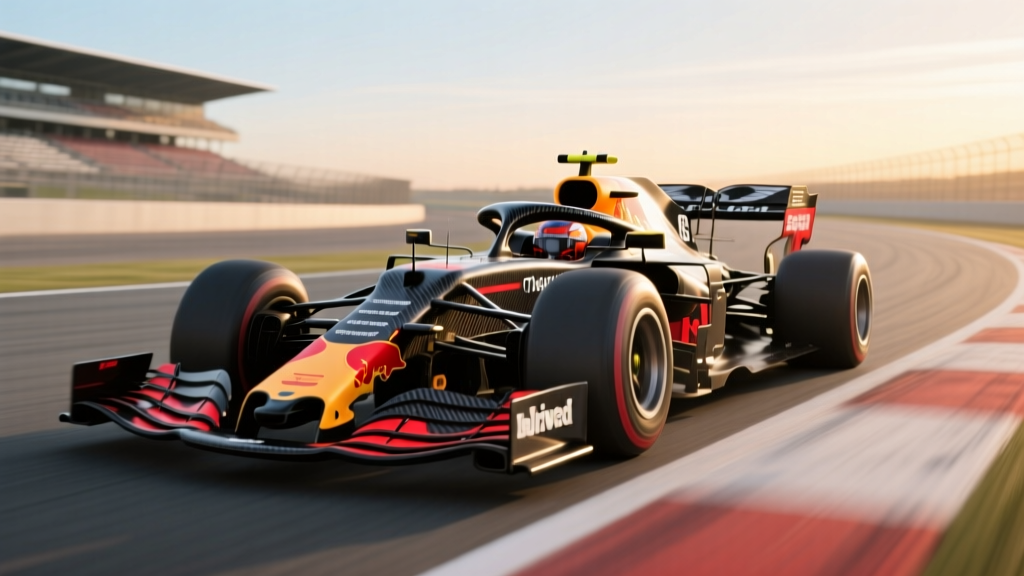
How Fast Are Formula 1 Cars? Top Speed & Acceleration Data
Formula 1 cars are among the fastest and most technologically advanced racing machines in the world, capable of reaching top speeds exceeding 370 km/h (230 mph) and accelerating from 0 to 100 km/h (62 mph) in under 2.6 seconds.
How Fast Are Formula 1 Cars? Key Performance Metrics
Modern Formula 1 cars achieve astonishing speed and acceleration due to cutting-edge aerodynamics, lightweight materials, and powerful hybrid power units. These vehicles are designed not just for top speed but also for rapid acceleration, braking, and cornering—making them faster overall on a race track than any other category of single-seater racing car.
Key Speed Characteristics
- Top Speed: Ranges between 340–375 km/h (211–233 mph), depending on the circuit and configuration.
- 0–100 km/h (0–62 mph): Achieved in approximately 2.4–2.8 seconds.
- 0–200 km/h (0–124 mph): Reached in about 5.0–5.5 seconds.
- Braking from 200–0 km/h: Completed in under 2.5 seconds over a distance of around 65 meters (213 feet).
- Cornering Speeds: Can exceed 300 km/h (186 mph) on high-speed circuits like Monza or Silverstone.
Aerodynamics and Power: What Makes F1 Cars So Fast?
The speed of an F1 car is not solely determined by engine power. Instead, it's a balance of horsepower, downforce, drag reduction, and tire grip. The current hybrid power units (introduced in 2014) combine a 1.6L V6 turbocharged internal combustion engine with two energy recovery systems (MGU-K and MGU-H), producing around 1,000 horsepower.
Factors Influencing Speed
- Aerodynamic Efficiency: Front and rear wings, bargeboards, and diffusers generate massive downforce, allowing higher cornering speeds.
- Power-to-Weight Ratio: With a minimum weight of 798 kg (including driver), F1 cars have one of the best power-to-weight ratios in motorsport.
- Tire Technology: Slick tires provide maximum grip on dry surfaces, enabling rapid acceleration and braking.
- Gearbox and Traction Control: Seamless-shift semi-automatic gearboxes allow gear changes in under 20 milliseconds.
Speed Comparison Across Circuits
Different tracks demand different setups, affecting top speeds. High-speed circuits like Monza favor low-downforce configurations for maximum straight-line speed, while twisty street circuits like Monaco prioritize mechanical grip and agility over raw velocity.
| Circuit | Top Speed (km/h) | Top Speed (mph) | Fastest Lap Speed (avg, km/h) | Year |
|---|---|---|---|---|
| Monza (Italy) | 372 | 231 | 265 | 2023 |
| Spa-Francorchamps (Belgium) | 365 | 227 | 251 | 2023 |
| Silverstone (UK) | 358 | 222 | 253 | 2023 |
| Baku City Circuit (Azerbaijan) | 378 | 235 | 206 | 2023 |
| Suzuka (Japan) | 352 | 219 | 238 | 2023 |
| Monaco | 310 | 193 | 160 | 2023 |
The data shows that Baku recorded the highest top speed in 2023 at 378 km/h due to its long straights, despite having a lower average lap speed because of tight sections. In contrast, Monaco has the lowest top speed and average speed due to its narrow, twisty layout. Monza remains the classic high-speed circuit with consistently high velocities and average lap speeds.
Fuel, Strategy, and Real-World Speed Variability
While peak speeds are impressive, actual race performance depends on fuel load, tire wear, DRS (Drag Reduction System) usage, and pit strategy. DRS can add up to 15 km/h (9 mph) on straights by reducing rear wing drag, significantly aiding overtaking.
- DRS is only available in designated zones and when within one second of the car ahead.
- Fuel consumption is tightly managed; modern engines are over 50% thermal efficient—far surpassing road car engines.
- Race engineers optimize gear ratios and wing angles based on expected conditions and competition.
Frequently Asked Questions About How Fast Formula 1 Cars Are
How fast do F1 cars go from 0 to 60 mph?
Formula 1 cars accelerate from 0 to 60 mph (97 km/h) in approximately 2.4 to 2.8 seconds, depending on track conditions, tire temperature, and launch technique.
What is the top speed ever recorded by an F1 car?
The highest officially recorded top speed during a Grand Prix weekend was 378 km/h (234.9 mph), achieved by Sebastian Vettel during the 2023 Azerbaijan Grand Prix using DRS on the main straight.
Are F1 cars faster than IndyCars or Le Mans prototypes?
Yes, F1 cars are generally faster in corners and have better acceleration due to superior downforce and technology. While Le Mans prototypes may reach similar or slightly higher top speeds, F1 cars have significantly higher lateral grip and braking performance, resulting in faster lap times overall.
Why don't F1 cars go even faster?
Speed is limited by safety regulations, aerodynamic drag, tire integrity, and fuel efficiency requirements. The FIA imposes strict rules on engine output, body dimensions, and downforce levels to maintain competitive balance and driver safety.
Do all F1 teams have the same top speed?
No, top speed varies between teams based on engine manufacturer (Mercedes, Ferrari, Renault, Honda), aerodynamic design, and setup choices. For example, Ferrari-powered cars often lead in top speed due to engine characteristics, while others may sacrifice top speed for better cornering balance.
More Articles
 How Much Is a Small Inground Swimming Pool?
 How Many Meters in a Mile Swim? Exact Conversion
 When Was Ice Hockey Invented? Origins & History
 Best Football For Today: Performance, Regulation, and Real-World Testing in 2024
 Rowing Machine Muscles Worked: Full-Body Breakdown
 How Much Water in an Olympic Swimming Pool?
 Bungee Jumping Equipment: Cords, Harnesses & Safety (2026)
 Where to Buy Swimwear Near Me Today
 How Much Do MotoGP Bikes Cost in 2025?
 Best Sports for Beginners: 10 Easy and Fun Games to Start Today