Bungee Jumping Equipment: Cords, Harnesses & Safety (2026)
Understanding Bungee Jumping Equipment
Bungee jumping relies on a sophisticated system of elastic cords, harnesses, and safety equipment designed to handle forces exceeding 3G during the rebound phase. Understanding this equipment is essential whether you're preparing for your first jump or simply curious about the engineering behind the sport.
The Bungee Cord: Heart of the System
Modern bungee cords are made from bundles of natural or synthetic latex rubber strands encased in a woven outer sheath. Here are the key specifications:
- Material: Natural latex rubber bundles (typically 100-300 individual strands)
- Outer sheath: Woven polyester or nylon covering that protects the rubber from UV damage and abrasion
- Stretch ratio: Cords stretch to 2-4 times their resting length
- Load rating: Cords are rated for specific weight ranges, typically in 10kg increments
- Lifespan: Professional cords are retired after a set number of jumps (usually 500-1000) regardless of visible condition
Harness Systems
Ankle Attachment
The most common attachment method uses padded ankle cuffs connected to the bungee cord via carabiners. This allows the jumper to experience a free-fall face-first sensation before the cord catches and rebounds.
Full Body Harness
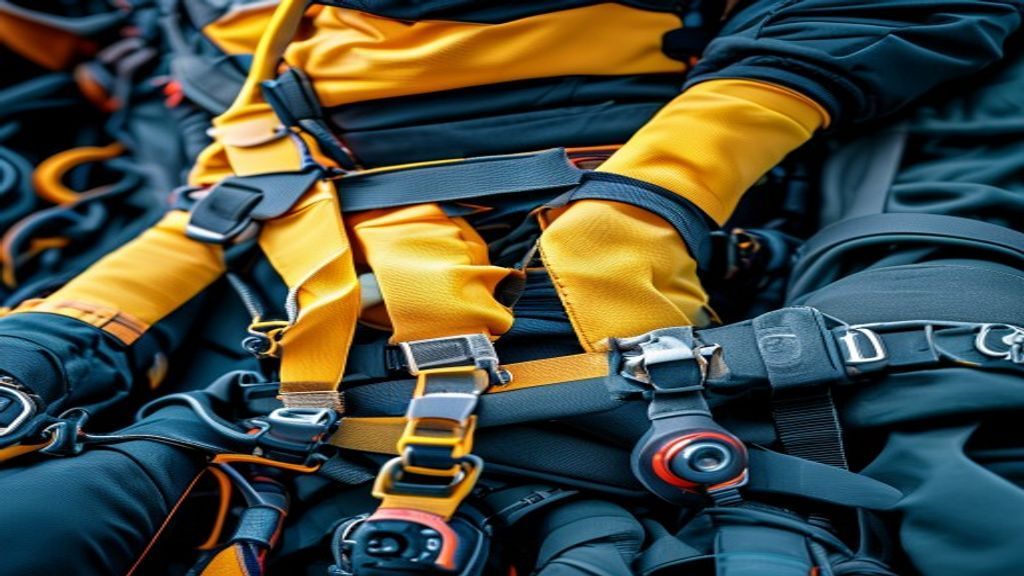
A climbing-style full body harness distributes forces across the thighs, hips, and chest. This is preferred for tandem jumps, heavier jumpers, or anyone with ankle or knee concerns.
Body Sling (Chest Harness)
Some operators use a chest-mounted attachment point that allows jumpers to flip upright during the rebound. This provides a different sensation than the traditional ankle-first style.
Safety Equipment Checklist
Every professional bungee jumping operation should have:
- Primary cord: The main elastic cord rated for the jumper's weight
- Backup cord: A secondary safety cord that engages if the primary fails
- Carabiners: Locking, rated climbing carabiners (minimum 25kN breaking strength)
- Helmet: Protects against accidental contact with the platform or structure
- Weight scale: Precise weight measurement for cord selection
- Communication system: Radio contact between jump master and ground crew
How Bungee Cords Are Tested
Professional operators perform daily test jumps with weighted bags to verify cord performance. Each cord has a stretch chart that correlates jumper weight to expected stretch distance and rebound height. Cords showing any visible damage, discoloration, or inconsistent stretch are immediately retired.
What to Expect During Your Jump
Before jumping, you'll be weighed, fitted with your harness, and given a safety briefing. The crew will double-check all connections using a systematic checklist. Your ankles (or body harness) will be attached to the cord, and you'll be positioned at the jump point. The jump master gives a countdown, and you leap. The free-fall lasts 2-4 seconds depending on height, followed by several bounces of decreasing amplitude before you're lowered to the ground or retrieved by boat.
More Articles
 Long Jump Technique Breakdown: Approach, Takeoff, Flight & Landing (2026)
 How Many Calories Do You Burn Swimming a Mile?
 Bungee Jumping Safety: 1 in 500,000 Death Rate (2026)
 How Big Is a Water Polo Ball? Official Sizes & Specs
 Deepest Above-Ground Swimming Pool: 52 Inches
 How Much Does a Go-Kart Cost in 2025?
 How Much Does It Cost to Build a Swimming Pool? (2025)
 How High Does Ronaldo Jump? 78 cm Vertical Revealed
 How Deep Are Olympic Diving Pools? 5m Minimum
 What Does Row Mean in Sports? Definition & Uses