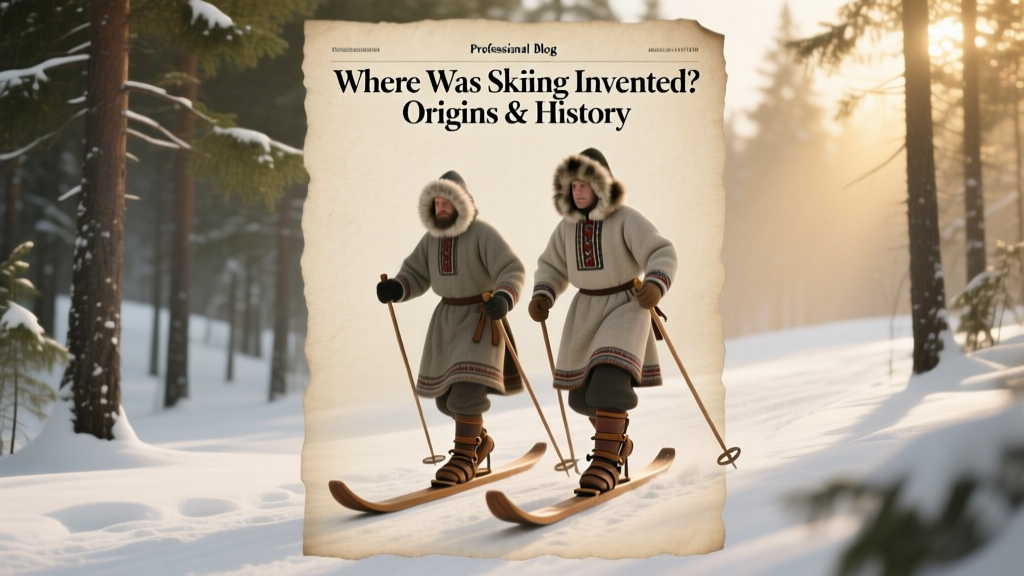
Where Was Skiing Invented? Origins & History
Skiing was invented in northern Scandinavia, with archaeological evidence pointing to Norway as the birthplace of skiing over 5,000 years ago.
The Origins of Skiing: A Historical Journey
Skiing is one of the oldest forms of human transportation and recreation, developed out of necessity in snowy, mountainous regions. The earliest evidence of skis comes from ancient rock carvings in Norway, dating back to around 3,000 BCE. These primitive skis were made from solid wood and used by hunters and warriors to travel across snow-covered terrain.
Why Was Skiing Invented?
- To facilitate winter hunting and trapping in deep snow
- To improve mobility for military and communication purposes
- To reduce energy expenditure during winter travel
- To enable access to remote forested and mountainous areas
Archaeological Evidence and Early Ski Use
The discovery of well-preserved skis in bogs and archaeological sites across Norway and Sweden confirms the region’s central role in skiing's development. One of the oldest surviving skis, the Reinheim ski, was found in Norway and dates to around 1300 BCE. Ancient Norse mythology even features Ullr, a god associated with skiing and winter.
Evolution of Ski Design
Early skis were long, narrow, and made entirely of wood. Over centuries, design evolved:
- Prehistoric Era: Solid pine or spruce planks, up to 2.5 meters long
- Medieval Period: Introduction of animal hide underfoot for grip (precursor to modern skins)
- 19th Century: Sondre Norheim of Telemark, Norway, pioneered curved skis and modern bindings
- 20th Century: Metal and fiberglass materials revolutionized performance
Global Spread of Skiing
From Scandinavia, skiing spread across Europe and eventually the world. Norwegian immigrants brought skiing to North America in the 1800s. The first recorded ski race in the U.S. took place in 1861 in Nevada. By the early 20th century, alpine skiing gained popularity in the Alps, leading to the first Winter Olympics in 1924 in Chamonix, France.
| Year | Event | Location | Significance |
|---|---|---|---|
| 3000 BCE | Rock carvings depicting skiers | Rock carvings at Rødøy, Norway | Earliest known representation of skiing |
| 1300 BCE | Reinheim ski discovered | Telemark, Norway | Oldest preserved ski fragment |
| 1861 | First U.S. ski race | Nevada City, California | Introduction of skiing to North America |
| 1924 | First Winter Olympics | Chamonix, France | Official recognition of skiing as a sport |
| 1936 | Alpine skiing introduced | Garmisch-Partenkirchen, Germany | Downhill and slalom events debut |
The timeline shows that skiing evolved from a survival tool to an international sport over millennia. Norway remains central to its origin, while the 20th century formalized it globally through competition and innovation.
Frequently Asked Questions About Where Skiing Was Invented
Where was skiing invented?
Skiing was invented in northern Scandinavia, particularly in what is now Norway, where archaeological findings and rock carvings date back over 5,000 years.
Who invented skiing?
No single person invented skiing—it evolved naturally among prehistoric peoples in snowy regions. However, Sondre Norheim of Norway is credited with pioneering modern skiing techniques and equipment in the 1800s.
When did skiing become a sport?
Skiing became an organized sport in the 19th century, with the first ski clubs forming in Norway. It debuted at the first Winter Olympics in 1924.
Did indigenous peoples in other regions invent skiing independently?
Yes, similar ski-like tools were used by indigenous groups in Russia and northern China, but the most continuous and influential development occurred in Scandinavia.
What was the original purpose of skiing?
The original purpose of skiing was practical: to travel efficiently over snow-covered land for hunting, fishing, and transportation during harsh winters.
More Articles
 How Many Camps Are on Mount Everest? Full Breakdown
 When Do Training Camps Start? Key Dates by Sport
 How Far Is an Ironman Triathlon? Full Distance Explained
 Seasonal Wardrobe Alignment for Athletes
 Best Football for NCAA: Official Specs, Top Brands, and What Players Actually Use on Game Day
 Discover the Power of Micro Plates in Strength Training
 How High Is Skydiving? Typical Jump Altitudes Explained
 Can Siri Start a CrossFit Workout on Apple Watch?
 What Length Cross Country Skis Do I Need?
 Basketball Stats That Actually Matter