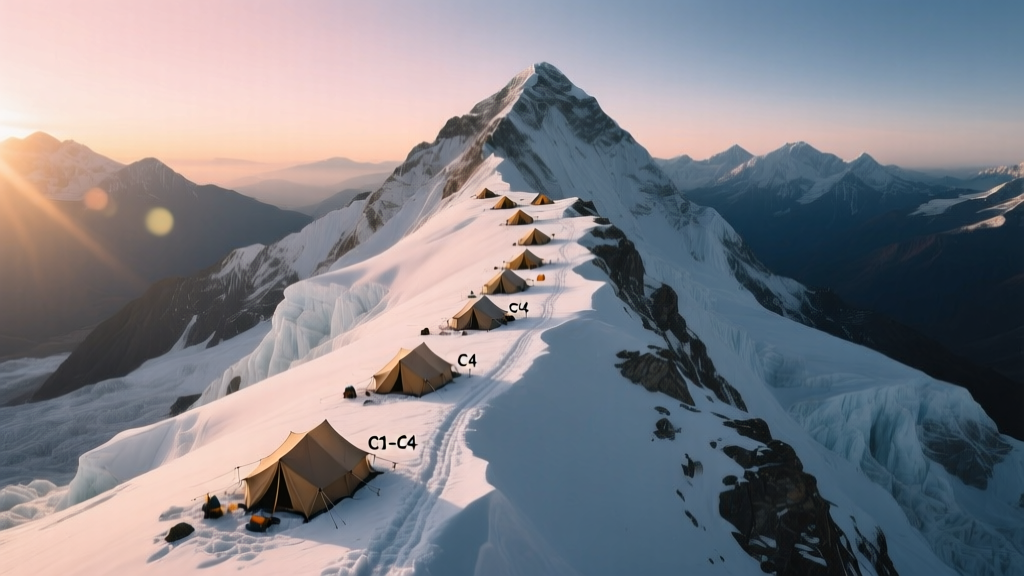
How Many Camps Are on Mount Everest? Full Breakdown
There are typically 6 main camps on Mount Everest, including Base Camp, Camp 1, Camp 2, Camp 3, Camp 4, and the Summit Camp, used during the standard ascent via the South Col route in Nepal.
Understanding the Climbing Route on Mount Everest
Mount Everest, standing at 8,848.86 meters (29,031.7 feet) above sea level, is the highest peak on Earth. Climbers attempting to summit from the Nepali side follow the Southeast Ridge route, which includes a series of established high-altitude camps. These camps serve as critical rest, acclimatization, and staging points throughout the expedition.
Standard Ascent Path and Camp Functions
- Base Camp (EBC): Starting point for climbers; used for weeks of acclimatization.
- Camp 1: First high camp beyond the dangerous Khumbu Icefall.
- Camp 2: Located on the Western Cwm; acts as a supply and rest depot.
- Camp 3: Positioned on the Lhotse Face; aids in further acclimatization.
- Camp 4 (South Col): Final stop before summit push; extremely harsh conditions.
- Summit Push Camp: Not a formal camp, but some teams use bivouac shelters near the Balcony or Hillary Step.
Breakdown of Each Camp on Everest
Everest Base Camp (5,364 m / 17,598 ft)
Located on the south side in Nepal, Base Camp serves as the primary logistical hub. Expeditions spend several weeks here to adjust to altitude while making rotations through higher camps. It hosts hundreds of climbers and support staff each season.
Camp 1 – Advanced Base Camp (6,065 m / 19,900 ft)
Situated beyond the treacherous Khumbu Icefall, Camp 1 is the first real test of endurance. Ice doctors fix ropes and ladders across crevasses annually to ensure safe passage.
Camp 2 – Intermediate Camp (6,500 m / 21,300 ft)
Also known as Advanced Base Camp, it lies in the broad valley of the Western Cwm. This camp supports longer stays and storage of gear and food.
Camp 3 (7,200 m / 23,600 ft)
Perched on the steep Lhotse Face, this camp is primarily used for overnight acclimatization. Weather conditions are severe, and oxygen is often used.
Camp 4 – South Col (7,906 m / 26,000 ft)
The final camp before the summit attempt, South Col is exposed to extreme winds and low oxygen levels. Most climbers depart around midnight for the summit to reach the top by dawn.
Summit Camp (Optional Bivouac)
No permanent camp exists at the summit. However, rare emergency bivouacs have occurred. The highest temporary shelter recorded was near the Balcony (~8,400 m) during rescue operations.
| Camp | Altitude (m) | Altitude (ft) | Primary Purpose | Typical Stay Duration |
|---|---|---|---|---|
| Base Camp | 5,364 | 17,598 | Acclimatization & logistics | 2–4 weeks |
| Camp 1 | 6,065 | 19,900 | Rest after Icefall | 1–2 nights |
| Camp 2 | 6,500 | 21,300 | Supply depot & rotation base | 3–7 days |
| Camp 3 | 7,200 | 23,600 | High-altitude acclimatization | 1 night |
| Camp 4 (South Col) | 7,906 | 26,000 | Final launch point for summit | 1 night |
The table highlights the progressive increase in elevation and decreasing habitability across camps. Most time is spent at Base Camp due to its relative safety and role in physiological adaptation. The jump from Camp 3 to Camp 4 represents entry into the “death zone,” where oxygen levels are insufficient to sustain human life for extended periods.
Additional Considerations for Everest Camps
While six major camps define the climbing structure, additional micro-camps or emergency bivouacs may be set up depending on weather, traffic, or medical needs. The North Side route from Tibet also features similar staging camps, though less frequently used than the South Col route.
Environmental concerns grow each year, with waste management and overcrowding becoming pressing issues at higher camps. Governments and expedition operators are implementing stricter regulations regarding tent usage, human waste disposal, and oxygen cylinder recovery.
Common Questions About Mount Everest Camps
How many official camps are on Mount Everest?
There are 5 officially recognized camps (Base Camp to Camp 4) plus the summit push point, totaling 6 key locations used during a typical ascent via the southeast ridge.
What is the purpose of multiple camps on Everest?
Multiple camps allow climbers to gradually acclimatize to altitude, store supplies, manage fatigue, and reduce risk. The “climb high, sleep low” strategy is essential for survival above 6,000 meters.
Which camp is the most dangerous on Everest?
Camp 1 and the Khumbu Icefall leading to it are considered the most dangerous due to shifting seracs, crevasses, and frequent avalanches. Over 25% of climber fatalities occur in this section.
Do climbers sleep at all camps during summit attempts?
Climbers rotate through camps for acclimatization but only spend one night at Camps 3 and 4 during the final summit bid. Base Camp and Camp 2 see repeated occupancy over several weeks.
Is there a Camp 5 on Mount Everest?
No permanent Camp 5 exists. Some teams refer to a high bivouac near the Balcony (~8,400 m) as a temporary Camp 5, but it's not standard. The South Col (Camp 4) remains the last formal camp.
More Articles
 Where Was Ski Patrol Filmed? Full Location Details
 Football for Beginners: Step-by-Step Guide
 Sports Guides: Fixes from Real-World Testing
 Top Smart Ski Goggles in 2025: Best Models Reviewed
 Injury Prevention Strategies: How Athletes Stay Healthy All Season
 When Does Ski Season End? By Region & Year
 What Does Apres Ski Mean? Definition & Culture Explained
 Best Places to Go Snow Skiing in 2025
 What Ski Resorts Are Open in October 2025?
 What Length Cross Country Skis Do I Need?