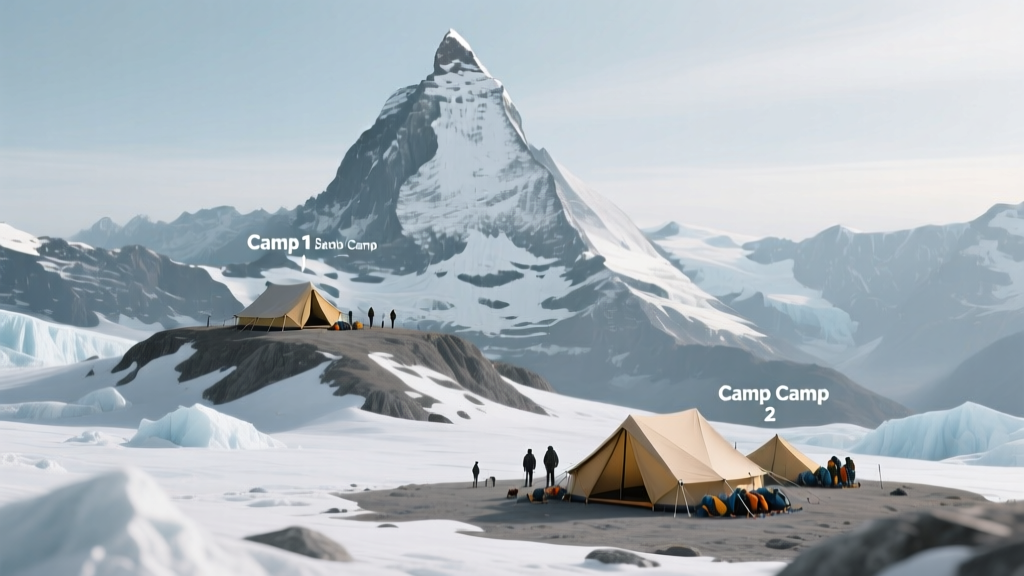
How Many Base Camps on Everest? Two Main Camps Explained
There are two main base camps on Mount Everest: the South Base Camp in Nepal at 5,364 meters (17,598 feet) and the North Base Camp in Tibet at 5,150 meters (16,900 feet). These serve as primary staging areas for climbers attempting the summit via the southeast ridge and northeast ridge routes, respectively.
Understanding Everest Base Camps
Mount Everest, standing at 8,848.86 meters (29,031.7 feet), is the highest peak on Earth. Due to its extreme altitude and challenging conditions, climbers rely on a series of camps during their ascent. However, only two are designated as official base camps: one on each side of the mountain. These base camps function as logistical hubs where climbers acclimatize, store gear, and prepare for higher-altitude pushes.
Key Functions of Base Camps
- Serve as starting points for summit attempts
- Provide medical and communication support
- Host team coordination and supply depots
- Enable gradual acclimatization to high altitude
South Base Camp: Nepal Side
The Everest South Base Camp, located in the Khumbu region of Nepal within Sagarmatha National Park, sits at an elevation of 5,364 meters (17,598 feet). It is accessible via a multi-day trek from Lukla Airport, making it a popular destination even for non-climbers seeking adventure.
Features of South Base Camp
- Operational from March to May and September to November
- Supports thousands of climbers and trekkers annually
- Home to temporary tent cities with satellite communications
- Gateway to the Southeast Ridge route, the most commonly used path to the summit
North Base Camp: Tibet Side
Located in Tingri County, Tibet Autonomous Region of China, the North Base Camp sits at approximately 5,150 meters (16,900 feet). Unlike the Nepalese side, access is typically by vehicle via the Friendship Highway from Lhasa or Shigatse.
Differences Between North and South Sides
- Accessibility: North Base Camp allows vehicular access; South requires trekking.
- Crowds: The South tends to be more crowded due to higher popularity.
- Route Difficulty: The Northeast Ridge (Tibet) is considered slightly steeper and windier.
- Regulations: Chinese authorities enforce stricter permits and monitoring on the north side.
Higher Camps vs. Base Camps
While only two base camps exist, climbers establish several higher camps during their ascent. These include:
- Camp I: ~6,065 m (19,900 ft) – above the Khumbu Icefall
- Camp II: ~6,500 m (21,300 ft) – advanced base camp for rotation
- Camp III: ~7,200 m (23,600 ft) – mid-point on Lhotse Face
- Camp IV: ~7,950 m (26,085 ft) – final push point before summit bid
These are not considered "base camps" but are critical for staged ascents and safety.
Base Camp Statistics and Operations
| Feature | South Base Camp (Nepal) | North Base Camp (Tibet) |
|---|---|---|
| Elevation | 5,364 m (17,598 ft) | 5,150 m (16,900 ft) |
| Average Seasonal Temperature | -10°C to 5°C (14°F to 41°F) | -15°C to 3°C (5°F to 37°F) |
| Primary Access Route | Trek from Lukla Airport | Road from Lhasa/Shigatse |
| Peak Climber Traffic (Annual) | ~1,500+ climbers | ~300–500 climbers |
| Main Summit Route | Southeast Ridge | Northeast Ridge |
| Typical Season | April–May | April–May, September–October |
| Government Oversight | Nepal Ministry of Tourism | China Tibet Mountaineering Association |
The data shows that the South Base Camp handles significantly more climbers annually, reflecting the greater accessibility and international appeal of the Nepalese route. Despite lower traffic, the North Base Camp remains strategically important due to its road access and alternative climbing experience. Both operate under strict environmental and safety regulations during peak seasons.
Frequently Asked Questions About Everest Base Camps
How many base camps are there on Mount Everest?
There are two official base camps on Mount Everest: the South Base Camp in Nepal and the North Base Camp in Tibet. Each serves as the primary launch point for expeditions on their respective sides of the mountain.
Can you visit both Everest base camps?
Yes, it is possible to visit both base camps, though they require separate permits and travel arrangements. Trekkers often visit the South Base Camp via Nepal, while tours to the North Base Camp are organized through licensed agencies in Tibet.
Is Everest Base Camp the same as Kala Patthar?
No, Kala Patthar is a 5,643-meter (18,514-foot) viewpoint near the South Base Camp offering panoramic views of Everest. While not the base camp itself, it is a popular destination for trekkers wanting to see the summit up close.
Do climbers stay at base camp the entire time?
No, climbers spend weeks rotating between base camp and higher camps to acclimatize. They return to base camp to rest, recover, and prepare for the next phase of the climb, using it as a central hub throughout the expedition.
Are there permanent structures at Everest base camps?
No, both base camps consist of temporary tents and facilities set up each season. All structures are removed after the climbing season to minimize environmental impact, in accordance with conservation efforts in the region.
More Articles
 How Long Is a Pilates Class? Typical Durations Explained
 How Much Do Skateboards Cost in 2025?
 Where Can I Buy a Yoga Mat? Top Stores & Tips
 Game Day Guide: Strategies and Tactics That Work
 Golf Glove Wear Patterns Analysis
 Where to Buy Ski Jackets: Best Retailers 2025
 Where Can I Go Skiing? Top Global Destinations
 Dates Checklist: Buy, Store, and Use for Max Flavor
 Alternatives to Court: Sports Disputes
 Who Makes Ironman Triathlon Watches? Official Brand Guide