How High Can Horses Jump? Record & Competition Heights
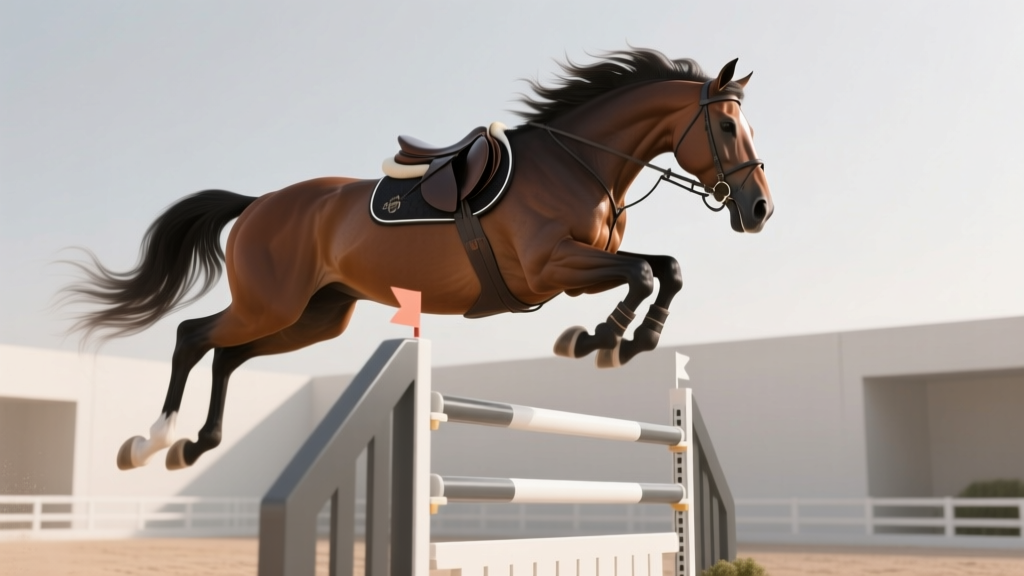
Top-level show jumping horses can clear heights of up to 1.60 meters (5 feet 3 inches) in official competitions, with the world record standing at an impressive 2.47 meters (8 feet 1 inch), set under special conditions.
The Basics of Horse Jumping Heights
Horse jumping is a precision sport that tests the athleticism, training, and partnership between horse and rider. The height horses can jump depends on breed, training, competition level, and specific equestrian discipline.
Disciplines That Involve Jumping
- Show Jumping – Focuses on clearing high and wide obstacles in an arena.
- Hunter Classes – Emphasize form, smoothness, and accuracy over lower fences.
- Eventing – Combines dressage, cross-country, and show jumping phases.
- Steeplechase – Involves racing over large natural-style fences at speed.
Competition-Level Jump Heights
In regulated events governed by the Fédération Equestre Internationale (FEI), jump heights are standardized based on competition level. These standards ensure fairness and safety across international events.
| Competition Level | Maximum Fence Height | Maximum Spread (Width) | Typical Age of Horse |
|---|---|---|---|
| Local Amateur | 1.00 m (3'3") | 1.20 m (3'11") | 6–8 years |
| Intermediate (National) | 1.30 m (4'3") | 1.60 m (5'3") | 8–10 years |
| Advanced (International) | 1.45 m (4'9") | 1.80 m (5'11") | 9–12 years |
| FEI Grand Prix | 1.60 m (5'3") | 2.00 m (6'7") | 10–14 years |
| World Record (Non-Competition) | 2.47 m (8'1") | Not recorded | 8 years (Huaso) |
The table shows that while elite competition fences max out at 1.60 meters, the world record exceeds this by nearly one meter. This extraordinary jump was achieved in controlled, non-competitive conditions, highlighting the peak physical capability of well-trained horses under optimal circumstances.
Factors Influencing Jump Height
Several key elements determine how high a horse can effectively and safely jump.
Breed and Genetics
Certain breeds are naturally predisposed to jumping due to conformation, agility, and power. The Dutch Warmblood, Selle Français, and Hanoverian are among the most successful in show jumping.
Training and Conditioning
Gradual strength development, proper technique instruction, and mental preparation allow horses to reach their athletic potential. Overtraining or premature jumping at high levels can lead to injury.
Rider Skill and Partnership
An experienced rider synchronizes with the horse’s stride and balance, optimizing takeoff angle and clearance. Trust and communication are critical for consistent performance.
Historical Context and Records
The current world record for the highest jump cleared by a horse and rider was set on February 5, 1949, in Chile. Captain Alberto Larraguibel rode Huaso, a Thoroughbred stallion, over a fence measuring 2.47 meters (8 feet 1 inch).
This record remains unbroken and is unlikely to be surpassed under current FEI rules, which cap maximum heights for welfare reasons.
Frequently Asked Questions About How High Horses Jump
How high can a horse jump in Olympic competition?
Olympic show jumping fences reach up to 1.60 meters (5'3") in height, with spreads up to 2.00 meters (6'7"). These dimensions align with FEI Grand Prix standards and test both technical skill and athleticism.
What breed of horse jumps the highest?
Dutch Warmbloods are among the top performers in elite show jumping due to their power, scope, and trainability. However, Selle Français, Hanoverians, and Irish Sport Horses also excel at the highest levels.
Can a horse jump over a two-story building?
No, a horse cannot jump over a two-story building, which typically stands around 6 meters (20 feet) tall. The world record is 2.47 meters (8'1"), less than half that height. This myth likely stems from a misinterpretation of the phrase “can jump over tall buildings” used humorously.
Do horses know how high they are jumping?
Horses assess jump height visually and adjust their stride and bascule (arc of the jump) accordingly. Through training, they learn to judge distances and clear obstacles efficiently, relying on experience and rider cues.
Is jumping bad for a horse’s health?
When done correctly with proper training, veterinary care, and rest, jumping is not harmful. However, repetitive strain, poor technique, or jumping too early in development can lead to joint or tendon injuries. Responsible management is essential.
More Articles
 What Swimming Pool Is Open Now? Find Nearby Access
 How Much Is a MotoGP Bike? Cost Breakdown 2025
 Where to Go to Swim: Best Pools & Open Water Spots
 Which Florida Springs Can I Swim In? Top 6 Spots
 How Many Players on a Hockey Team on the Ice?
 How High Can You Jump Into Water Safely?
 What Time Is the NASCAR Race Today? 2025 Schedule & TV Info
 What Events Did Michael Phelps Swim? Full List
 Why Is China So Good at Diving? Secrets Behind Dominance
 Rules vs Reality: Performance Data Check