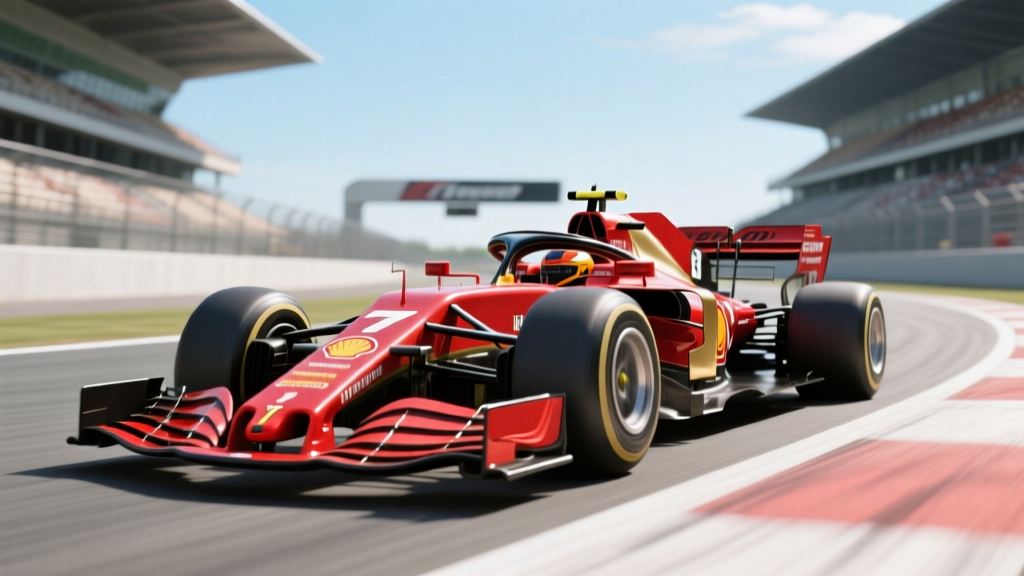
How Long Is an F1 Race? Duration Explained
An F1 race typically lasts around 1.5 to 2 hours, ending when the leader completes either a pre-determined distance of approximately 305 kilometers (190 miles) or a maximum time limit of two hours, whichever comes first. The exact duration varies based on circuit length, number of laps, and race conditions such as safety car periods or weather delays.
Understanding F1 Race Duration
The length of a Formula 1 race is not measured in time alone but primarily by distance. Most races are set to cover about 305 kilometers, with the exception of the Monaco Grand Prix, which is shorter due to the circuit's tight layout. Each race consists of a specific number of laps depending on the track’s length. For example, the Circuit de Monaco is only 3.34 km per lap, requiring 78 laps, while the Circuit of the Americas is 5.513 km per lap, needing only 56 laps to reach the target distance.
Key Factors That Influence Race Length
- Circuit length: Longer tracks mean fewer laps; shorter tracks require more laps to meet the target distance.
- Race distance: Fixed at approximately 305 km, except for Monaco (260.5 km) and the Saudi Arabian GP (a longer 6.174 km circuit). \li>
- Time limit: A two-hour cap ensures no race exceeds this duration, even if the full distance isn’t completed due to slow conditions.
- Safety cars and red flags: These can extend the perceived race time without adding actual racing distance.
- Weather conditions: Rain or poor visibility may slow lap times and increase total elapsed time.
Race Format Overview
An F1 race weekend includes practice sessions, qualifying, and the main race event. The race itself starts with a formation lap followed by the standing start. Drivers must complete the required laps within the two-hour window. If a race is suspended due to extreme conditions, it may be resumed later or concluded early based on regulations.
Stages of an F1 Race Weekend
- Practice 1, 2, and 3: Teams test setups and gather data.
- Qualifying: Determines starting grid positions.
- Race Day: Final competition where points are awarded from 1st to 10th place.
| Grand Prix | Circuit Length (km) | Laps | Race Distance (km) | Avg. Race Duration (min) |
|---|---|---|---|---|
| Monaco | 3.337 | 78 | 260.286 | 105 |
| Spanish | 4.655 | 66 | 307.130 | 90 |
| Saudi Arabian | 6.174 | 50 | 308.700 | 102 |
| British | 5.891 | 52 | 306.332 | 95 |
| Italian (Monza) | 5.793 | 53 | 306.729 | 88 |
| United States (COTA) | 5.513 | 56 | 308.428 | 96 |
The table shows that despite varying circuit lengths and lap counts, total race distances remain close to 305 km. Average durations range from 88 to 105 minutes, well under the two-hour limit, indicating most races finish within expected timeframes. Variations in average duration reflect differences in track type—high-speed circuits like Monza result in shorter race times, while street circuits like Jeddah or Monaco involve tighter corners and slower speeds, increasing elapsed time.
Exceptions and Special Rules
In certain scenarios, races may end earlier than planned. If heavy rain persists or a major accident occurs, the race director may issue a red flag, pausing the event. If conditions don’t improve, the race can be concluded using the results from the previous completed lap. Additionally, if the two-hour time limit is reached before the final lap, drivers are allowed to complete one more lap after the checkered flag is shown.
Abbreviated Races
If less than 75% of the scheduled race distance is completed, half points are awarded. This occurred during the 2021 Belgian Grand Prix, where only three laps were completed behind the safety car due to extreme weather, resulting in no racing action and minimal points distribution.
Frequently Asked Questions About F1 Race Length
How long does an average F1 race last?
An average Formula 1 race lasts between 90 and 120 minutes. Most races are completed in about 1.5 hours, depending on the circuit and race conditions.
What is the shortest F1 race ever?
The shortest completed F1 race by time was the 2021 Belgian Grand Prix, which saw only six laps driven under safety car conditions due to heavy rain, lasting around 3 hours in real time but with almost no actual racing.
Why do F1 races have a two-hour time limit?
The two-hour time limit ensures races conclude within a predictable timeframe for broadcast, safety, and logistical reasons. It prevents indefinite extensions due to repeated safety car periods or adverse weather.
Do all F1 races cover the same distance?
Most F1 races aim for approximately 305 kilometers, but the Monaco Grand Prix is an exception at around 260 km due to its short circuit length and high lap count.
Can an F1 race go over two hours?
No official racing occurs beyond two hours. However, drivers may complete one final lap after the two-hour mark if they were on track when the time expired, ensuring fairness in finishing order.
More Articles
 Comfortable Pool Temperature for Swimming
 Tennis Serve Technique: Grip, Toss & Motion Guide for Beginners (2026)
 What Muscles Do Upright Rows Work? (Science-Backed)
 Best Baseball Gloves for Youth Players: 2026 Sizing and Fit Guide
 Where Can I Ride Go Karts Near Me? Top Local Tracks
 How Thick Is a Hockey Rink Ice? NHL & Olympic Standards
 Tennis Scoring System: Points, Games, Sets & Tiebreaks Explained (2026)
 How High Are Hurdles in the Olympics? By Event & Gender
 How Are Ice Skating Rinks Made? Full Process Explained
 How Many Periods in Field Hockey? 4 Quarters Explained