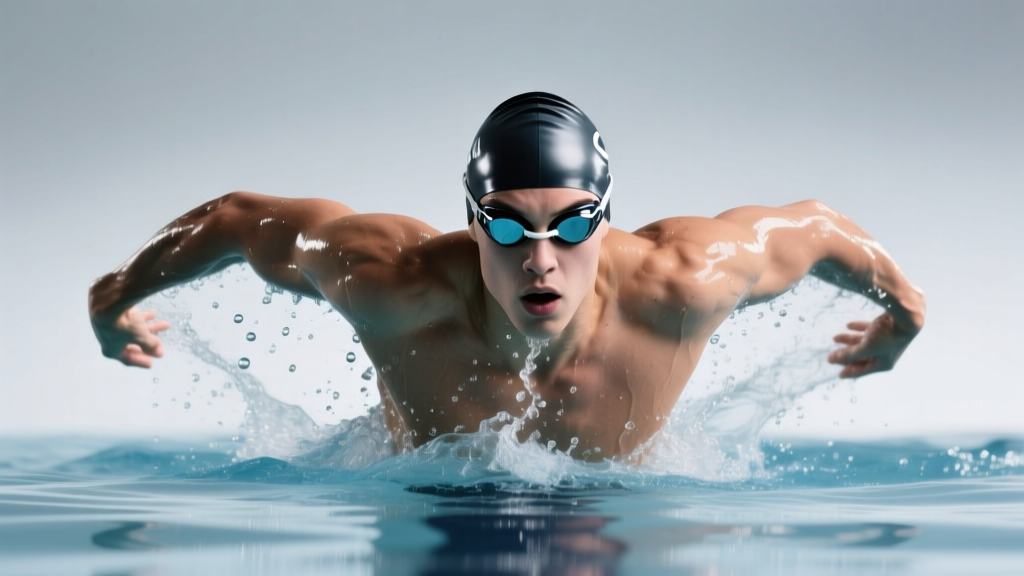
How Fast Do Olympic Swimmers Swim? Speeds Revealed
Olympic swimmers typically swim at average speeds of 5 to 6 miles per hour (8 to 9.7 km/h), with elite sprinters reaching bursts over 6.5 mph (10.5 km/h) during short events like the 50m freestyle. These speeds depend on stroke, distance, gender, and race strategy, with freestyle being the fastest and longer events seeing slightly reduced pace.
Understanding Olympic Swimming Speeds
The speed of Olympic swimmers varies significantly based on event type, stroke, and athlete physiology. However, top-tier competitors consistently achieve speeds that far exceed recreational or amateur levels. The fastest recorded swimming speeds occur in short-distance freestyle events, where explosive power and technique maximize velocity.
What Influences Swimming Speed?
- Stroke Type: Freestyle is the fastest, followed by butterfly, backstroke, and breaststroke.
- Distance: Sprint events (50m, 100m) allow higher peak speeds than endurance races (400m+).
- Gender: Men generally swim faster due to higher muscle mass and lower body fat.
- Starts and Turns: Underwater dolphin kicks off walls contribute significantly to overall speed.
- Technology: High-tech swimsuits and pool design reduce drag and improve performance.
Top Speeds by Stroke and Event
Different strokes produce different velocities due to biomechanics and resistance. Freestyle remains the benchmark for speed, while breaststroke is the slowest competitive stroke.
| Event | Average Speed (mph) | Average Speed (km/h) | World Record Holder | Time (as of 2024) |
|---|---|---|---|---|
| Men's 50m Freestyle | 5.5 | 8.85 | Caeleb Dressel (USA) | 20.91 s |
| Men's 100m Freestyle | 5.3 | 8.53 | Pan Zhanle (CHN) | 46.40 s |
| Men's 100m Butterfly | 4.9 | 7.88 | Caeleb Dressel (USA) | 49.45 s |
| Men's 100m Backstroke | 4.7 | 7.56 | Thomas Ceccon (ITA) | 51.60 s |
| Men's 100m Breaststroke | 4.4 | 7.08 | Adam Peaty (GBR) | 56.88 s |
| Women's 50m Freestyle | 5.1 | 8.21 | Sarah Sjöström (SWE) | 23.61 s |
| Women's 100m Freestyle | 4.9 | 7.88 | Ariarne Titmus (AUS) | 51.85 s |
The data shows that men’s events consistently record higher speeds across all strokes. The 50m freestyle achieves the highest average speed due to minimal deceleration over short distance. Notably, underwater phases after starts and turns can briefly exceed 7 mph (11.3 km/h), significantly boosting race averages.
How Speed Is Measured in Competitive Swimming
Swimming speed is calculated by dividing the race distance by total time. While splits are tracked via touchpads and video analysis, average speed gives a practical estimate of performance. Real-time speed tracking using wearable sensors is emerging but not yet standard in official competitions.
Key Metrics Used:
- Split Times: Segment durations (e.g., every 25m or 50m).
- Turn Efficiency: Time spent gliding and kicking underwater post-turn.
- Stroke Rate: Number of strokes per minute.
- Stroke Length: Distance covered per stroke cycle.
Peak Speed vs. Average Speed
While average speed reflects overall race performance, peak speed occurs during starts and turns. Elite swimmers can reach over 6.5 mph (10.5 km/h) in the initial underwater phase, faster than their surface swimming. This highlights the strategic importance of streamline position and dolphin kicking technique.
Why Peak Speed Matters
- Reduces time spent in high-drag surface swimming.
- Provides momentum into subsequent strokes.
- Can create psychological advantage over competitors.
Frequently Asked Questions About Olympic Swimming Speeds
How fast do Olympic swimmers swim in mph?
Olympic swimmers average between 5 and 6 mph in sprint freestyle events, with peak bursts exceeding 6.5 mph during starts and turns. Longer events see slightly lower averages, around 4.5 to 5.5 mph depending on stroke and distance.
Who is the fastest Olympic swimmer ever?
Caeleb Dressel of the USA is among the fastest, holding world records in the 50m and 100m freestyle and 100m butterfly. His explosive starts and powerful underwater kicks contribute to his top-tier speed. Pan Zhanle broke the 100m freestyle world record in 2024 with a time of 46.40 seconds.
Is swimming faster than running in terms of human speed?
No, humans are much faster on land. The fastest runners exceed 27 mph (Usain Bolt), while even the quickest swimmers top out around 6.5 mph. Water resistance is about 800 times greater than air, making swimming inherently slower despite superior strength and technique.
Do swimmers go faster underwater?
Yes, elite swimmers are often faster underwater due to reduced drag and efficient dolphin kicking. During the 15-meter glide after starts and turns, speeds can surpass surface swimming by up to 1 mph. This is why FINA limits underwater travel to 15 meters in most strokes.
What factors make Olympic swimmers so fast?
Combination of elite genetics, years of specialized training, optimized stroke mechanics, low body fat, high lung capacity, and advanced equipment such as polyurethane swimsuits and hydrodynamic pool designs all contribute to their exceptional speed.
More Articles
 Stats vs Complete Data: Performance Tracking
 What Swimming Pools Are Open Now? Find Nearby Access
 Golf Handicap Explained: How It Works, How to Get One & Calculate Yours (2026)
 Running Shoes for Flat Feet: Stability Picks for 2026
 How Many Players Are on the Ice in Hockey?
 What Does a Bent Over Row Work? Back Muscles Explained
 Where to Buy Go Karts: Best Sites & Tips (2025)
 First Woman to Swim English Channel: Gertrude Ederle
 Where to Watch MotoGP Live in 2025 – Global Guide
 Best Volleyball Shoes for Liberos: Lightweight and Responsive Picks for 2026