
How Deep Is Water for Water Polo? Official Depth Explained
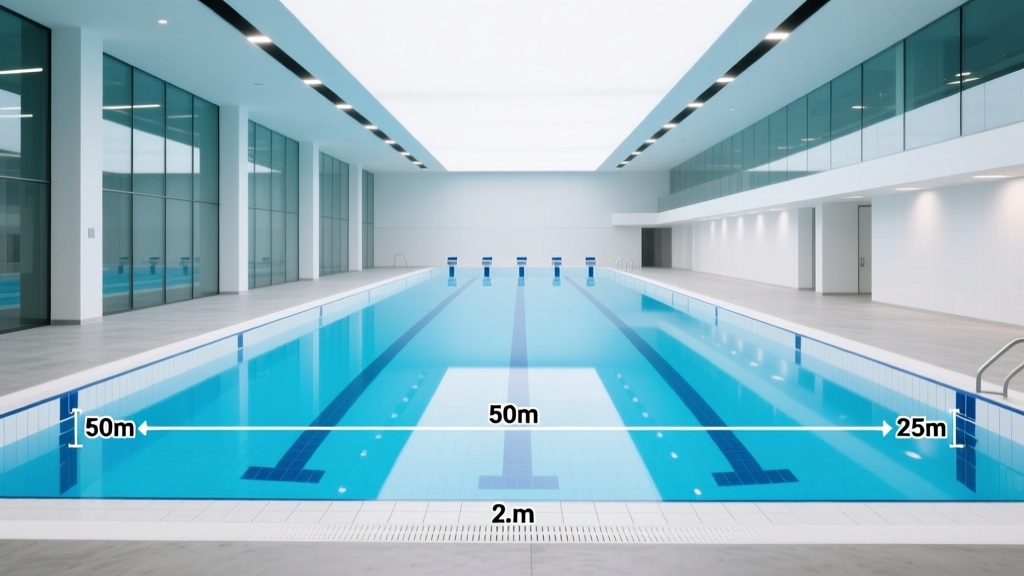
Water polo is played in a pool that is typically 2 meters (6 feet 7 inches) deep, ensuring players cannot touch the bottom, which emphasizes swimming ability and fairness in play.
Why Water Polo Requires Deep Water
The depth of the water in water polo is critical for maintaining the integrity and challenge of the sport. Unlike recreational swimming or other aquatic activities, water polo demands constant treading water and dynamic movement. A minimum depth ensures players rely solely on their swimming skills rather than touching the pool floor.
Key Reasons for Minimum Depth
- Prevents players from gaining an unfair advantage by standing or pushing off the bottom
- Ensures consistent gameplay across all positions and zones of the pool
- Maintains player safety by reducing sudden stops or collisions with the pool base
- Supports proper execution of techniques like eggbeater kick and body positioning
Official Water Polo Pool Dimensions
International competitions follow strict guidelines set by World Aquatics (formerly FINA). These standards ensure uniformity and competitive fairness across global events.
| Parameter | Standard Measurement | Notes |
|---|---|---|
| Pool Length | 30 meters | For international matches |
| Pool Width | 20 meters | For international matches |
| Water Depth | Minimum 2.0 meters (6'7") | No shallow areas allowed |
| Goal Size | 3.0 x 0.9 meters (9'10" x 2'11") | Same as field hockey goals |
| Ball Circumference | 0.68–0.71 meters (26.8–27.9 in) | Size 5 for men, Size 4 for women |
| Game Duration | Four 8-minute periods | Clock stops frequently |
The data confirms that water depth is standardized at a minimum of 2 meters globally. This consistency allows athletes to train under match-like conditions regardless of location. The uniform depth also supports裁判 (referees) in enforcing rules related to fouls and infractions tied to footing or illegal support.
Variations in Recreational and Collegiate Leagues
While international standards require a minimum of 2 meters, some collegiate and recreational leagues may use slightly shallower pools—though still typically no less than 1.8 meters (5'11"). However, even in these cases, the goal remains to prevent players from touching the bottom.
Differences by Region and Level
- NCAA (USA): Requires pools to be at least 6 feet (1.83 m) deep
- High School (NFHS): Recommends minimum 6-foot depth
- Club Leagues: Often adhere to FINA standards when possible
- Training Facilities: May use adjustable floors but simulate deep water during drills
Frequently Asked Questions About Water Polo Water Depth
How deep is the water in Olympic water polo?
The water in Olympic water polo must be at least 2 meters (6 feet 7 inches) deep, following World Aquatics regulations. This depth ensures players cannot touch the bottom, maintaining fair and skill-based competition.
Can water polo be played in shallow water?
No, official water polo should not be played in shallow water. Pools must be deep enough so players cannot stand or push off the bottom, typically at least 2 meters. Shallow water changes the dynamics of the game and increases injury risk.
Why can't players touch the bottom during water polo?
Players are not allowed to touch the bottom to prevent unfair advantages in positioning and movement. Doing so would allow stronger swimmers or taller players to dominate physically rather than technically, undermining the sport’s emphasis on treading water and upper-body strength.
Do women's water polo pools have different depth requirements?
No, the depth requirement is the same for both men’s and women’s water polo—minimum 2 meters (6'7") under international rules. While ball size and field dimensions differ slightly, pool depth remains standardized for fairness and safety.
What happens if a player touches the bottom during a match?
If a player touches the bottom intentionally, it results in a turnover or foul, depending on context. Referees penalize this action because it provides an unfair positional advantage and violates the fundamental rule of continuous swimming without support.
More Articles
 How Much Does Renting a Jet Ski Cost? (2025 Rates)
 Best Football For Scoring: Science, Design, and Real-World Performance
 Basketball Court Dimensions: NBA, FIBA, College & High School Standards (2026)
 How Long to Jump Rope for Weight Loss
 Olympic Water Polo Pool Depth: Exact Measurement
 Best Running Shoes for Marathon Training: Cushion, Support, and Durability Guide
 How Much Does Ice Skating Cost in 2025?
 Soccer Positions Explained: All 11 Roles, Formations & Responsibilities (2026)
 7 Alternatives to Game UK for Gaming Hardware in 2026
 Olympic Swimming Pool Size: Exact Dimensions 2025