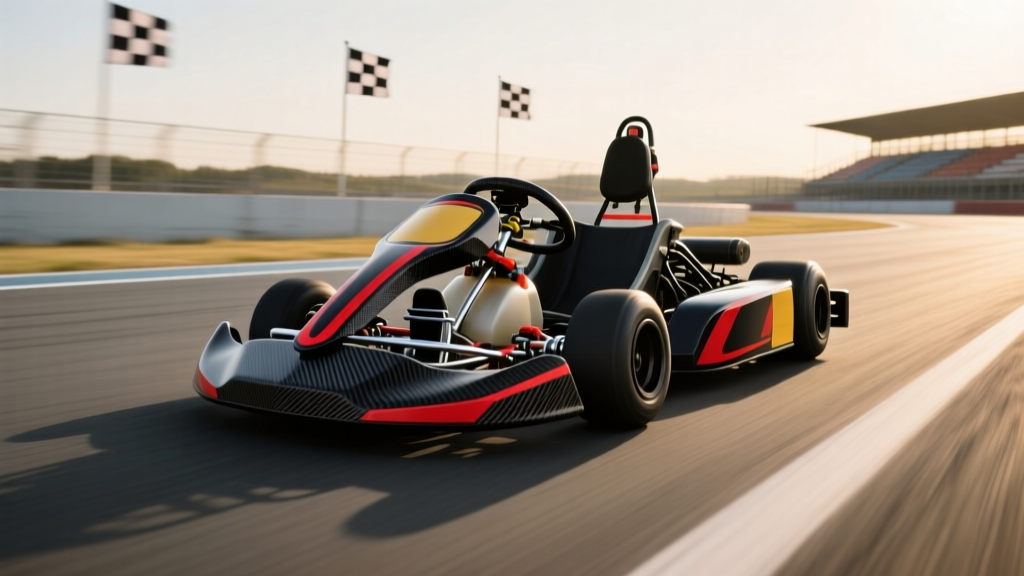
How Fast Are Go Karts? Top Speeds by Class
Go karts can reach speeds from 25 mph (40 km/h) for recreational models to over 160 mph (257 km/h) for professional racing karts, depending on engine type, track layout, and driver experience. This article breaks down speed variations across kart classes, compares key performance factors, and answers common questions about go kart velocity.
Understanding Go Kart Speeds
Go kart speeds vary dramatically based on the class, engine power, chassis design, and track conditions. While most casual riders experience karts between 25–60 mph, high-performance racing karts push far beyond. Understanding these differences helps drivers choose the right kart and track for their skill level and goals.
Types of Go Karts and Their Speed Ranges
- Recreational/Indoor Karts: Typically powered by 4-stroke engines, reaching 25–45 mph.
- Rental Karts at Commercial Tracks: Often electronically limited to 45–60 mph for safety.
- Junior Racing Karts: Designed for young drivers, averaging 40–60 mph.
- Senior/Adult Racing Karts (KF, OK Classes): Use 125cc 2-stroke or 4-stroke engines, hitting 70–100 mph.
- Superkarts: High-powered karts with 250cc V-twin engines capable of 140–160+ mph.
Factors That Influence Go Kart Speed
Several variables determine how fast a go kart can go. These include engine specifications, aerodynamics, tire grip, driver weight, and track design.
Engine and Power Output
The engine is the primary determinant of top speed. Most racing karts use two-stroke or four-stroke engines ranging from 50cc to 250cc. Two-stroke engines offer higher power-to-weight ratios, enabling faster acceleration and higher top speeds.
Track Design and Layout
A straight-heavy track allows karts to reach higher speeds, while technical circuits with tight corners limit top velocity but emphasize handling and cornering skills.
Tire Type and Grip Level
Racing slicks provide maximum traction on dry surfaces, improving acceleration and cornering speed. Recreational karts often use treaded tires for durability and wet-weather safety, reducing overall performance.
Detailed Speed Comparison by Kart Class
| Kart Class | Engine Type | Power (HP) | Top Speed (mph) | Top Speed (km/h) | Use Case |
|---|---|---|---|---|---|
| Indoor Recreation Kart | 4-stroke, 5.5hp | 5.5 | 25 | 40 | Beginner/Family Entertainment |
| Outdoor Rental Kart | 4-stroke, 9hp | 9 | 45 | 72 | Commercial Track Experience |
| Junior Racing Kart | 80cc 2-stroke | 15 | 55 | 88 | Youth Competition |
| Rotax Max Junior | 125cc 2-stroke | 28 | 70 | 113 | Entry-Level Racing |
| Rotax Max Senior | 125cc 2-stroke | 28 | 85 | 137 | Amateur/Semi-Pro Racing |
| Shifter Kart | 125cc 2-stroke, 6-speed | 35 | 100 | 161 | Advanced Racing |
| Superkart | 250cc V-twin 2-stroke | 90 | 160 | 257 | Professional Racing |
The data shows a clear correlation between engine displacement, horsepower, and top speed. Superkarts, with nearly triple the power of senior racing karts, achieve significantly higher velocities. Shifter karts outperform standard 125cc karts due to their multi-gear transmission, allowing optimal power delivery across speeds.
How Fast Do Professional Kart Racers Go?
Elite kart racers compete in high-performance categories like KZ (shifter karts) and Superkarts, where speeds exceed 100 mph. These karts accelerate from 0 to 60 mph in under 3.5 seconds—comparable to many sports cars. The FIA Karting World Championship features drivers navigating complex tracks at sustained high speeds, demanding exceptional reflexes and precision.
Notable Performance Metrics
- 0–60 mph in 3.0–3.5 seconds (shifter karts)
- Braking from 60 mph in under 3 seconds
- Lateral grip exceeding 2.0 g in cornering
- Top speeds achieved on long straights, such as at Rowville Raceway or Buckmore Park
Frequently Asked Questions About Go Kart Speeds
How fast do rental go karts go?
Rental go karts typically reach speeds between 45 and 60 mph. Most are equipped with 4-stroke engines and have electronic speed limiters for safety, especially at commercial tracks with mixed-experience drivers.
Are go karts faster than cars?
While most go karts are slower than high-performance cars, certain racing karts (like shifter karts and superkarts) can match or exceed the acceleration of sports cars. Due to their lightweight and low center of gravity, karts often outperform cars on twisty tracks despite lower top speeds.
What is the fastest go kart in the world?
The world's fastest go kart is the Daymak C5 Blast, an electric model that accelerates from 0 to 60 mph in 1.5 seconds. However, in traditional racing, 250cc Superkarts are the fastest, reaching up to 160 mph on long straights.
Can a go kart reach 100 mph?
Yes, shifter karts and Superkarts can exceed 100 mph. Standard 125cc racing karts usually max out around 85–90 mph, but with a 6-speed gearbox and more powerful engines, shifter karts easily surpass 100 mph on suitable tracks.
Why don't all go karts go fast?
Speed is limited by design purpose, safety, and regulations. Recreational karts prioritize control and safety over speed, using smaller engines and speed governors. Racing karts remove these limits but require skilled drivers and regulated environments to operate safely at high velocities.
More Articles
 Size Safety Tips: How Proper Sizing Prevents Injury
 Comfortable Water Temp for Swimming: Ideal Range Explained
 Will Rogers Equestrian Ranch Guide 2025
 Where to Ride Go Karts Near You in 2025
 Hockey Stick Flex Rating Explained
 How Much Do F1 Drivers Earn in 2025?
 Safe Chlorine Level to Swim In: Max ppm Guidelines
 How Water Polo Players Tread Water Explained
 How to Clean Sports Gear by Season
 Can Sprints Build Muscle? Science-Backed Answer