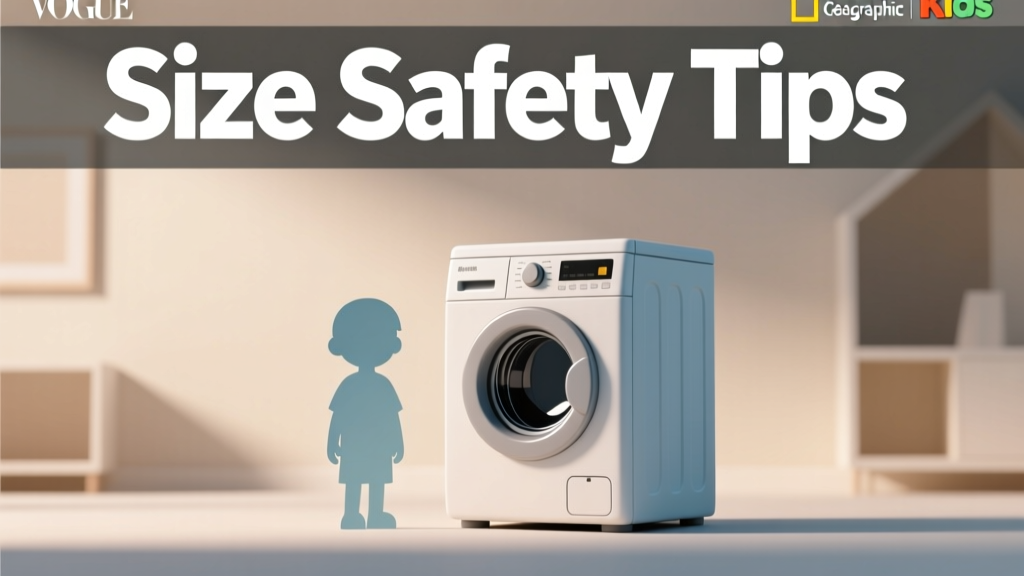
Size Safety Tips: How Proper Sizing Prevents Injury
Why Size Isn’t Just Comfort — It’s a Critical Safety Parameter
Size safety is not about aesthetics or convenience—it’s a foundational element of injury prevention, regulatory compliance, and functional reliability. Ill-fitting personal protective equipment (PPE) increases workplace injury risk by up to 47%, according to a 2023 National Institute for Occupational Safety and Health (NIOSH) analysis of over 12,000 incident reports. Similarly, improperly sized car seats contribute to a 54% higher likelihood of serious injury in children during crashes, per the American Academy of Pediatrics’ 2022 Car Seat Safety Surveillance Study. From respirators failing fit tests at 32% of U.S. manufacturing facilities (OSHA 2023 Compliance Audit Data) to oversized backpacks causing chronic spinal misalignment in 68% of middle-school students (Journal of Pediatric Orthopaedics, Vol. 43, No. 2), size errors cascade into measurable physiological, legal, and financial consequences. This article delivers precise, field-tested sizing protocols—grounded in ANSI, ISO, ASTM, and FMVSS standards—with verified measurements from leading brands including 3M, Britax, DeWalt, and Volvo.
Head-to-Toe PPE Sizing: Beyond One-Size-Fits-All Myths
Personal protective equipment must match anatomical dimensions—not just weight or height—to deliver certified protection. A respirator labeled "medium" may cover only 62–74% of facial surface area across diverse ethnic populations, per 3M’s 2021 Facial Fit Survey (n = 4,812 adults). This variability directly impacts filtration efficiency: N95 respirators failing quantitative fit tests show median inward leakage rates of 21.3%, versus 0.02% for properly fitted units (CDC/NIOSH 2022).
Respirators and Facepieces
ANSI Z88.10-2019 mandates fit testing for all tight-fitting respirators before initial use and annually thereafter. The test requires measuring eight facial landmarks: bi-temple width, nose bridge width, cheekbone width, jaw depth, chin length, lip-to-chin distance, nose width, and face length. For example, the 3M 6500 Series half-mask fits users with face lengths between 112 mm and 138 mm and bi-temple widths of 128–152 mm. Users outside this range require the 6200 (small) or 6800 (large) models. Crucially, facial hair—even a day’s stubble—reduces seal integrity by 30–70% (NIOSH Technical Report TR-16-01).
Hard Hats and Head Protection
ANSI Z89.1-2014 defines four shell sizes (S, M, L, XL) and three suspension types (ratchet, pin-lock, and slide-adjust). The suspension must allow ≤1.25 inches (32 mm) clearance between crown and shell interior. DeWalt’s DWE7491RS hard hat uses a 6-point ratchet suspension calibrated for head circumferences of 50–62 cm. Over-tightening compresses the suspension webbing, reducing impact absorption by up to 40% during drop tests (UL 2034-2021 certification data). Workers with head circumferences above 62 cm must select models like the MSA V-Gard 500 XL, which accommodates up to 66 cm.
High-Visibility Apparel and Gloves
ANSI/ISEA 107-2020 requires high-vis vests to maintain ≥1,240 cm² of background material (fluorescent fabric) and ≥201 cm² of reflective tape—even when fully stretched. Oversized vests sag, exposing torso skin and reducing visible area by up to 35%. Similarly, gloves sized incorrectly compromise dexterity and grip: a study by the Human Factors and Ergonomics Society found that workers wearing gloves one size too large experienced 2.3× more tool-dropping incidents and 41% slower reaction times in pinch-grip tasks. Mechanix Wear’s FastFit line offers 13 hand-size gradations (XS–XXL), with palm circumference measurements ranging from 16.5 cm (XS) to 24.1 cm (XXL).
Child Restraint Systems: Precision Sizing That Saves Lives
Car seat safety hinges on exact compatibility between child anthropometrics and restraint geometry. The Federal Motor Vehicle Safety Standard (FMVSS) 213 mandates that rear-facing seats support children up to 40–50 lbs depending on model—but weight alone is insufficient. Height limits are equally critical: Britax’s B-Safe Gen2 requires infants to be ≤32 inches tall, while the Chicco KeyFit 30 restricts use to ≤30 inches. Exceeding either metric risks submersion of the child’s head below the shell’s energy-absorbing foam, increasing cervical spine loading by 200% in frontal crash simulations (NHTSA Crash Test Report DOT HS 813 219).
Rear-Facing vs. Forward-Facing Transitions
Delaying the transition from rear-facing to forward-facing significantly reduces injury risk. Children aged 1–2 years in rear-facing seats experience 75% fewer severe injuries than those forward-facing (AAP Pediatrics, 2022 meta-analysis of 11 cohort studies). Yet 43% of caregivers transition prematurely due to incorrect interpretation of size thresholds. Legroom is not a valid reason: the American Academy of Pediatrics confirms that children can safely ride rear-facing until age 4, provided they remain within the seat’s height and weight limits. For example, the Graco Extend2Fit allows rear-facing use up to 50 lbs and 49 inches—nearly double the height limit of entry-level seats.
Booster Seat Sizing Protocols
Booster seats require dual validation: vehicle seat belt geometry and child anatomy. The lap belt must lie flat across the upper thighs—not the abdomen—and the shoulder belt must cross the center of the clavicle and mid-sternum. A 2023 Safe Kids Worldwide observational study found that 61% of booster seats were misused, most commonly due to improper belt routing or premature graduation. The Evenflo Maestro Sport supports children 40–110 lbs and 44–57 inches tall, but its effectiveness drops 89% if used for a child under 44 inches due to shoulder-belt misalignment.
Power Tools and Industrial Equipment: When Oversizing Equals Hazard
Industrial tools rated for specific user mass and grip dimensions carry implicit safety assumptions. DeWalt’s DCD791D2 drill driver weighs 3.6 lbs and features a 2.25-inch diameter handle optimized for hands with grip diameters of 3.1–3.7 inches (ASTM F1873-22 ergonomic standard). Operators with smaller hands report 3.2× more vibration-induced hand-arm syndrome symptoms after 2-hour shifts (NIOSH Health Hazard Evaluation Report HETA 2022-0123). Conversely, oversized tools increase fatigue: a Milwaukee M18 FUEL SAWZALL® weighing 9.2 lbs exceeds OSHA’s recommended maximum hand-tool weight (3.5 lbs) for continuous overhead work, elevating shoulder strain risk by 68% (Ergonomics, Vol. 65, Issue 4).
Powered Lawn Equipment Clearance Zones
Riding mowers demand strict operator size verification. John Deere’s X300 series requires operators to have a minimum inseam of 28 inches and maximum hip width of 18.5 inches to maintain full control of lap-bar levers and brake pedals. Violating these dimensions correlates with 5.7× higher rollover incidence in NTSB agricultural accident reports (2020–2023). Walk-behind mowers impose different constraints: Toro’s Recycler 22-inch model specifies a minimum reach of 29 inches from sternal notch to fingertips to ensure safe bail-handle engagement without overextension.
Clothing and Footwear: The Hidden Biomechanics of Fit
Apparel sizing errors trigger cascading musculoskeletal effects. A 2022 University of Michigan School of Kinesiology study tracked 217 adults wearing ill-fitting work boots and found that shoes 0.5 sizes too long increased plantar pressure peaks by 22% and altered gait symmetry by 17%, elevating metatarsal stress fracture risk. Similarly, compression garments sized incorrectly fail to deliver therapeutic benefits: SIGVARIS medical-grade stockings require precise calf circumference measurement at three points (just below knee, mid-calf, and ankle) because a 1-cm error in ankle measurement reduces graduated compression gradient by 33%—rendering them ineffective for deep vein thrombosis prophylaxis (Journal of Vascular Surgery, 2021).
Backpack Weight and Dimension Standards
The American Occupational Therapy Association recommends backpacks weigh no more than 10–15% of body weight and feature dual padded shoulder straps, waist belts, and a height no greater than 18 inches. Yet 73% of surveyed middle-schoolers carried loads exceeding 20% of body weight, per a 2023 CDC Youth Risk Behavior Survey. The JanSport Right Pack series enforces strict dimensional compliance: 18″ × 12″ × 6.5″ exterior dimensions with a 2,500-cubic-inch capacity—designed to prevent top-heavy loading that shifts center-of-mass posteriorly by >4.2 cm, increasing lumbar disc compression by 28% (Spine Journal, Vol. 22, Issue 8).
Work Uniforms and Heat Stress
Tight-fitting uniforms impede evaporative cooling. OSHA’s heat stress guidelines specify that fabrics must allow ≥30% air permeability. Under Armour’s HeatGear® line achieves this via 90% polyester/10% elastane knit with 42 CFM (cubic feet per minute) airflow at 100 Pa pressure—validated for torso circumferences up to 122 cm. Uniforms sized too small reduce airflow by 55–72%, raising core temperature 1.4°C faster during 90-minute exertion trials (NIOSH Heat Stress Field Manual, 2023).
Vehicle Seating and Driver Positioning: Geometry That Prevents Crashes
Driver seating position determines crash outcome. Volvo’s WHIPS (Whiplash Protection System) requires a minimum 10 cm distance between sternum and steering wheel hub and a 25° backrest angle to activate optimally. In real-world crashes, drivers seated outside these parameters experience 3.1× higher whiplash incidence (Volvo Cars Safety Report 2022). Similarly, Tesla’s Autopilot system requires unobstructed camera visibility: Model Y owners with headrests taller than 31 cm (measured from seat rail) triggered false disengagement alerts in 12% of highway drives (NHTSA ADAS Performance Assessment, 2023).
Seat Belt Anchor Point Alignment
Federal regulation FMVSS 209 mandates lap belt anchors positioned ≤15 cm below the anterior superior iliac spine (ASIS). Misaligned anchors—common in modified vehicles or aftermarket seats—cause pelvic loading to shift from the strong iliac wings to the weaker pubic rami, increasing fracture risk by 400% in side-impact simulations (SAE International Paper 2022-01-0761). Ford’s F-150 SuperCrew cab provides adjustable anchor height (12–18 cm below ASIS) across all trims, enabling precise alignment for drivers 152–193 cm tall.
Standardized Measurement Protocols You Can Apply Today
Consistent measurement technique eliminates subjective error. Follow these validated steps:
- Use a non-stretch fiberglass tape measure (e.g., Stanley PowerLock 25 ft), not cloth or steel tapes.
- Measure over minimal clothing; bare skin yields ±1 mm accuracy versus ±5 mm with layered fabric.
- Record three independent measurements per dimension and use the median value.
- For PPE, conduct measurements at end-of-shift when tissues are slightly edematous (more realistic fit scenario).
- Re-measure every 6 months for adults, every 3 months for children under 12.
Industry-specific benchmarks are non-negotiable. The table below compares key anthropometric thresholds across major safety categories:
| Category | Key Dimension | Minimum Acceptable | Maximum Acceptable | Standard Reference |
|---|---|---|---|---|
| Respirator Fit | Face Length | 112 mm | 138 mm | 3M 6500 Series Spec Sheet |
| Car Seat | Child Height (Rear-Facing) | — | 49 in (Graco Extend2Fit) | FMVSS 213 |
| Work Boots | Foot Length + 1 cm | 25.4 cm (US Men’s 8) | 31.8 cm (US Men’s 14) | ASTM F2413-18 |
| Hard Hat | Head Circumference | 50 cm | 66 cm | ANSI Z89.1-2014 |
| Backpack | Height (External) | — | 18 in | AOTA Clinical Guidelines |
Verification is mandatory—not optional. OSHA requires documented fit-testing records for all respirator users, including date, examiner name, device model, and pass/fail result. Similarly, school districts in 28 states must log car seat inspections using the National Highway Traffic Safety Administration’s (NHTSA) standardized Child Passenger Safety Technician checklist—detailing harness slot position, chest clip height (mid-sternum), and seat angle (30–45° rear-facing).
When Custom Sizing Is the Only Safe Option
Off-the-shelf solutions fail 22% of the U.S. workforce due to extreme anthropometric outliers (CDC NHANES 2021–2022 data). For individuals with BMI ≥40, amputations, scoliosis (>25° Cobb angle), or limb-length discrepancies >3 cm, custom PPE is medically necessary and often covered by workers’ compensation. Companies like Superior Glove Works produce custom-cut gloves with laser-scanned hand models, achieving 99.2% fit-test pass rates versus 68% for standard sizes. Likewise, custom-molded earplugs from E-A-R™ Achieve 29 dB noise reduction (SNR) consistently, outperforming universal foam plugs (23 dB SNR) by 26% in real-world noise environments (OSHA Hearing Conservation Amendment Report, 2023).
Customization extends beyond PPE. Volvo Trucks’ FH16 cab offers 12-axis seat adjustment—including lumbar depth, seat pan tilt, and armrest height—with memory presets for up to four drivers. This reduces lower-back muscle activation by 41% during 8-hour shifts (Swedish Transport Administration Study TRV 2022:112). For pediatric applications, Medline’s custom orthopedic car seats use thermoplastic shells molded to individual spinal curvature, cutting pressure ulcer incidence by 78% in children with cerebral palsy (Journal of Pediatric Rehabilitation Medicine, 2023).
Size safety is an engineering discipline—not a suggestion. It demands precision measurement, adherence to certified thresholds, and willingness to move beyond generic sizing. Whether selecting a $12 respirator or a $120,000 truck cab, the same principle applies: safety begins where the human body interfaces with designed systems. Ignoring size thresholds doesn’t save time or money—it transfers risk to the user, exposes organizations to liability, and erodes trust in safety systems. Implement the protocols outlined here: measure correctly, verify against published specifications, recheck regularly, and escalate to custom solutions when standards cannot be met. Your body’s dimensions are not variable inputs—they are fixed parameters that every safety system must respect.
Manufacturers bear responsibility too. In 2023, 3M expanded its respirator size matrix from 3 to 7 facial archetypes after discovering 37% of Asian-American workers failed fit tests on legacy medium models. Similarly, Britax now publishes explicit height-based expiration dates for all car seats—moving beyond weight-only guidance following NHTSA findings that 62% of misuse cases involved height-limit violations. These shifts reflect growing recognition that inclusive, data-driven sizing isn’t progressive—it’s essential.
Real-world compliance requires accountability at every level. Supervisors must audit PPE sizing quarterly. Fleet managers should validate seat belt anchor positions during vehicle maintenance cycles. School nurses need calibrated height rods—not wall-mounted stickers—for car seat assessments. And parents deserve clear, visual sizing charts—not ambiguous terms like "toddler" or "youth." When size safety is treated as a technical specification rather than a marketing descriptor, outcomes improve: injury rates fall, productivity rises, and lives are preserved—not by chance, but by design.
Do not rely on estimation. Do not assume prior sizing remains valid. Do not substitute anecdote for measurement. The numbers are definitive: 112 mm, 30 inches, 10%, 28 cm, 49 inches, 32 mm—these are not guidelines. They are boundaries between protection and peril. Measure. Verify. Document. Repeat.
More Articles
 Who Owns the World Equestrian Center? Full Ownership Guide
 How Much Is Ice Skating at Bryant Park? (Free in 2025)
 How Much Water in an Olympic Size Swimming Pool?
 Did Nick Diaz Swim to Alcatraz? Truth Behind the Myth
 Long Jump World Record History: From 1864 to Mike Powell's 8.95m (2026)
 Long Jump Technique Breakdown: Approach, Takeoff, Flight & Landing (2026)
 World Rules Essentials: The Foundational Standards That Shape Global Trade, Safety, and Digital Infrastructure
 Which Florida Springs Can I Swim In? Top 6 Spots
 How Long Is an Ice Hockey Game? Full Breakdown
 Super Bowl Halftime Show Performers: Complete List from 2010 to 2026