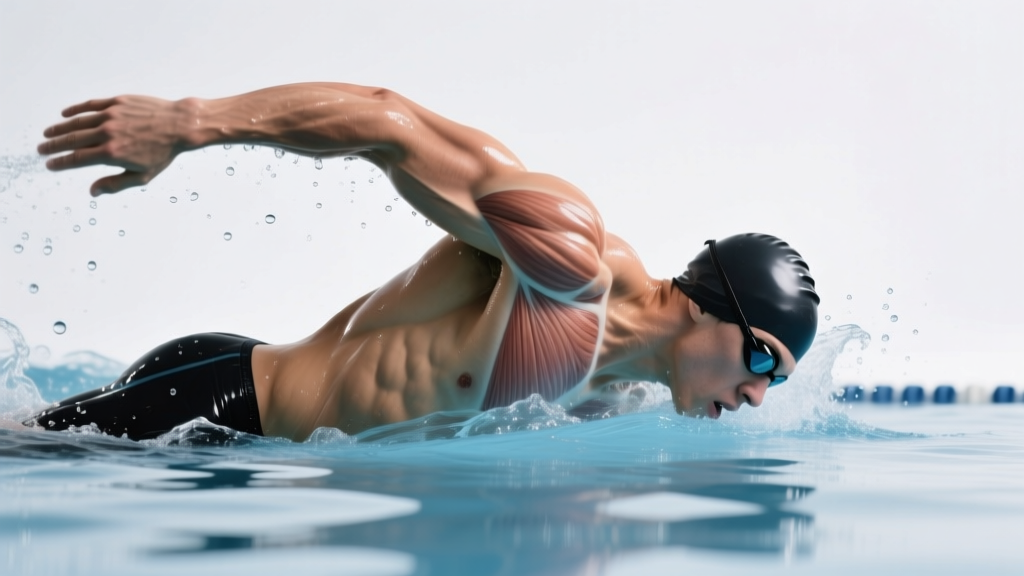
What Muscles Work When Swimming? Full Breakdown
Swimming is a full-body workout that primarily engages the deltoids, pectorals, latissimus dorsi, triceps, core muscles (including rectus abdominis and obliques), glutes, and quadriceps. The specific muscle activation varies by stroke—freestyle emphasizes shoulders and core, breaststroke targets inner thighs and chest, while butterfly intensely recruits the upper back and abdominal muscles.
How Swimming Engages Major Muscle Groups
Swimming activates nearly every major muscle group in the body due to its dynamic, resistance-based nature. Water provides 12-14 times more resistance than air, making each movement a functional strength exercise. Unlike land-based workouts, swimming delivers low-impact, high-engagement training that promotes muscular endurance, joint stability, and cardiovascular health simultaneously.
Primary Muscles Worked During Different Strokes
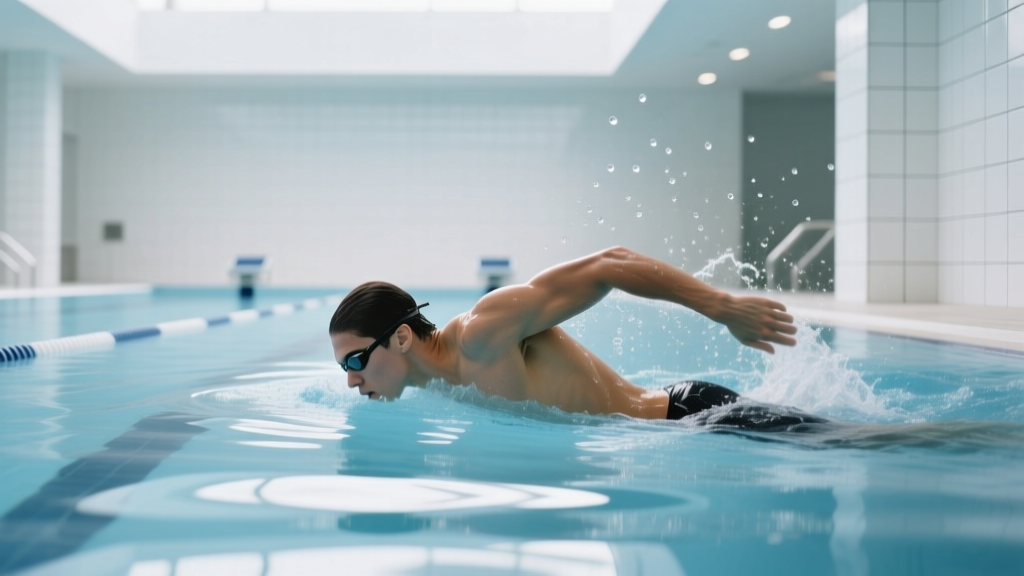
- Freestyle (Front Crawl): Emphasizes shoulder rotation and continuous propulsion, heavily engaging the deltoids, latissimus dorsi, and triceps.
- Backstroke: Similar to freestyle but performed on the back; activates the posterior chain including rear deltoids and lower back stabilizers.
- Breaststroke: Involves a frog-like kick and simultaneous arm pull, placing significant demand on the pectoralis major, adductors, and quadriceps.
- Butterfly: Requires powerful undulation and dual-arm recovery, making it the most demanding stroke for the core, latissimus dorsi, and anterior deltoids.
Muscle Activation Levels by Stroke (EMG Data)
| Muscle Group | Freestyle (% MVC*) | Backstroke (% MVC) | Breaststroke (% MVC) | Butterfly (% MVC) |
|---|---|---|---|---|
| Deltoids | 68% | 65% | 52% | 75% |
| Pectoralis Major | 58% | 50% | 70% | 68% |
| Latissimus Dorsi | 72% | 70% | 55% | 80% |
| Triceps | 60% | 58% | 48% | 70% |
| Rectus Abdominis | 45% | 42% | 50% | 85% |
| Gluteus Maximus | 38% | 36% | 45% | 50% |
The table shows electromyography (EMG) data measuring muscle activation as a percentage of maximum voluntary contraction (MVC). Butterfly consistently produces the highest activation in key upper body and core muscles, especially the deltoids, lats, and abs. Breaststroke uniquely emphasizes the pectorals and inner thigh adductors due to its wide arm pull and whip kick mechanics.
Secondary Muscles and Stabilizers Involved
Beyond primary movers, swimming relies on deep stabilizing muscles to maintain form and reduce drag. These include the rotator cuff (supraspinatus, infraspinatus), transverse abdominis, erector spinae, and tibialis anterior. Proper technique ensures these smaller muscles support efficient movement without overloading joints.
Common Technique Errors That Reduce Muscle Engagement
- Overgliding in freestyle, which decreases continuous propulsion and reduces lat engagement.
- Wide breaststroke kicks, leading to inefficient adductor use and knee strain.
- Excessive head lifting in butterfly, disrupting core alignment and reducing abdominal activation.
- Collapsed elbow in backstroke recovery, diminishing triceps and deltoid contribution.
Benefits of Swimming for Muscle Balance and Joint Health
Swimming promotes balanced muscular development by equally working opposing muscle groups (e.g., chest vs. back). Its non-weight-bearing nature reduces injury risk while improving neuromuscular coordination. Regular swimmers exhibit enhanced postural control and reduced incidence of shoulder impingement when proper stroke mechanics are maintained.
Frequently Asked Questions About Swimming and Muscle Activation
Does swimming build chest muscles?
Yes, particularly breaststroke and butterfly engage the pectoralis major at 70% and 68% of maximum voluntary contraction, respectively, making them effective for chest development.
Which swimming stroke works the abs the most?
Butterfly stroke activates the rectus abdominis at up to 85% MVC due to the rhythmic undulation and need for core stabilization throughout the stroke cycle.
Can swimming help tone arms?
Absolutely. All strokes involve repetitive pulling motions that engage the triceps, deltoids, and latissimus dorsi, contributing to improved arm definition and upper body strength over time.
Is swimming good for building leg muscles?
While not as intense as weight training, swimming—especially breaststroke and flutter kicks—activates quadriceps, hamstrings, and glutes. Resistance from water enhances muscular endurance in the lower body.
Why do my shoulders hurt when swimming freestyle?
Shoulder pain often results from poor stroke mechanics, such as crossing the midline during entry or insufficient shoulder roll. Strengthening the rotator cuff and improving scapular stability can prevent injury.
More Articles
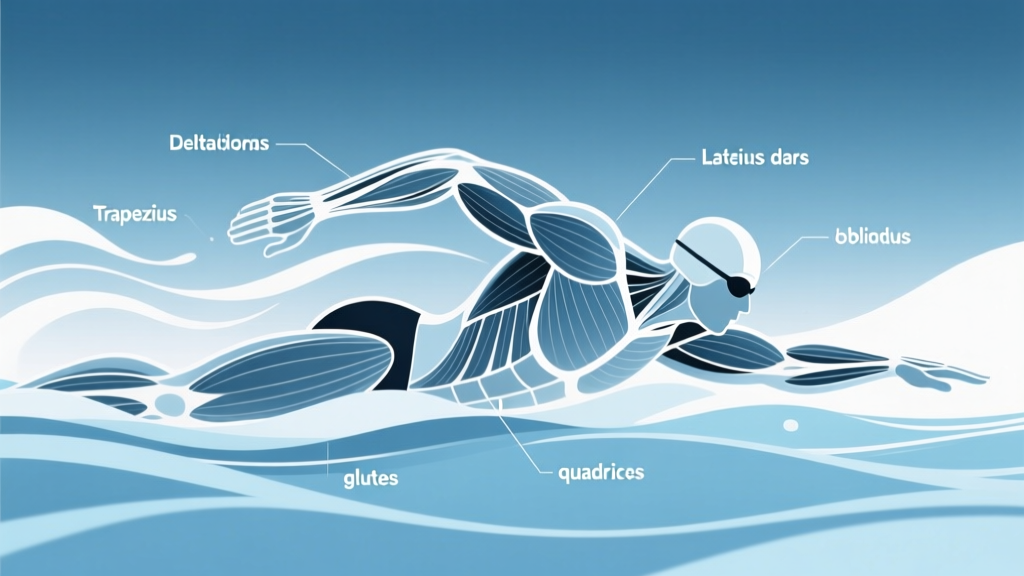 What Muscles Does Swimming Use? Full Breakdown
 How High Does LeBron Jump? Vertical Leap Revealed
 Where Can I Go Ice Skating Near Me? Top Local Spots
 Where Can I Ride Go Karts Near Me? Top Local Tracks
 What Does Row Mean in Sports? Definition & Uses
 Can Cows Swim? Yes, Here's How and Why
 How Much Does a MotoGP Motorcycle Cost in 2025?
 How Many Gallons in an Olympic Pool?
 How Many Calories Does Swimming a Mile Burn?
 Golf Ball Compression: Match Ball to Swing Speed