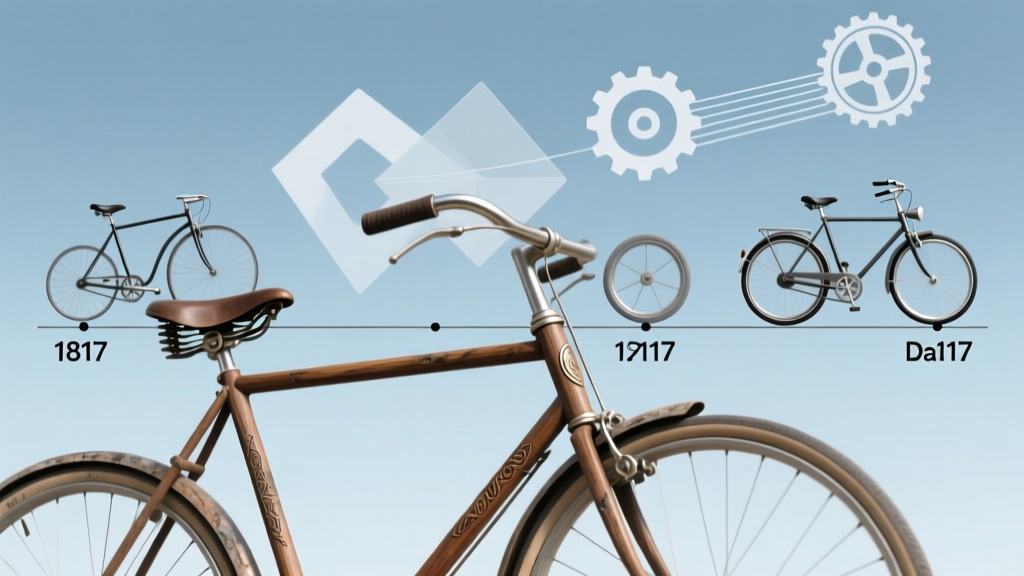
Who Invented the Bicycle? The True Origins
The bicycle was not invented by a single person, but evolved through multiple innovations; however, Karl von Drais is credited with inventing the first two-wheeled, steerable, human-powered machine in 1817, known as the 'Draisine' or 'Laufmaschine,' widely recognized as the precursor to the modern bicycle.
Who Invented the Bicycle? A Historical Overview
The invention of the bicycle was a gradual process spanning decades, involving contributions from several inventors across Europe. While no single individual can be credited with creating the modern bicycle in one step, the foundational design emerged in the early 19th century. The earliest direct ancestor of today's bike was developed by German baron Karl von Drais in 1817. His invention, the Draisine, featured a wooden frame, two same-size wheels, and a steering mechanism—allowing riders to propel themselves by pushing their feet against the ground.
This breakthrough laid the groundwork for future enhancements, including pedals, chains, and pneumatic tires, which would come later in the 19th century. The evolution of the bicycle reflects both technological innovation and societal needs, particularly during periods of transportation shortages and industrial advancement.
Key Inventors in Bicycle Development
Several pioneers played crucial roles in transforming the basic Draisine into the efficient, comfortable bicycles we use today. Below are some of the most influential figures:
- Karl von Drais (Germany) – Invented the first steerable two-wheeled vehicle in 1817.
- Pierre Michaux and Pierre Lallement (France/USA) – Credited with adding pedals to the front wheel in the 1860s, creating the 'boneshaker.'
- James Starley (UK) – Developed the 'penny-farthing' in the 1870s, featuring a large front wheel for greater speed.
- John Kemp Starley (UK) – Introduced the 'Rover Safety Bicycle' in 1885, which had equal-sized wheels and a chain drive to the rear wheel—essentially the blueprint of the modern bike.
- John Boyd Dunlop (UK) – Re-invented pneumatic tires in 1888, greatly improving comfort and efficiency.
Why Was the Bicycle Invented?
The initial motivation behind the bicycle’s invention stemmed from a practical crisis: the Year Without a Summer in 1816, caused by the eruption of Mount Tambora. This led to widespread crop failures and the death of many horses, prompting Karl von Drais to develop a horseless mode of personal transport.
Evolution of Bicycle Design: From 1817 to Modern Day
The bicycle has undergone dramatic changes since its inception. Each phase addressed limitations in speed, safety, comfort, and accessibility.
Major Stages in Bicycle Evolution
- 1817 – Draisine: No pedals; foot-powered.
- 1860s – Boneshaker: First pedal-equipped bikes; made of wood and iron.
- 1870s – Penny-Farthing: Large front wheel for higher speeds; dangerous design.
- 1885 – Safety Bicycle: Chain-driven rear wheel, equal-sized wheels, much safer.
- 1888 – Pneumatic Tires: Inflatable rubber tires improved ride quality.
- 20th Century – Gears, Brakes, Materials: Introduction of derailleur gears, hand brakes, aluminum, and carbon fiber frames.
| Invention | Year | Inventor | Country | Key Innovation |
|---|---|---|---|---|
| Laufmaschine (Draisine) | 1817 | Karl von Drais | Germany | First steerable two-wheeled human-powered vehicle |
| Velocipede (Boneshaker) | 1863 | Pierre Michaux / Pierre Lallement | France / USA | Added pedals to front wheel |
| Penny-Farthing | 1871 | James Starley | UK | Larger front wheel for increased speed |
| Rover Safety Bicycle | 1885 | John Kemp Starley | UK | Chain drive to rear wheel, equal-sized wheels |
| Pneumatic Tire | 1888 | John Boyd Dunlop | UK | Improved comfort and traction with air-filled rubber |
| Derailleur Gear System | 1937 | Paul de Vivie (popularized) | France | Multiple gears for varied terrain |
The data highlights how the bicycle evolved from a simple walking aid into a sophisticated mode of transport through incremental engineering advances. Notably, the shift from the penny-farthing to the safety bicycle in the 1880s marked a turning point in mass adoption due to improved stability and accessibility. Innovations like pneumatic tires and derailleur gears further expanded cycling's utility across different environments.
Global Impact of the Bicycle
The bicycle revolutionized personal mobility, especially in the late 19th and early 20th centuries. It provided affordable transportation for millions, contributed to women's emancipation by offering independent travel, and became a symbol of freedom and sustainability.
- Bicycles played a key role in urban development and reduced reliance on animal transport.
- Today, over one billion bicycles are in use worldwide, serving commuting, recreation, and competitive purposes.
- Cycling is promoted globally as a green alternative to motor vehicles, helping reduce carbon emissions and traffic congestion.
Frequently Asked Questions About the Invention of the Bicycle
Who is considered the inventor of the first bicycle?
Karl von Drais is widely regarded as the inventor of the first bicycle-like machine—the 'Laufmaschine'—in 1817. Though it lacked pedals, it introduced the concept of a steerable, two-wheeled, human-powered vehicle, forming the foundation for all future bicycle designs.
When was the first pedal bicycle invented?
The first pedal-equipped bicycle, known as the 'velocipede' or 'boneshaker,' was developed in the 1860s. Pierre Lallement, a Frenchman working in the U.S., received the first patent for a pedal-driven bicycle in 1866, building upon earlier work by Pierre Michaux in France.
What was the 'penny-farthing' and why was it important?
The penny-farthing, popular in the 1870s, featured a large front wheel and a small rear wheel. Its design allowed higher speeds because each pedal rotation moved the bike farther. However, its high center of gravity made it dangerous. It was important as a transitional design that highlighted the need for safer alternatives.
How did the safety bicycle change cycling?
Invented by John Kemp Starley in 1885, the safety bicycle used a chain drive to power the rear wheel and had equally sized wheels. This made it much more stable and accessible than the penny-farthing, leading to a boom in cycling popularity among all ages and genders, including women.
What role did pneumatic tires play in bicycle development?
Invented by John Boyd Dunlop in 1888, pneumatic (air-filled) tires dramatically improved ride comfort and efficiency. They reduced rolling resistance and vibration, making bicycles more practical for everyday use and long-distance travel, and remain standard on most bikes today.
More Articles
 When Does Fishing Season Start? Key Dates by State
 Where to Ski in Colorado: Top Resorts & Tips
 CrossFit Open 2025 Dates: Start, End & How to Compete
 A and B Cycle Training Explained
 How Many Calories Do You Burn Snowboarding?
 Where Is Chicago Bears Training Camp Held in 2025?
 Who Won the CrossFit Games 2024? Final Results
 How Fast Do You Fall When Skydiving? Speed Explained
 Hydration Guide for Athletes: Before, During, After
 How Many People Die a Year from Skydiving? Stats & Safety