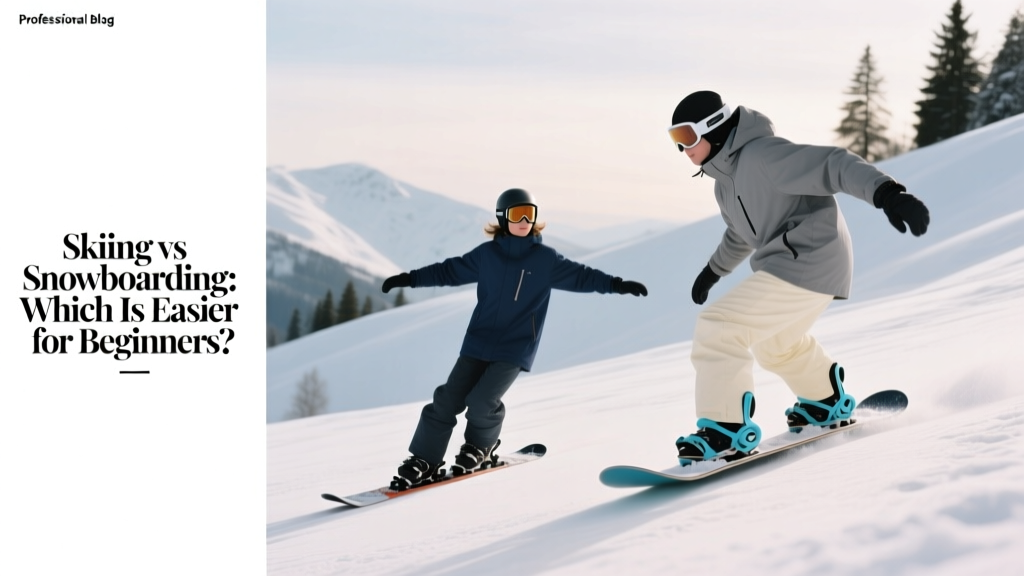
Skiing vs Snowboarding: Which Is Easier for Beginners?
For most beginners, skiing is easier to learn than snowboarding, with a shorter initial learning curve and more intuitive balance. However, snowboarding can feel more natural once basic skills are mastered, and many find it easier to progress to intermediate levels after the first few days.
Learning Curve: Skiing vs Snowboarding
When comparing the difficulty of learning skiing versus snowboarding, the first 1–3 days are critical. Most newcomers find skiing easier at the start because each leg operates independently, allowing for better balance and control during early maneuvers.
Why Skiing Feels Easier Initially
- Independent leg movement allows gradual weight shifting
- Easier to stop and regain balance using snowplow technique
- Walking and getting up after falls is simpler with free-heel bindings
- Beginner slopes are typically less intimidating on skis
Why Snowboarding Gets Easier Over Time
- Fewer coordination demands between limbs once stance is stable
- No "skier's wedge" confusion—turning relies on unified body motion
- Less risk of equipment crossing and causing falls (common in beginner skiing)
- Many riders report faster progression from beginner to intermediate level
Skill Progression Timeline Comparison
| Skill Level | Skiing (Days to Achieve) | Snowboarding (Days to Achieve) |
|---|---|---|
| Beginner: Stop & Turn Safely | 1–2 | 3–4 |
| Intermediate: Linked Turns, Blue Runs | 5–7 | 6–8 |
| Advanced: Black Diamond, Carving | 20+ hours | 25+ hours |
| Average Lesson Hours to Comfortable Riding | 6–8 hours | 8–10 hours |
The data shows that while skiing requires fewer hours to reach basic competency, snowboarders often experience smoother progression beyond the beginner phase. Instructors note that snowboarding’s steeper initial challenge pays off in more consistent turning mechanics later on.
Physical Demands and Balance Requirements
Skiing emphasizes lower-body strength and coordination, particularly in knee flexion and edge control. Snowboarding places greater demand on core stability and ankle flexibility due to the fixed-foot stance.
Common Physical Challenges by Discipline
- Skiing: Leg fatigue from asymmetric movements, difficulty coordinating poles and turns
- Snowboarding: Wrist strain from frequent falls, calf fatigue due to boot pressure
- Both sports require strong proprioception, but snowboarding challenges balance more initially
Injury Risk and Safety Considerations
According to the National Ski Areas Association, snowboarders have a 15–30% higher chance of injury than skiers, mostly due to falls during learning phases. However, skiers face a higher risk of severe knee injuries (e.g., ACL tears).
- Snowboarding injuries often affect wrists, shoulders, and ankles
- Skiing injuries commonly involve knees and lower legs
- Helmet use reduces head injury risk by up to 60% in both sports
Equipment Differences and Mobility
Skiing offers greater mobility on flat terrain thanks to free-moving heels and poles. Snowboarders must unclip or shuffle when walking short distances, which can be cumbersome.
Key Equipment Factors Affecting Ease of Use
- Poles in skiing aid balance and timing
- Snowboard boots offer ankle support but limit walking ability
- Ski bindings release automatically during falls; snowboard bindings do not
- Modern ski designs (rockered skis) reduce catching edges for beginners
Which Is Easier: Final Verdict
Skiing is generally easier for beginners due to its forgiving nature and familiar stepping motion. However, personal preference, physical fitness, and prior board experience (e.g., skateboarding, surfing) play major roles. Those with board sports backgrounds may find snowboarding more intuitive despite the initial fall rate.
FAQs About Skiing vs Snowboarding Difficulty
Is skiing easier than snowboarding for adults over 40?
Yes, many adults over 40 find skiing easier due to better balance control and reduced fall impact on joints. Skiing also allows more natural movement patterns, which can be beneficial for those with limited ankle mobility or prior knee issues.
Does prior experience in other sports help with snowboarding?
Absolutely. People with experience in skateboarding, surfing, or wakeboarding tend to pick up snowboarding faster because they’re already accustomed to balancing on a single board and initiating turns with their upper body.
How many lessons do I need to be comfortable on skis or a snowboard?
Most beginners become comfortable after 3–5 professional lessons. Skiers often feel confident after 3 sessions, while snowboarders may need 4–5 to master falling safely, turning, and riding chairlifts independently.
Is one sport cheaper to start than the other?
Rental costs are similar, but skiing gear is typically 10–15% more expensive to purchase outright due to additional equipment like poles and complex binding systems. Snowboarders save on poles and have fewer components overall.
Can you switch from skiing to snowboarding (or vice versa) easily?
Yes, many skiers learn snowboarding later in life and vice versa. Transferable skills include slope awareness, speed control, and understanding snow conditions. However, muscle memory from skiing can interfere with proper snowboard stance and turning technique initially.
More Articles
 Where to Buy Skateboards: Best Stores & Brands 2025
 How Many Calories Does Cycling Burn? (By Weight & Speed)
 A Surfing Life by William Finnegan: Key Insights
 Best Places to Go Skydiving in 2025
 Who Developed CrossFit? The Full Story
 How Long Is NFL Training Camp? Duration & Schedule Explained
 How to Repair Tennis Equipment
 Can Yoga Burn Calories? Yes, Here's How Much
 Where to Go Snowboarding: Top Global Destinations
 How Often Should You Do Pilates? Optimal Weekly Frequency