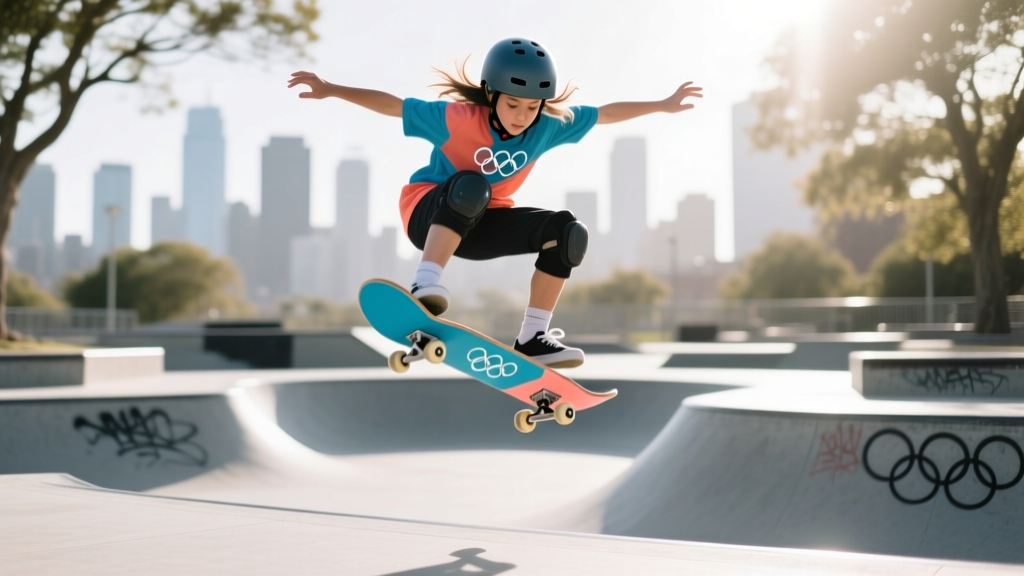
Why Are Olympic Skateboarders So Young?
Olympic skateboarders are so young because the sport emphasizes agility, adaptability, and a fearless approach to risk—traits common in youth. Most elite skaters start before age 10, accumulating thousands of hours of practice by their teens. Unlike traditional Olympic sports with structured coaching pathways, skateboarding evolved from street culture, where innovation and creativity flourish early. Physical peak for technical skills occurs earlier in skateboarding, and late specialization is typical, allowing natural talent to emerge quickly. These factors combine to make youth a competitive advantage at the highest levels.
Why Youth Dominates Olympic Skateboarding
The average age of Olympic skateboarders is strikingly low compared to most Olympic disciplines. In the 2024 Paris Olympics, the median age of skateboarders was just 17. This trend reflects the unique nature of skateboarding as a skill-intensive, creativity-driven sport where physical and cognitive flexibility give younger athletes an edge.
Key Factors Behind Young Athletes' Success
- Early Skill Acquisition: Most elite skateboarders begin between ages 5 and 10, mastering complex maneuvers through repetition and play.
- Mental Adaptability: Younger brains are more neuroplastic, enabling faster learning of new tricks and recovery from falls.
- Cultural Roots: Skateboarding originated in youth-driven subcultures, prioritizing self-expression over formal training.
- Lower Body Weight: Lighter frames reduce impact stress, allowing quicker aerial rotation and safer landings.
- Risk Tolerance: Adolescents often exhibit higher risk-taking behavior, essential for attempting dangerous stunts.
Developmental Timeline of Elite Skateboarders
Unlike gymnastics or swimming, skateboarding lacks standardized youth development programs. Instead, progression is self-directed, accelerated by access to parks, mentorship, and video-sharing platforms like YouTube and TikTok.
Stages of Skill Progression
- Ages 5–10: Introduction to board control, basic grinds, and ollies.
- Ages 11–14: Mastery of flip tricks, transitions, and competition entry.
- Ages 15–18: Refinement of style, consistency under pressure, and international exposure.
- Age 19+: Career sustainability challenges due to injury accumulation and evolving trick standards.
Comparison With Other Olympic Sports
Skateboarding's youth dominance contrasts sharply with sports requiring long-term physiological development or tactical experience.
| Sport | Average Age (2024 Olympics) | Peak Performance Age | Typical Start Age |
|---|---|---|---|
| Skateboarding (Park) | 16.8 | 16–20 | 7.2 |
| Skateboarding (Street) | 17.3 | 17–21 | 7.5 |
| Gymnastics | 19.1 | 16–20 | 6.0 |
| Swimming | 22.4 | 20–24 | 8.0 |
| Track & Field | 26.7 | 25–30 | 12.0 |
| Cycling | 28.9 | 27–32 | 14.0 |
The data shows that Olympic skateboarders are among the youngest competitors, with both park and street disciplines peaking before age 21. In contrast, endurance and power-based sports favor older athletes who have completed physical maturation and accumulated years of structured training. The early start age in skateboarding—similar to gymnastics but without institutional oversight—enables rapid mastery through autonomous, interest-led practice.
Injury Rates and Career Longevity
High-impact landings and repetitive stress lead to frequent injuries, particularly ankle sprains, wrist fractures, and concussions. Younger bodies recover faster, giving adolescents a biological advantage.
Common Injuries in Competitive Skateboarding
- Ankle ligament tears (32% of reported injuries)
- Wrist fractures (28%)
- Concussions (15%)
- Shoulder dislocations (9%)
- Dental trauma (7%)
A 2023 study found that professional skateboarders sustain an average of 3.2 major injuries per year, with recovery time decreasing significantly under age 20. This supports the trend of younger athletes maintaining performance levels despite high-risk routines.
Training and Practice Patterns
Elite skateboarders log 20–30 hours per week in unstructured practice environments. Unlike coached sports, skill acquisition relies on trial, error, and peer feedback.
Practice vs. Competition Preparation
- No formal drills; learning occurs through repeated attempts.
- Video analysis used primarily for sharing highlights, not technical correction.
- Mentorship from older skaters replaces coaching.
- Competition strategy focuses on consistency, not choreography.
Frequently Asked Questions About Why Olympic Skateboarders Are So Young
Why are there no older skateboarders in the Olympics?
While older skateboarders exist, the physical demands and injury risks make sustained elite performance difficult past age 25. However, some veterans compete successfully—like 31-year-old Rune Glifberg, who qualified for the 2024 Olympics. Age limits aren’t enforced, but biological and cultural factors naturally favor youth.
Is there an age limit for Olympic skateboarding?
No official minimum or maximum age exists for Olympic skateboarding. However, World Skate requires athletes to be at least 13 years old to compete in Olympic qualifiers. This ensures physical readiness and aligns with child protection policies. There is no upper age cap, though few over 30 qualify due to performance decline.
Can someone start skateboarding late and still go pro?
Yes, but it’s extremely rare. Starting after age 15 makes reaching Olympic level highly unlikely due to the 10,000-hour rule of expertise. Late starters may succeed in niche areas like vert or longboarding, but street and park require deep muscle memory developed over childhood. Passion and access can offset late starts, but elite competition remains dominated by early adopters.
Do young skateboarders have special training programs?
Not typically. Most train independently at local parks or private facilities. Some national federations now offer support, including physiotherapy and nutrition guidance, but structured coaching is minimal. Programs in Japan, Brazil, and the U.S. are emerging, focusing on injury prevention and mental resilience rather than technique instruction.
Will Olympic skateboarders get older over time?
Possibly. As the sport matures, training science and protective gear may extend careers. Older athletes could leverage experience to compensate for reduced physical output, similar to trends in snowboarding. However, the core appeal of skateboarding—innovation and progression—will likely continue rewarding younger, more adaptable competitors.
More Articles
 How Much Is Club Pilates Per Month? (2025 Rates)
 Who Made the Snowboard? The Inventor and Key Pioneers
 A Surfing Life by William Finnegan: Key Insights
 How to Clean and Maintain Yoga Mats
 Ultimate Teams Guide: High-Performance in 2026
 Where Was Ski Patrol Filmed? Full Location Details
 How to Improve Sprint Speed: Training Techniques, Drills, and Exercises
 Which Insurance Covers Skiing & Snowboarding?
 Best Baseballs for Play: Field Guide for Coaches
 Seasonal Wardrobe Alignment for Athletes