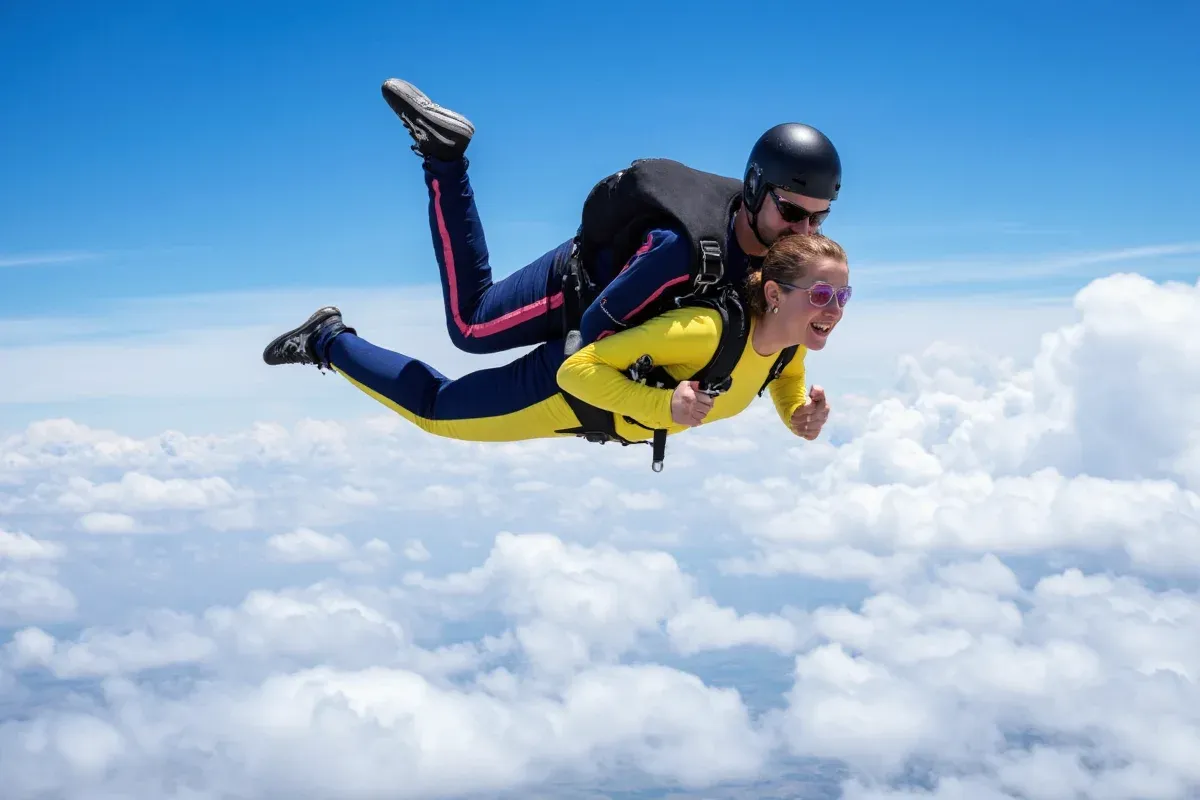
How Fast Do You Fall in Skydiving? Speed Explained
On average, a skydiver in freefall reaches a terminal velocity of about 120 miles per hour (193 km/h) within 10 to 15 seconds after jumping from the plane. This speed is maintained until the parachute is deployed, typically around 5,000 feet above ground.
Understanding Skydiving Freefall Speed
Skydiving involves falling through the atmosphere under the influence of gravity, and the rate at which you fall depends on several factors including body position, altitude, weight, and air resistance. The most common speed experienced during a recreational skydive is approximately 120 mph in a stable belly-to-earth position.
What Determines Your Falling Speed?
- Body Position: A spread-eagle or belly-down posture increases air resistance, slowing descent. A head-down or streamlined position can increase speed beyond 200 mph. \li>
- Weight and Surface Area: Heavier individuals with compact builds tend to fall faster, while lighter or broader bodies experience more drag.
- Altitude: Higher jump altitudes mean thinner air initially, allowing slightly faster acceleration before terminal velocity is reached.
- Suit Design: Specialized wingsuits or tight-fitting jumpsuits can alter aerodynamics significantly.
Stages of a Typical Skydive
A standard tandem skydive from 10,000 to 15,000 feet includes several phases, each affecting fall speed:
1. Initial Acceleration (0–10 seconds)
Immediately after exiting the aircraft, you accelerate rapidly due to gravity. There’s minimal air resistance at first, so speed increases quickly.
2. Reaching Terminal Velocity (10–15 seconds)
Air resistance balances gravitational pull, and you stop accelerating. At this point, you’re falling at a constant speed—typically 120 mph for tandem skydivers.
3. Controlled Freefall (30–60 seconds)
During this phase, instructors may adjust body position to control speed and direction. Some dives include formation skydiving or acrobatics.
4. Parachute Deployment (~5,000 feet)
The parachute opens, drastically increasing drag and reducing speed to about 10–15 mph for a safe landing.
Freefall Speeds by Body Position
| Body Position | Average Speed (mph) | Average Speed (km/h) | Typical Use Case |
|---|---|---|---|
| Belly-to-Earth (Tandem) | 120 | 193 | Beginner and tandem jumps |
| Head-Down | 150–180 | 241–290 | Advanced freeflying |
| Sit-Fly | 130–160 | 209–257 | Intermediate freeflying |
| Tracking (Arms & Legs Extended) | 100–110 | 161–177 | Lateral movement and glide |
| Wingsuit Flight | 100–150 | 161–241 | Glide ratio up to 3:1 horizontal |
The data shows that body orientation has a significant impact on freefall speed. While tandem jumpers maintain a consistent 120 mph, advanced skydivers can manipulate their form to exceed 180 mph. Wingsuits reduce vertical speed but greatly increase horizontal travel.
Factors That Influence Fall Time and Speed
While terminal velocity is relatively consistent, actual fall duration varies based on jump height and deployment altitude.
- Jump Altitude: Most skydives occur from 10,000 to 15,000 feet. Higher exits allow longer freefall times.
- Deployment Height: Parachutes are usually deployed around 5,000 feet, meaning freefall lasts from 30 to 60 seconds depending on exit altitude.
- Air Density: Colder, denser air at lower altitudes increases drag slightly, potentially reducing speed by a few mph.
- Equipment Weight: Tandem systems add mass, but the instructor controls stability, maintaining standard speeds.
Frequently Asked Questions About Skydiving Fall Speed
How fast do you fall when skydiving?
The average skydiver falls at about 120 miles per hour (193 km/h) in a belly-to-earth position. This speed is reached within 10 to 15 seconds of jumping and remains constant until the parachute opens.
How long does it take to reach terminal velocity?
It takes approximately 10 to 15 seconds to reach terminal velocity during a skydive. During this time, you accelerate from 0 to about 120 mph due to gravity before air resistance balances the force.
Can you fall faster than 120 mph while skydiving?
Yes, advanced skydivers in head-down or streamlined positions can fall between 150 and 180 mph. Speed skydiving specialists have exceeded 300 mph using specialized suits and techniques.
How long is the freefall in a typical skydive?
From 15,000 feet, freefall lasts about 60 seconds. From 10,000 feet, it lasts roughly 30 seconds. The exact duration depends on jump altitude and deployment height, usually around 5,000 feet.
Does weight affect how fast you fall when skydiving?
Yes, heavier skydivers generally fall faster due to greater gravitational force. However, surface area and body position play critical roles, so two people of different weights can fall at similar speeds with proper technique.
More Articles
 How Many Deaths from Skydiving Per Year? (2025 Data)
 How Many Ski Resorts in Colorado? 28 Top Destinations
 Basketball Rebounding Techniques: 10 Drills and Tips to Dominate the Boards
 Yoga Mat Thickness: How to Choose
 What Does a Triathlon Consist Of? Full Breakdown
 Where to Buy Ski Gear: Best Stores & Deals 2025
 Where to Buy a Ski Mask Online and In-Store (2025)
 When Is Ski Season? Dates by Region & Resort
 How Many Calories Do You Burn Snow Skiing?
 How Many Miles Is a Triathlon? Full Breakdown