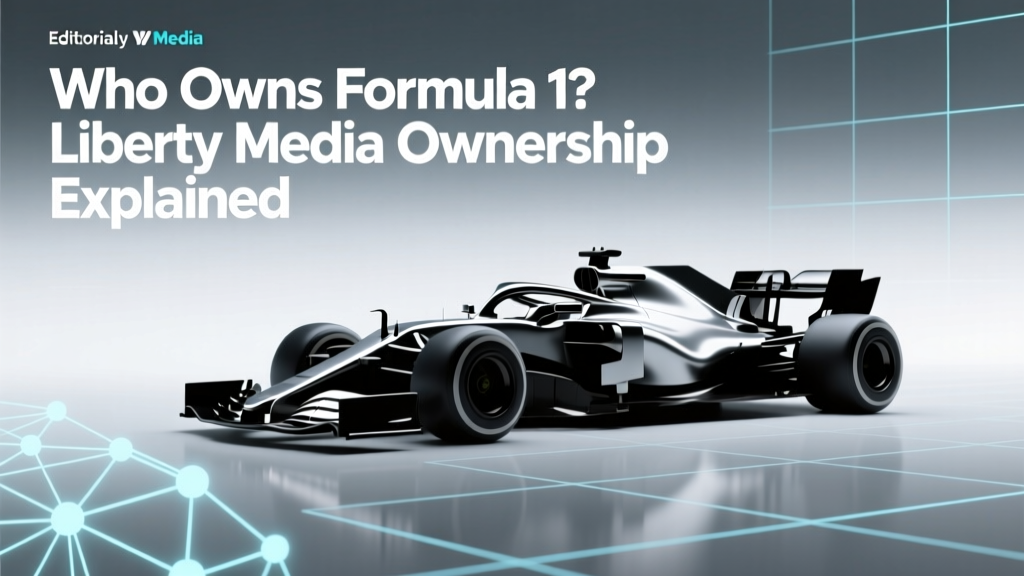
Who Owns Formula 1? Liberty Media Ownership Explained
The owner of Formula 1 is Liberty Media Corporation, an American mass media company that acquired the commercial rights and controlling interest in Formula 1 through its subsidiary, Formula One Group, in January 2017.
Overview of Formula 1 Ownership
Formula 1, the pinnacle of international motorsport, is owned and operated by the Liberty Media Corporation. The acquisition marked a strategic shift in the sport’s management, emphasizing global expansion, digital innovation, and fan engagement. Liberty Media completed the purchase of Delta Topco, the parent company of the Formula 1 Group, for approximately $4.6 billion, including debt assumption.
Key Entities Involved
- Liberty Media Corporation: Publicly traded company (Nasdaq: LSXMA) that holds majority control.
- Formula One Group: Operating entity managing commercial rights, broadcasting, and race promotion. \li>FIA (Fédération Internationale de l'Automobile): Governing body responsible for technical and sporting regulations, separate from ownership.
Historical Background of F1 Ownership
Prior to Liberty Media’s acquisition, Formula 1 was under the stewardship of Bernie Ecclestone, who managed the commercial aspects for over four decades. Ecclestone’s era focused on expanding the calendar and negotiating lucrative broadcast deals, but faced criticism for lack of digital innovation and centralized governance.
In 2016, shares were sold by private equity firm CVC Capital Partners, which had gradually accumulated control since the early 2000s. Liberty Media emerged as the final buyer, bringing a new strategic vision centered on long-term growth and modernization.
Corporate Structure of Formula 1
Liberty Media holds ownership through a complex corporate structure designed for financial transparency and operational efficiency.
Ownership Breakdown
| Entity | Stake in Formula 1 Group | Year Acquired | Acquisition Cost (USD) |
|---|---|---|---|
| Liberty Media Corporation | 100% (via indirect holding) | 2017 | 4.6 billion |
| CVC Capital Partners | ~35.5% (pre-2017) | 2000–2006 | N/A (acquired in stages) |
| Bernie Ecclestone | <5% | Pre-2017 | N/A |
| Investment Institute (INAIL) | ~8.9% | Pre-2017 | N/A |
The data illustrates a consolidation of ownership from fragmented private equity stakes into a single publicly traded entity. Liberty Media’s full control has enabled centralized decision-making, accelerating investments in sustainability, esports, and emerging markets like the United States.
Strategic Direction Under Liberty Media
Since taking over, Liberty Media has prioritized several key initiatives:
- Expanding the calendar with new races in the U.S., such as Miami and Las Vegas.
- Enhancing digital platforms, including F1 TV and F1 Drive (on-demand video service).
- Introducing cost-cap regulations to promote competitive balance.
- Leveraging Netflix’s "Drive to Survive" series to boost global popularity, especially among younger audiences.
Financial performance has improved significantly, with revenue growing from $1.5 billion in 2016 to over $2.6 billion in 2023, according to annual reports.
Common Questions About Formula 1 Ownership
Who currently owns Formula 1?
Formula 1 is currently owned by Liberty Media Corporation, an American media conglomerate that acquired full control in 2017.
Is Bernie Ecclestone still involved in Formula 1 ownership?
No, Bernie Ecclestone no longer holds a significant ownership stake or executive role in Formula 1 after Liberty Media’s acquisition.
What is the role of the FIA in Formula 1?
The FIA sets the technical and sporting regulations for Formula 1 and ensures fair competition, but does not own the commercial rights or the series itself.
How much did Liberty Media pay for Formula 1?
Liberty Media paid approximately $4.6 billion to acquire Formula 1, including the assumption of existing debt.
Has Formula 1 become more profitable under Liberty Media?
Yes, under Liberty Media, Formula 1's revenue has grown substantially, exceeding $2.6 billion in 2023, driven by new markets, digital expansion, and sponsorship growth.
More Articles
 How Much Do Swimming Pools Cost in 2025?
 How Long to Swim English Channel: Average & Record Times
 Most Watched Sporting Events in History: Global TV Viewership Records and Rankings
 Best Tennis Rackets for Beginners 2026: Complete Buying Guide with Expert Reviews
 Where to Go to Swim: Best Pools & Open Water Spots
 Rules vs Reality: Performance Data Check
 How Much Do Go Karts Cost in 2025?
 How Long Is a Canoe? Sizes by Type Explained
 How Many Calories Does Rock Climbing Burn?
 Where Was Field Hockey Invented? Origin & History