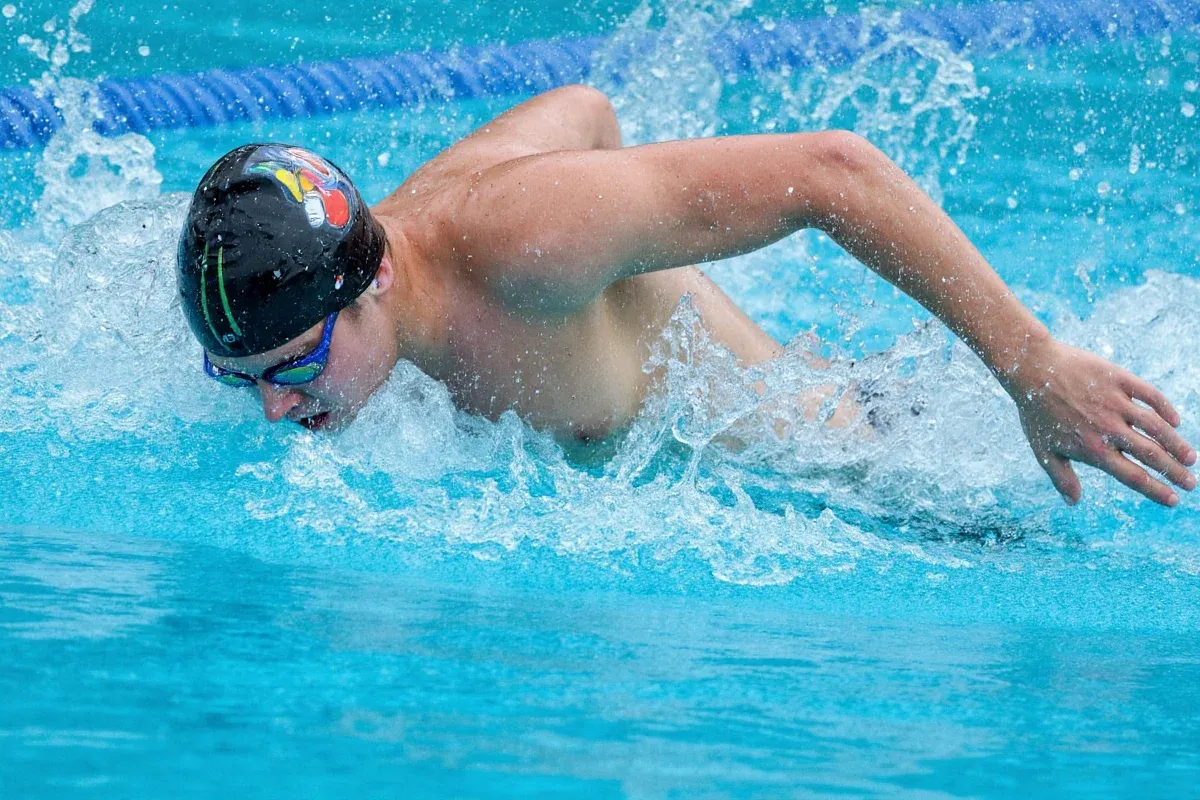
How Fast Can a Human Swim? Top Speeds Revealed
The fastest human swimming speed ever recorded is approximately 5.0 mph (8.0 km/h), achieved by Olympic swimmer Michael Phelps during a 100-meter freestyle sprint. This peak velocity is typically reached in short bursts and only maintained for brief intervals due to physiological limitations such as drag, energy expenditure, and stroke efficiency.
How Fast Can Humans Swim? Understanding the Limits of Human Speed in Water
Human swimming speed varies significantly based on skill level, stroke type, body composition, and environmental conditions. While elite swimmers can reach top speeds near 5 mph, most recreational swimmers average between 1.5 to 3 mph. Unlike land-based locomotion, swimming involves overcoming substantial water resistance—about 800 times denser than air—which makes high speeds extremely energy-intensive.
Factors Influencing Swimming Speed
- Stroke technique: Freestyle is the fastest stroke, followed by butterfly, backstroke, and breaststroke.
- Muscle composition: Higher proportion of fast-twitch muscle fibers enhances explosive power.
- Body size and shape: Longer limbs and streamlined bodies reduce drag.
- Training intensity: Elite athletes undergo years of specialized training to maximize propulsion and minimize resistance.
- Water conditions: Temperature, turbulence, and pool design affect performance.
World-Class Performance: Top Speeds by Elite Swimmers
Olympic-level swimmers represent the pinnacle of human aquatic performance. Their speeds are measured not only by race times but also through split times and motion analysis technology. The fastest recorded velocities occur during underwater phases after starts and turns, where wave drag is reduced.
| Swimmer | Nationality | Event | Top Speed (mph) | Top Speed (km/h) | Year |
|---|---|---|---|---|---|
| Michael Phelps | USA | 100m Freestyle | 5.0 | 8.0 | <2009|
| Caeleb Dressel | USA | 50m Freestyle | 4.7 | 7.6 | <2021|
| Katie Ledecky | USA | 400m Freestyle | 4.3 | 6.9 | <2016|
| Adam Peaty | GBR | 50m Breaststroke | 4.1 | 6.6 | <2019|
| Sarah Sjöström | SWE | 50m Butterfly | 4.6 | 7.4 | <2017
The data shows that freestyle remains the fastest stroke, with Michael Phelps achieving the highest verified burst speed. Sprint events (50m and 100m) produce higher peak velocities than distance races. Notably, male swimmers tend to achieve slightly higher top speeds, though female elites like Sarah Sjöström demonstrate comparable relative performance.
Underwater dolphin kicking, especially off starts and turns, allows swimmers to exceed their surface speeds by reducing form drag. In fact, many world-class swimmers spend up to 15 meters underwater per lap in regulated competitions, where speed can briefly surpass 5.5 mph before surfacing.
Comparing Human Speeds Across Swimming Strokes
Different strokes yield different maximum speeds due to biomechanics and hydrodynamic efficiency. A comparison helps illustrate why certain techniques dominate competitive racing.
Average Top Speeds by Stroke Type
- Freestyle: ~4.5–5.0 mph – Most efficient and fastest stroke.
- Butterfly: ~4.0–4.6 mph – High energy cost limits sustained speed.
- Backstroke: ~3.5–4.0 mph – Streamlined but lacks visual feedback.
- Breaststroke: ~3.0–4.1 mph – Greatest resistance due to frontal area exposure.
Physiological and Hydrodynamic Constraints on Speed
Several scientific principles limit how fast humans can move through water:
Key Limiting Factors
- Drag force: Increases with the square of velocity, making each incremental gain exponentially harder.
- Oxygen consumption: Swimming has high aerobic demand; VO2 max correlates strongly with endurance speed.
- Propulsive efficiency: Only about 60–70% of muscular effort translates into forward motion.
- Wave resistance: Breaking the surface creates energy-wasting waves, minimized in deeper pools.
Technological advances such as full-body swimsuits (now banned) once boosted speeds dramatically. For example, polyurethane suits used before 2010 helped reduce drag by up to 5%, contributing to numerous world records during that era.
Frequently Asked Questions About Human Swimming Speed
What is the fastest any human has ever swum?
The fastest burst speed ever recorded was 5.0 mph (8.0 km/h) by Michael Phelps during a 100-meter freestyle event in 2009, aided by optimal technique and a now-banned high-tech swimsuit.
Can humans swim faster than sharks?
No, humans cannot swim faster than most shark species. The average shark cruises at 5–10 mph and can burst up to 25 mph, far exceeding even the fastest human swimmers.
Who holds the record for fastest 50-meter freestyle?
As of 2025, Caeleb Dressel of the United States holds one of the fastest short-course times at 20.16 seconds, equating to an average speed of about 4.7 mph (7.6 km/h).
Is it possible for a human to swim at 10 mph?
No, swimming at 10 mph is beyond current human physiological capabilities. Even with advanced equipment, no verified swimmer has exceeded 5.5 mph in short bursts.
Why do swimmers go faster underwater than on the surface?
Swimmers achieve higher speeds underwater because they avoid wave drag, which occurs at the air-water interface. Dolphin kicks in streamline position reduce resistance and allow more efficient propulsion.
More Articles
 Best Football Cleats for Wide Receivers: 2026 Speed and Agility Guide
 Best Sports for Weight Loss: Calories Burned Comparison and Training Plans
 When Do Rockefeller Ice Skating Tickets Go on Sale?
 Will Rogers Equestrian Ranch Guide 2025
 Ideal Chlorine Level for Swimming Pool (1.0–3.0 ppm)
 How Many Calories Does Ice Skating Burn?
 Don Hume Rower: 1936 Olympic Coxswain & Legacy
 How to Clean Sports Gear by Season
 How Long to Jump Rope for Weight Loss
 How Long to Swim English Channel: Times & Facts