How Thick Is an Ice Hockey Rink?
How Thick Is an Ice Hockey Rink?
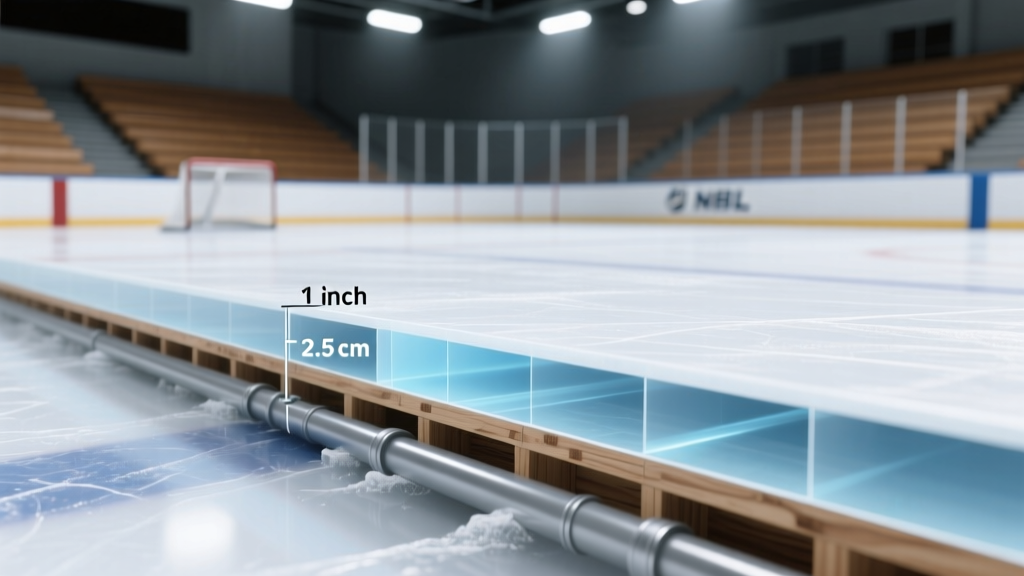
The standard thickness of an ice hockey rink is approximately 1.25 inches (3.2 cm) for the playing surface, with a total ice depth ranging from 3 to 4 inches (7.6–10.2 cm), including structural layers beneath. This optimal thickness ensures durability, consistent puck glide, and player safety under regulated indoor temperatures around 24°F (−4.4°C).
Understanding Ice Hockey Rink Construction
Modern ice hockey rinks are engineered systems, not just frozen water. The ice thickness supports fast gameplay while maintaining structural integrity. The primary playing surface is kept at about 1.25 inches thick, but the full ice slab includes additional layers for insulation and refrigeration.
Key Components of a Hockey Rink
- Concrete base layer: Embedded with refrigeration pipes that circulate chilled glycol or brine.
- Insulating layer: Prevents ground heat from melting the ice.
- Thin ice build-up layers: Multiple sprayed layers to eliminate bubbles and ensure clarity.
- Top playing surface: Maintained at 1.25 inches for optimal hardness and smoothness.
Factors Influencing Ice Thickness
Different leagues and environments adjust ice specifications based on performance needs and climate conditions.
Variables Affecting Optimal Ice Depth
- Ambient temperature and humidity levels in the arena
- Type of events (NHL games vs. public skating)
- Frequency of resurfacing with Zamboni machines
- Player speed and physical contact intensity
- Refrigeration system efficiency
| Rink Type | Playing Surface Thickness (inches) | Total Ice Depth (inches) | Arena Temperature (°F) | Ice Temperature (°F) |
|---|---|---|---|---|
| NHL Regulation | 1.25 | 3.0 | 60–65 | 22–24 |
| IIHF International | 1.25 | 3.0 | 60–65 | 22–24 |
| Outdoor Winter Classic | 1.5 | 4.0 | Varies | 18–22 |
| Youth Hockey Arena | 1.25 | 2.5–3.0 | 60–70 | 24–26 |
| Multipurpose Facility | 1.25–1.5 | 3.0–3.5 | 65–75 | 24–28 |
The data shows NHL and IIHF rinks maintain nearly identical ice thickness standards for elite play. Outdoor games require thicker ice (up to 4 inches) due to environmental exposure. Multipurpose arenas often use slightly warmer ice, increasing thickness to prevent rapid wear during non-hockey events like concerts or skating shows.
Why Ice Thickness Matters for Performance
Thicker ice isn't always better. While outdoor or multipurpose rinks may go up to 4 inches, professional arenas prioritize harder, thinner ice for faster gameplay. Excessively thick ice can soften and become slushy if cooling systems struggle, reducing puck speed and increasing injury risk.
Impact on Gameplay
- Puck behavior: Harder, thinner ice allows for smoother, more predictable puck movement.
- Skater traction: Optimal thickness provides ideal edge grip without cracking under stress.
- Energy efficiency: Thinner ice reduces refrigeration costs and stabilizes temperature faster.
- Safety: Properly layered ice resists chipping and gouging from skate blades and collisions.
Common Questions About Ice Hockey Rink Thickness
How thick is the ice in an NHL hockey rink?
The playing surface of an NHL rink is typically 1.25 inches thick, with a total ice depth of about 3 inches over a concrete slab embedded with cooling pipes.
Do outdoor hockey rinks have thicker ice?
Yes, outdoor rinks like those used in the NHL Winter Classic often have ice up to 4 inches thick to withstand fluctuating temperatures and direct sunlight.
Can ice thickness affect player performance?
Absolutely. Thinner, harder ice found in professional arenas allows faster skating and more accurate puck control, while softer or thicker ice can slow the game and increase fatigue.
How is ice thickness maintained during a game?
Ice crews use resurfacing machines (like Zambonis) between periods to shave and re-flood the surface. The underlying refrigeration system continuously monitors and adjusts temperature to maintain consistent thickness.
What temperature is the ice kept at in professional rinks?
Professional hockey rinks keep the ice surface between 22°F and 24°F (−5.6°C to −4.4°C) to maintain optimal hardness and thickness throughout the game.
More Articles
 What Events Did Michael Phelps Swim? Full List
 How Fast Do Karts Go at K1 Speed? (Up to 55 mph)
 How Thick Is Ice Skating Rink Ice? Expert Breakdown
 Who Won the High Jump Today? Mahuchikh & Barshim Claim Gold
 Best Running Shoes for Marathon Training: Cushion, Support, and Durability Guide
 When Was Ice Hockey Invented? Origins & History
 Pool Laps for a Mile: Exact Numbers by Size
 How High Can You Jump Into Water Safely?
 How Heavy Is a Shot Put? Official Weights by Category
 How Long Is the English Channel Swim?