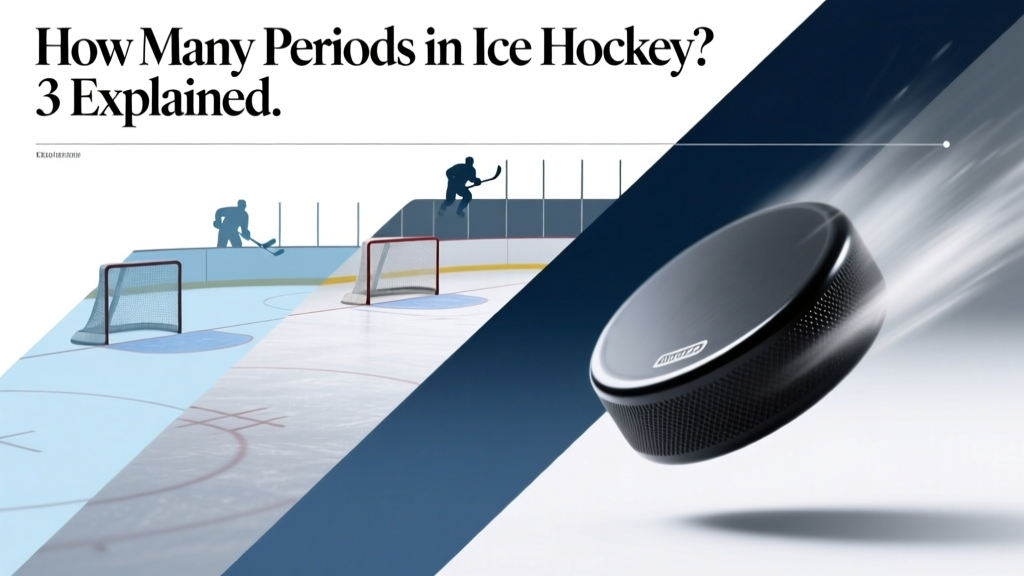
How Many Periods in Ice Hockey? 3 Explained
In ice hockey, there are three periods, each lasting 20 minutes of regulation play time, making a standard game 60 minutes long. This structure is consistent across major leagues including the NHL, IIHF, and Olympic competition.
Understanding the Structure of an Ice Hockey Game
Ice hockey is divided into three distinct segments known as periods. Each period lasts 20 minutes of actual playing time, with intermissions between them typically lasting 15 to 18 minutes. This format ensures player recovery and allows teams to regroup strategically.
Why Three Periods?
The three-period system was adopted in the early 20th century to replace two 30-minute halves. The change improved ice conditions and player stamina management. Before this, continuous play led to deteriorating ice quality and increased fatigue.
- The first period allows teams to test strategies and adjust to opponents.
- The second period often features intensified physical play and momentum shifts.
- The third period is typically the most strategic, especially in close games.
NHL vs. International Hockey Period Structures
While all major leagues use three periods, slight variations exist in timing, intermissions, and overtime rules. The National Hockey League (NHL) and international competitions governed by the International Ice Hockey Federation (IIHF) follow similar but not identical formats.
| League/Organization | Period Duration | Number of Periods | Intermission Length | Overtime Format |
|---|---|---|---|---|
| NHL (Regular Season) | 20 minutes | 3 | 17 minutes | 5-minute 3-on-3 sudden death |
| NHL (Playoffs) | 20 minutes | 3 | 17 minutes | 20-minute 5-on-5 sudden death |
| IIHF (Men's Tournament) | 20 minutes | 3 | 15 minutes | 10-minute 3-on-3, then shootout |
| Olympic Games (Ice Hockey) | 20 minutes | 3 | 15 minutes | 10-minute sudden death, then shootout |
| Youth Hockey (USA Hockey U14) | 15 minutes | 3 | 10–12 minutes | Varies by tournament |
The data shows that while the core structure of three 20-minute periods is universal at elite levels, youth leagues reduce period length to suit developmental stages. Intermission times are slightly shorter in international play compared to the NHL’s extended breaks, which accommodate broadcasting needs.
Overtime and Shootout Rules Across Leagues
When a game ends in a tie after regulation, overtime rules determine the winner. These vary significantly between leagues and contexts.
NHL Regular Season Overtime
Games tied after 60 minutes enter a 5-minute overtime with 3-on-3 play. If no goal is scored, a shootout decides the winner. The winning team earns 2 points, the loser gets 1 point.
NHL Playoff Overtime
There is no shootout. Instead, full 20-minute 5-on-5 periods continue until a goal is scored. This has led to historic marathon games, such as the 1936 Detroit Red Wings vs. Montreal Maroons game that required six overtimes.
International Tournaments
IIHF and Olympic games use a single 10-minute 3-on-3 overtime followed by a shootout if needed. This balances competitive fairness with scheduling constraints during multi-team events.
Frequently Asked Questions About Ice Hockey Periods
How long is each period in ice hockey?
Each period in professional ice hockey lasts 20 minutes of regulation playing time. Actual duration is longer due to stoppages, penalties, and reviews.
Are there breaks between periods in hockey?
Yes, there are two intermissions between the three periods. In the NHL, intermissions last 17 minutes; in international play, they are typically 15 minutes long.
What happens if a hockey game is tied after three periods?
If the game is tied, it goes into overtime. The format depends on the league: the NHL uses a 5-minute 3-on-3 sudden death in the regular season, followed by a shootout if needed. Playoffs feature unlimited 20-minute 5-on-5 periods.
Do youth hockey games have three periods?
Yes, most youth hockey games have three periods, but the length varies by age group. For example, players under 14 may play 15-minute periods instead of 20.
Why don't hockey games have quarters like basketball or football?
Hockey uses three periods for historical and practical reasons. Introduced in 1910, the three-period format improved ice conditions and player endurance. Two halves caused excessive ice deterioration, impacting gameplay and safety.
More Articles
 How Much Does Ice Skating Cost in 2025?
 How High Does LeBron Jump? Vertical Leap Revealed
 Who Started Parkour? David Belle's Origin Story
 How Much Is Ice Skating at Bryant Park? (Free in 2025)
 Best Volleyball Shoes for Liberos: Lightweight and Responsive Picks for 2026
 What Does a Rowing Machine Workout Do?
 Which Florida Springs Can I Swim In? Top 6 Spots
 How Many Gallons in an Olympic Pool?
 How Many Feet Is a Swim Lap? Exact Distances Explained
 How Many Laps Is 1500m Swim? Pool-by-Pool Breakdown