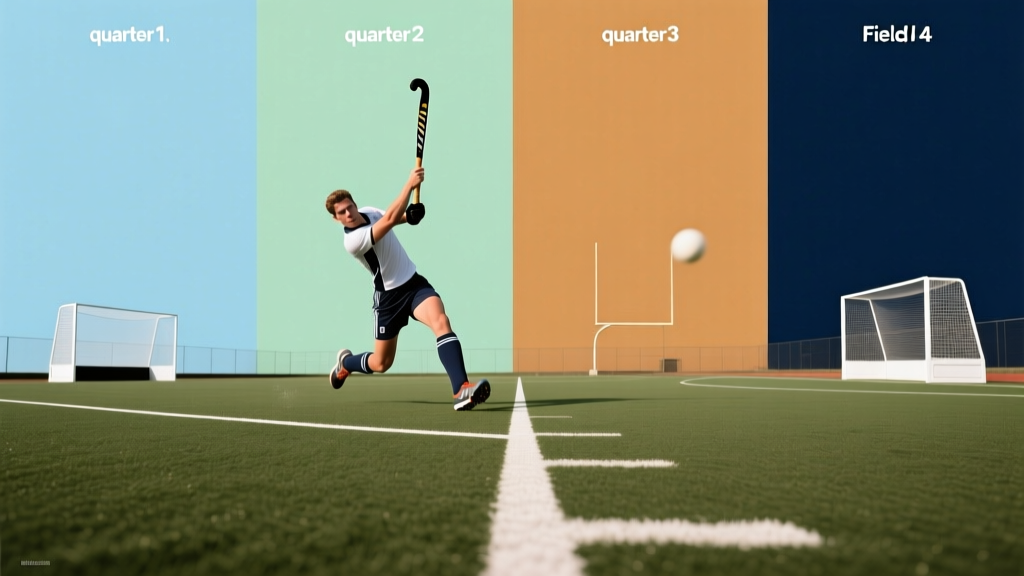
How Many Periods in Field Hockey? 4 Quarters Explained
Field hockey matches consist of four quarters, each lasting 15 minutes, for a total playing time of 60 minutes. This structure has been standard since the International Hockey Federation (FIH) transitioned from two 35-minute halves to four quarters in 2014 to improve game flow, player recovery, and spectator engagement.
Understanding the Structure of a Field Hockey Game
Modern field hockey is divided into four quarters instead of the traditional two halves. Each quarter lasts 15 minutes, with short breaks between quarters and a longer halftime interval. This format enhances pacing, allows for hydration breaks, and aligns with international broadcasting standards.
Key Time Elements in a Field Hockey Match
- Four Quarters: Each 15 minutes long
- Interval Between Quarters: 2 minutes after the first and third quarters
- Halftime Break: 10 minutes after the second quarter
- Total Playing Time: 60 minutes
- Overtime (if needed): Two 7.5-minute periods or penalty shootout
Historical Evolution of Game Duration
Prior to 2014, field hockey was played in two 35-minute halves. The FIH introduced the four-quarter system to modernize the sport, increase strategic substitutions, and allow for official video reviews and hydration stops—especially critical in hot climates.
Advantages of the Quarter System
- Better athlete recovery during high-intensity matches
- Opportunities for tactical adjustments by coaches
- Enhanced fan experience with structured breaks
- Alignment with Olympic and global broadcast schedules
Game Timing Across Different Levels
The duration of field hockey games can vary based on age group, competition level, and governing body rules. While elite international matches follow the FIH’s 15-minute quarter model, youth and amateur leagues may adjust timing for developmental and safety reasons.
| Level | Quarter Duration | Number of Quarters | Total Playing Time | Overtime Format |
|---|---|---|---|---|
| Senior International (FIH) | 15 min | 4 | 60 min | 2 x 7.5 min or shootout |
| NCAA (USA) | 15 min | 4 | 60 min | Sudden victory 10-min halves |
| High School (NFHS, USA) | 17.5 min | 4 | 70 min | Two 10-min halves |
| Youth (Ages 12–14) | 12–15 min | 4 | 48–60 min | Varies |
| Masters (Over 35) | 15–20 min | 4 | 60–80 min | Shortened overtime or none |
The table illustrates how game length varies across competitive levels. International and NCAA rules are closely aligned, while U.S. high school games run longer at 70 minutes. Youth and masters divisions adapt durations to fitness and safety considerations, demonstrating flexibility within standardized frameworks.
Frequently Asked Questions About Field Hockey Periods
How many periods are in a professional field hockey game?
Professional field hockey games consist of four quarters, each lasting 15 minutes, totaling 60 minutes of play under FIH regulations.
Why did field hockey switch from halves to quarters?
The switch in 2014 allowed for structured breaks, improved player hydration, better substitution strategies, and enhanced broadcast appeal with natural commercial intervals.
Is overtime used in field hockey?
Yes, if a match ends in a tie during knockout stages, two 7.5-minute periods of extra time are played. If still tied, a penalty shootout determines the winner.
Do college field hockey games have the same period length as international games?
Yes, NCAA women’s field hockey uses four 15-minute quarters, matching the international standard for consistency and athlete preparation at elite levels.
How long is halftime in a field hockey match?
Halftime lasts 10 minutes and occurs after the second quarter, providing teams with a substantial break for rest and strategy review.
More Articles
 Pre-Competition Checklist: Final Tips
 Stats vs Complete Data: Performance Tracking
 How Much Is a MotoGP Bike? Cost Breakdown 2025
 Olympic Swimming Pool Temperature: Official Standards
 Running Foam: EVA vs TPU vs PEBA
 How Much Is a Swimming Pool Heater? Costs & Types
 4 Competitive Swimming Strokes: Technique, Speed & Rules for Each (2026)
 How Long Are Swimming Pools? Standard Sizes Explained
 Where to Buy a Go-Kart: Best Options in 2025
 How Many Players on an Ice Hockey Team?