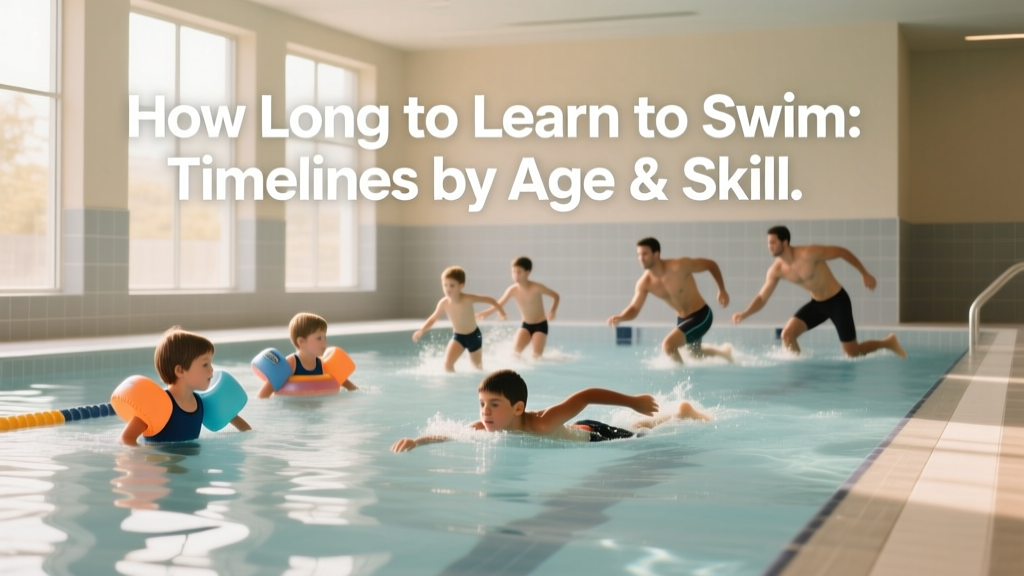
How Long to Learn to Swim: Timelines by Age & Skill
Learning to swim typically takes between 20 to 40 hours of formal lessons for most adults, while children may require 30 to 60 hours depending on age, comfort level in water, and frequency of practice. However, becoming confident and proficient can take several months to a year with consistent weekly sessions.
How Long Does It Take to Learn Basic Swimming Skills?
The time it takes to learn swimming varies significantly based on age, prior water experience, physical fitness, and lesson frequency. However, structured programs generally follow predictable timelines.
Factors That Influence Learning Speed
- Age: Children often adapt faster due to fewer fears, but adults may progress quicker technically.
- Lesson Frequency: Practicing 2–3 times per week accelerates learning compared to weekly sessions.
- Comfort Level in Water: Fear of water is the biggest barrier; overcoming it can add weeks to training.
- Instructor Quality: Certified instructors using progressive techniques reduce learning time.
- Physical Fitness: Better endurance and coordination improve stroke efficiency and confidence.
Typical Swim Learning Timeline by Age Group
| Age Group | Average Hours to Learn Basics | Common Milestones | Recommended Session Frequency |
|---|---|---|---|
| 3–5 years | 40–60 hours | Water safety, floating, kicking, basic arm movements | 2x/week (30 min) |
| 6–12 years | 30–50 hours | Freestyle, backstroke, independent swimming for 25m | 2x/week (45 min) |
| Teens (13–17) | 20–35 hours | All four strokes, treading water, diving basics | 2–3x/week (45–60 min) |
| Adults (18+) | 20–40 hours | Freestyle, backstroke, survival skills, breathing control | 2x/week (60 min) |
The data shows that younger children require more total hours due to shorter attention spans and developmental stages, while teens and adults achieve foundational skills faster with longer, focused sessions. Consistency remains key across all groups—those practicing twice weekly reach milestones up to 50% faster than those attending sporadically.
Stages of Learning to Swim
Swimming proficiency develops in progressive phases, each building on the previous one.
Stage 1: Water Acclimation (Beginners)
Focuses on overcoming fear, submerging face, blowing bubbles, and safe entry/exit. This stage may take 4–8 sessions.
Stage 2: Floating and Gliding
Learners practice front and back floats, streamline glides, and basic kicking. Buoyancy control is emphasized.
Stage 3: Propulsion and Breathing
Introduction of coordinated arm movements and rhythmic breathing. Freestyle and backstroke are typically first strokes taught.
Stage 4: Stroke Development
Refining technique in freestyle, backstroke, breaststroke, and butterfly. Swimmers also learn flip turns and open turns.
Stage 5: Endurance and Safety
Building stamina, treading water, diving, and open-water skills. Lifesaving techniques may be introduced.
How Practice Frequency Affects Progress
Research indicates that swimmers who train 2–3 times per week progress 30–50% faster than those attending once weekly. Muscle memory and water confidence develop through repetition.
- Once per week: Steady but slow progress; may take 6–12 months to master basics.
- Twice per week: Optimal balance; most learners complete beginner levels in 3–6 months.
- Three or more times: Rapid improvement; ideal for competitive goals or short-term objectives.
Common Challenges in Learning to Swim
- Fear of water: The most common obstacle, especially in adults. Requires patient instruction and gradual exposure.
- Breathing technique: Poor timing leads to panic. Drills focusing on exhalation underwater help significantly.
- Body position: Incorrect alignment increases drag. Visual feedback and kickboard drills correct posture.
- Lack of consistency: Infrequent lessons disrupt skill retention and confidence building.
Frequently Asked Questions About Learning to Swim
Can I learn to swim in 1 week?
Yes, some intensive programs enable beginners to perform basic strokes and survive in water after 5–7 days of daily training. However, true confidence and skill retention usually require ongoing practice beyond one week.
Is it hard for adults to learn to swim?
While adults may face more anxiety around water than children, they often learn faster due to better cognitive understanding of techniques. With proper instruction and consistent practice, most adults become competent swimmers within 20–40 hours.
How many swim lessons does a child need?
A child typically needs 30 to 60 hours of lessons to master fundamental skills like floating, kicking, and swimming 25 meters unassisted. Continued lessons build stroke technique, endurance, and water safety knowledge.
What is the best age to start swimming lessons?
The American Academy of Pediatrics supports swim lessons as early as age 1. Most experts recommend starting formal group lessons at age 4 when motor skills and attention span support learning. Early exposure in parent-child classes builds water comfort.
Can you teach yourself to swim?
While self-teaching is possible using online resources and drills, it's risky without supervision. Beginners lack awareness of proper form and safety. Professional instruction ensures correct technique and reduces drowning risk during learning.
More Articles
 How Many Players on a Water Polo Team? Full Breakdown
 How Much Is a Jet Ski Rental? (2025 Prices)
 Badminton Guide: Rules, Gear, and Strategy
 How Fast Do Race Walkers Walk? Elite Speeds Revealed
 How Long to Fill a Swimming Pool? Time & Cost Explained
 Who Owns the World Equestrian Center? Full Ownership Guide
 How Fast Do Go Karts Go? Top Speeds by Type
 Soccer Offside Rule Explained: When, Why & How It Works (2026)
 How Many Yards in a Mile Swim? Exact Conversion
 Golf Mistakes: Why Good Players Lose Strokes