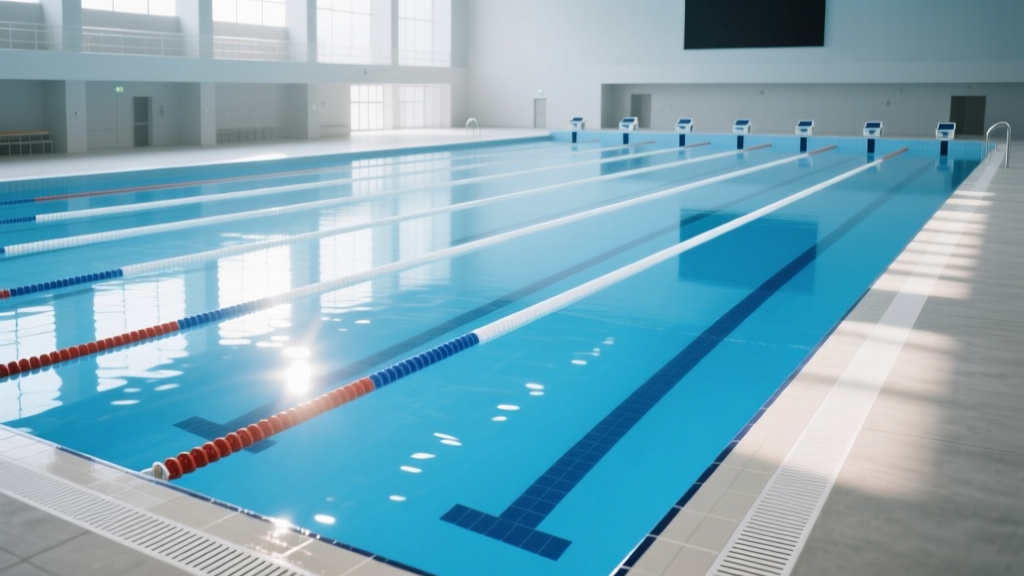
Olympic Swimming Pool Length: 50 Meters Explained
The Olympic swimming pool is 50 meters long, which is the standard length for all Olympic and international long-course competitions. This length ensures consistency across events and allows swimmers to compete under uniform conditions recognized by FINA (Fédération Internationale de Natation).
What Is an Olympic Swimming Pool?
An Olympic swimming pool, officially known as a long-course pool, is specifically designed to meet strict international standards set by FINA for competitive swimming during the Olympic Games and World Championships.
Key Features of an Olympic Pool
- Length: Exactly 50 meters
- Width: 25 meters
- Lanes: 8 or 10 lanes, each 2.5 meters wide
- Depth: Minimum 2 meters, typically deeper to reduce wave turbulence
- Water Temperature: Maintained between 25–28°C (77–82°F)
- Volume: Holds approximately 2.5 million liters (660,000 gallons) of water
Differences Between Olympic Pools and Other Pools
Not all swimming pools are built to Olympic specifications. Understanding the differences helps clarify why elite competitions require such precise dimensions.
Common Pool Types Compared
- Short-Course Pools: 25 meters long, used in winter competitions and many national-level meets
- Yard Pools: Common in the U.S., often 25 yards long, slightly shorter than 25 meters
- Recreational Pools: Vary widely in size and depth, not suitable for official competition
- Olympic (Long-Course) Pools: 50 meters long, used in Summer Olympics and World Aquatics Championships
Olympic Pool Specifications and Competition Rules
FINA regulates every aspect of the pool design to ensure fairness, safety, and accurate timing. These rules apply to all Olympic venues.
FINA Standards for Olympic Pools
- Pools must be 50.0 meters in length with a tolerance of +0.03 m / -0.00 m
- Each lane must be 2.5 meters wide
- Minimum depth of 2.0 meters, though most Olympic pools exceed this
- Touch pads at both ends for electronic timing
- Backstroke flags placed 5 meters from each end
- Proper lighting and acoustics to support athlete performance
| Feature | Olympic Pool (50m) | Short-Course Pool (25m) | U.S. Short Course (25yd) |
|---|---|---|---|
| Length | 50 meters | 25 meters | 22.86 meters (25 yards) |
| Number of Lanes | 10 (8 used) | 8–10 | 6–10 |
| Lane Width | 2.5 meters | 2.5 meters | 7 feet (~2.13 meters) |
| Depth | ≥2.0 meters | ≥1.35 meters | Variable |
| Water Volume | ~2,500,000 liters | ~625,000 liters | ~567,800 liters |
The table highlights key differences in pool dimensions used globally. Olympic-sized pools are twice the length of short-course meters pools and significantly larger than typical U.S. short-course yards pools. The increased depth and lane width help minimize drag and turbulence, enhancing swimmer performance and record accuracy.
Why the 50-Meter Length Matters
The 50-meter length is more than just a standard—it shapes how races are swum and how records are set.
Impact on Race Strategy
- Swimmers turn every 50 meters in freestyle, backstroke, and butterfly events
- Fewer turns mean less reliance on underwater dolphin kicks compared to 25m pools
- Endurance becomes more critical in 50m pools due to longer stretches without push-offs
- World records in 50m pools are considered the highest benchmark in swimming
Frequently Asked Questions About Olympic Swimming Pools
How many meters is the Olympic swimming pool?
The Olympic swimming pool is exactly 50 meters long, meeting FINA's international competition standards.
How many laps make 100 meters in an Olympic pool?
In a 50-meter Olympic pool, two lengths (one lap down and one lap back) equal 100 meters.
Are all Olympic pools the same size?
Yes, all Olympic pools must adhere to FINA regulations: 50 meters long, 25 meters wide, with 8–10 lanes and a minimum depth of 2 meters.
Can Olympic pools be used for other events?
Yes, Olympic pools can host diving, synchronized swimming (now artistic swimming), and water polo, though configurations may change between sports.
Do Olympic pools use saltwater?
No, Olympic pools use freshwater treated with chlorine or alternative disinfectants like ozone or UV systems. Salt is sometimes added in small amounts for comfort but not as the primary water source.
More Articles
 Sports Gear Storage Tips to Extend Lifespan
 How Long Is a Swimming Pool? Sizes Explained
 How Thick Is Ice Hockey Ice? NHL Standards Explained
 MIPS vs Standard Bike Helmets: What to Know
 Size Safety Tips: How Proper Sizing Prevents Injury
 Where to Buy Swimming Clothes: Best Stores & Brands 2025
 How Long Are Swimming Pools? Standard Sizes Explained
 What Muscles Does Freestyle Swimming Work?
 When Was Ice Hockey Invented? Origins & History
 How Fast Are Go Karts? Top Speeds by Class