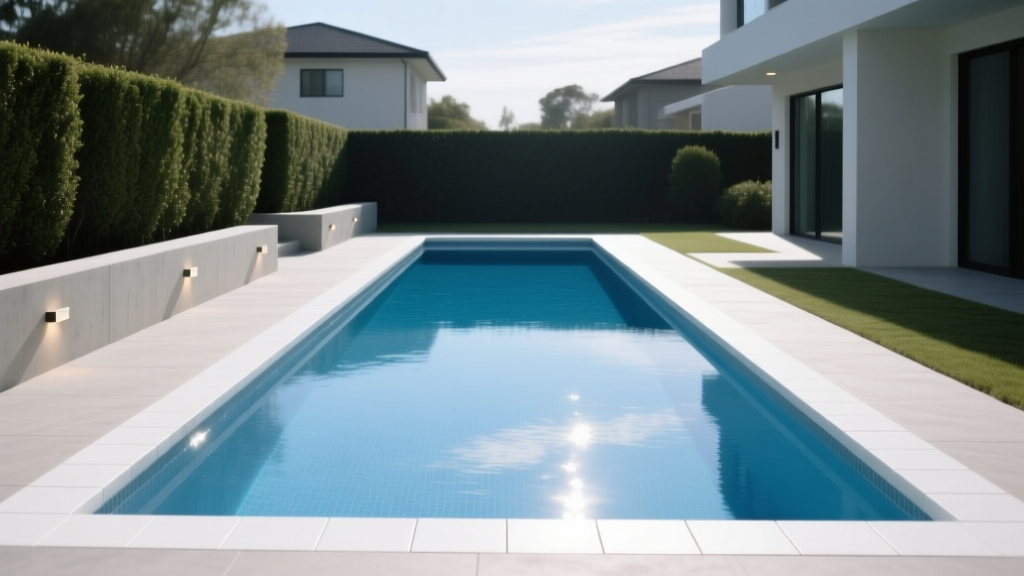
How Long Are Swimming Pools? Standard Sizes Explained
Swimming pools vary in length depending on their purpose, but the most common standardized lengths are 25 yards, 25 meters, and 50 meters. Olympic and international competitions use 50-meter long course pools, while short course events are held in 25-meter or 25-yard pools. Recreational and residential pools can range from 10 to 40 feet or more, with no standard size.
Standard Swimming Pool Lengths by Use
Swimming pools are built to different dimensions based on their intended use—competitive swimming, training, recreation, or therapy. Understanding these standards helps athletes, coaches, and facility planners make informed decisions.
Competition Pools
- Olympic-size (Long Course): 50 meters long, used in the Olympics, World Championships, and other elite international events.
- Short Course (Metric): 25 meters long, commonly used in Europe and for many international meets outside the summer season.
- Short Course (Yard): 25 yards long, standard in U.S. high school and collegiate swimming competitions.
Training and Recreational Pools
- Many public and community pools are 25 yards or 25 meters, allowing for competitive training.
- Residential pools typically range from 30 to 60 feet (9–18 meters), though some lap pools extend to 75 feet (23 meters).
- Hotel and resort pools prioritize aesthetics and leisure, often non-standard in length.
Lap Pools
Lap pools are designed for continuous swimming and fitness. They are usually at least 25 meters or 25 yards long, but some urban or compact lap pools may be as short as 15–20 meters.
Detailed Comparison of Pool Types and Dimensions
The following table outlines key pool types, their standard lengths, widths, depths, and primary uses.
| Purpose | Length | Width | Lanes | Depth | Water Volume (approx.) |
|---|---|---|---|---|---|
| Olympic Competition | 50 meters | 25 meters | 10 | 2.0+ meters | 2.5 million liters |
| Short Course (Metric) | 25 meters | 21–25 meters | 6–10 | 1.8–2.0 meters | 1.0–1.3 million liters |
| U.S. Collegiate (SCY) | 25 yards (~22.86 meters) | 25 yards | 8–10 | 1.8–2.0 meters | 800,000–1.1 million liters |
| Residential Lap Pool | 15–25 meters | 3–6 meters | 1–2 | 1.2–1.8 meters | 50,000–200,000 liters |
| Recreational Pool | 10–20 meters | Variable | N/A | 0.9–1.5 meters | 100,000–500,000 liters |
The data shows a clear distinction between competition-grade and recreational pools. Olympic pools require precise dimensions and greater water volume to minimize wave resistance and ensure fair racing conditions. In contrast, residential and leisure pools prioritize usability over regulation compliance. The number of lanes and depth also reflect functional needs—elite pools maintain deeper water to reduce turbulence.
Why Pool Length Matters for Swimmers
Precision in pool length is critical for accurate timing, stroke development, and race legality. Even small deviations can impact performance metrics and record validation.
Impact on Training
- Swimmers adjust pacing strategies based on pool length (e.g., more turns in short course = faster times).
- Coaches use distance per lap to calculate sets (e.g., 10x100m vs. 10x100y).
- Turn technique becomes more important in short course pools due to increased turn frequency.
World Records and Pool Type
FINA recognizes separate world records for long course (50m) and short course (25m) pools due to performance differences. Short course times are generally faster because of the advantage gained during wall push-offs.
Frequently Asked Questions About Swimming Pool Lengths
How long is an Olympic swimming pool?
An Olympic swimming pool is exactly 50 meters long, 25 meters wide, and at least 2 meters deep. It contains ten lanes, each 2.5 meters wide, with two additional buffer lanes at the edges to reduce wave interference.
Are all competition pools 50 meters?
No, not all competition pools are 50 meters. While Olympic and World Championship events use 50-meter long course pools, many national and collegiate competitions take place in 25-meter or 25-yard short course pools, especially during the winter season.
What is the standard length of a swimming pool in the USA?
In the United States, the standard competitive pool length is 25 yards for high school and NCAA college meets. However, international events and summer national championships use 50-meter pools. Some U.S. facilities have dual-marked pools that accommodate both yard and meter measurements.
How long is a typical backyard swimming pool?
A typical residential swimming pool ranges from 30 to 60 feet (9–18 meters). Dedicated lap pools may extend to 75 feet (23 meters), but most backyard pools are designed for recreation rather than serious swimming training.
Can a swimming pool be longer than 50 meters?
No official competition pool exceeds 50 meters in length. However, some training or therapy pools may be longer for specific purposes, such as underwater filming or research. For FINA-sanctioned events, the maximum allowable length is 50 meters, with strict tolerance limits (±0.03 meters).
More Articles
 Gymnastics Scoring System 2026: Full Breakdown
 How Much Is It to Rent a Jet Ski? (2025 Rates)
 Olympic Water Polo Pool Depth: Exact Measurement
 When Did Michael Phelps Start Swimming? Key Facts
 How Long Should You Jump Rope Daily?
 Why Swimming in a Quarry Is Dangerous
 How Many Periods in an Ice Hockey Game? (Explained)
 Where to Watch MotoGP Live in 2025 – Global Guide
 What Muscles Do Rows Work? Back Anatomy Explained
 Where Is Ice Skating Near Me? Find Rinks & Times