How Many Players on an Ice Hockey Team? Full Breakdown
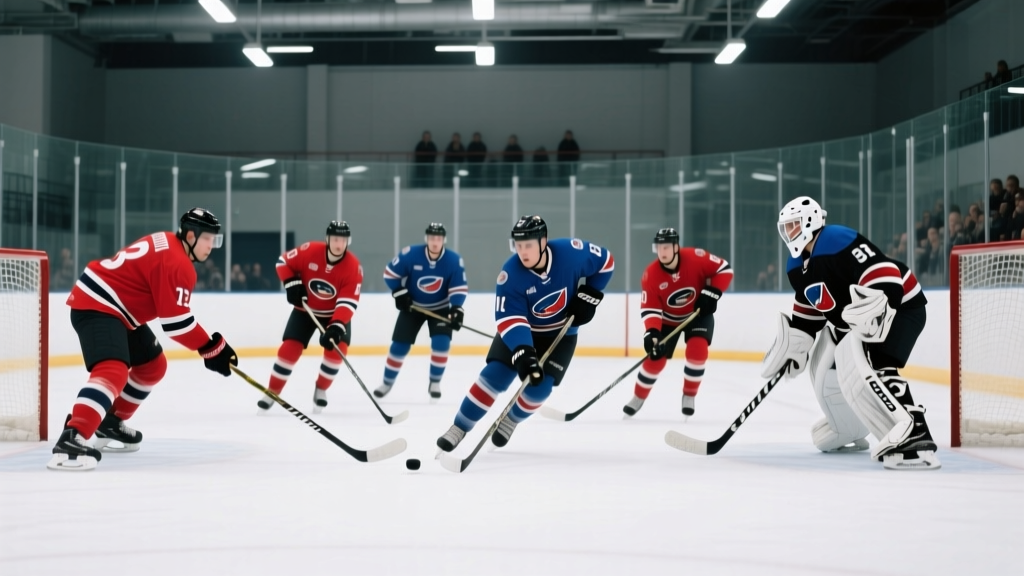
Each ice hockey team has six players on the ice at a time: one goaltender, two defensemen, and three forwards. During a game, teams typically have a total roster of 20 players — 18 skaters and 2 goalies — with additional substitutes available in case of injury or fatigue.
Understanding Ice Hockey Team Composition
The standard number of players actively participating on the ice during an ice hockey game is six per team. This structure ensures balanced gameplay and allows for strategic positioning across the rink. While only six are on the ice simultaneously, each team maintains a larger roster to manage shifts, injuries, and specialized roles.
Breakdown of On-Ice Roles
- Goaltender (Goalie): Responsible for preventing the puck from entering the net.
- Defensemen (2): Positioned near their own goal to defend against attacks and initiate breakouts.
- Forwards (3): Comprising a center and two wingers, they focus on offense and scoring.
Roster Size vs. Active Players
While only six players from each team are on the ice at once, NHL rules allow for a maximum of 20 players (18 skaters and 2 goalies) dressed and ready for a game. Teams may carry up to 23 players on their active roster under regular conditions, with emergency exceptions permitting temporary increases.
Key Roster Regulations in Major Leagues
- NHL teams can dress 20 players per game: 18 skaters and 2 goaltenders.
- Substitutions are allowed freely during stoppages or even on the fly during play.
- Injuries or emergencies may permit temporary expansion beyond standard limits.
- Minor league and amateur teams often have smaller rosters due to resource constraints.
| League | Total Game-Day Roster | Skaters | Goaltenders | On-Ice Players |
|---|---|---|---|---|
| NHL | 20 | 18 | 2 | 6 |
| AHL | 20 | 18 | 2 | 6 |
| IIHF (International) | 22 | 20 | 2 | 6 |
| College (NCAA) | 18–22 | 16–20 | 2 | 6 |
| Youth (Under-18) | 15–18 | 13–16 | 2 | 6 |
The table highlights variations in roster sizes across different leagues. While all maintain six players on the ice per team, international and professional leagues tend to allow larger benches for tactical flexibility. The IIHF permits 22 players, giving coaches more substitution options during high-stakes tournaments.
Player Rotation and Substitution Rules
Unlike sports with limited substitutions, ice hockey allows continuous player rotation. Known as "on-the-fly" changes, these occur while the game clock is running, enabling fresh players to enter seamlessly as others exit.
How Line Changes Work
- Players change shifts during live play by timing their exit and entry near the bench area.
- Typical forward lines last 45–60 seconds; defense pairings may stay longer.
- Coaches strategically rotate lines based on energy levels, matchups, and special teams situations.
- Punishments like penalties reduce on-ice numbers temporarily.
Special Situations Affecting Player Count
Certain scenarios alter the standard six-player setup:
- Power Play: One team gains a numerical advantage due to an opponent's penalty.
- Penalty Kill: The shorthanded team defends with fewer players (e.g., 5 vs. 4).
- Empty Net: A team pulls its goalie for an extra skater when trailing late in the game.
- Double Minor or Match Penalties: Can lead to 5-on-3 or other imbalances.
Frequently Asked Questions About Ice Hockey Team Players
How many players are on an ice hockey team during gameplay?
Six players from each team are on the ice at any given time: one goaltender, two defensemen, and three forwards.
What is the maximum roster size in the NHL?
The NHL allows teams to dress 20 players per game — 18 skaters and 2 goaltenders. The full active roster can include up to 23 players under normal conditions.
Can teams substitute players during the game?
Yes, ice hockey allows unlimited substitutions during both stoppages and live play through on-the-fly line changes, making it one of the most fluid sports in terms of player rotation.
Why do some games show different player counts?
Differences occur due to penalties (e.g., 5-on-4), empty-net strategies (6-on-5), or overtime formats that reduce on-ice players to create more scoring chances.
How does overtime affect the number of players on the ice?
In regular-season NHL overtime, teams play 3-on-3 for five minutes before a shootout. In playoffs, overtime periods are 5-on-5 with full 20-minute frames until a goal is scored.
More Articles
 Cheap vs Premium Swim: Performance, Durability, and Value Decoded
 Where to Lap Swim Near Me: Best Pools & Tips
 Most Valuable Sports Franchises in 2026: Rankings and Revenue Breakdown
 How to Clean Golf Clubs Like a Pro
 Sports Gear Storage Tips to Extend Lifespan
 Don Hume Rower: 1936 Olympic Coxswain & Legacy
 Hockey Stick Flex Rating Explained
 Tennis Scoring System: Points, Games, Sets & Tiebreaks Explained (2026)
 How Many Calories Does Rowing Burn? (By Weight & Intensity)
 Best Badminton Rackets for Beginners 2026: Top 5 Picks Under $100