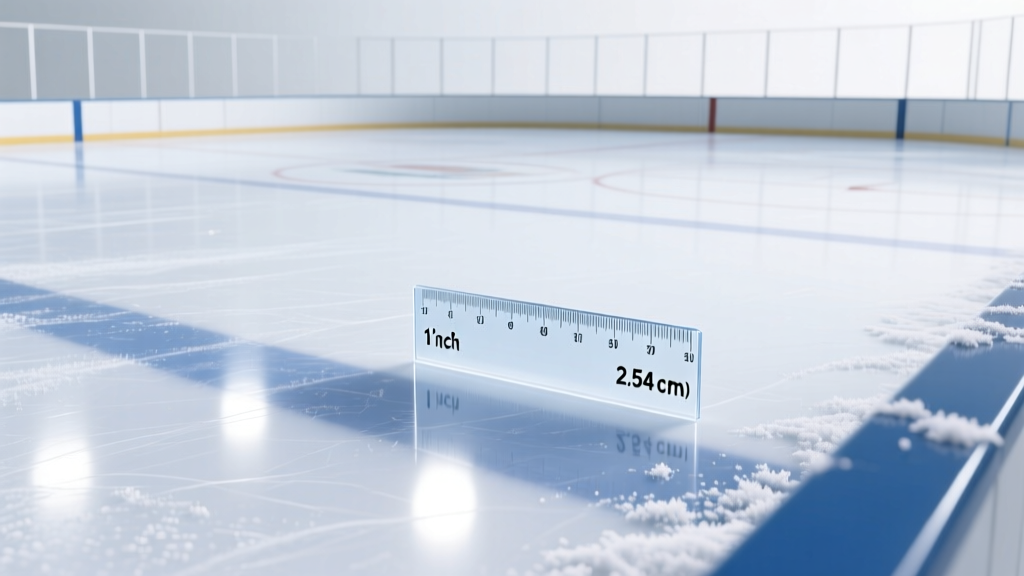
How Thick Is a Hockey Rink Ice? NHL & Olympic Standards
A standard hockey rink has an ice thickness of approximately 1 inch (2.54 cm), with slight variations depending on league, climate, and usage. This optimal thickness balances player safety, puck glide, and structural integrity under intense conditions.
Why Ice Thickness Matters in Hockey
The thickness of the ice on a hockey rink is critical for performance, safety, and game consistency. Too thin, and the ice risks cracking or melting; too thick, and it becomes brittle, slows the puck, and increases energy costs to maintain.
Key Factors Influencing Ice Thickness
- League standards: NHL, IIHF, and amateur leagues have specific guidelines.
- Arena refrigeration: Cooling systems must maintain consistent subfloor temperatures.
- Environmental conditions: Humidity and ambient temperature affect ice stability.
- Game intensity: Professional games generate more friction, requiring durable ice.
NHL vs International Rink Ice Standards
The National Hockey League (NHL) and International Ice Hockey Federation (IIHF) follow similar but not identical specifications for ice construction. While both target around 1 inch of ice, differences arise in rink size and maintenance protocols.
| Parameter | NHL | IIHF | Olympic Standard |
|---|---|---|---|
| Ice Thickness | 1.0 in (2.54 cm) | 1.0–1.25 in (2.54–3.18 cm) | 1.25 in (3.18 cm) |
| Subfloor Temp | -9°C (15°F) | -5°C to -9°C (23–15°F) | -5°C (23°F) |
| Rink Size | 200 x 85 ft (61 x 26 m) | 200 x 100 ft (61 x 30.5 m) | 200 x 100 ft (61 x 30.5 m) |
| Ice Surface Temp | -5°C (23°F) | -7°C to -9°C (19–15°F) | -7°C (19°F) |
| Number of Ice Layers | 8–12 | 10–15 | 12–16 |
The data shows that while NHL rinks use slightly thinner ice, international and Olympic standards favor thicker ice (up to 1.25 inches) to accommodate larger rinks and longer events. Thicker ice resists wear from extended gameplay and higher humidity in multi-sport venues.
How Ice is Built and Maintained
Creating professional-grade ice is a multi-day process involving precise layering and temperature control.
Step-by-Step Ice Formation
- Chill the concrete slab: Refrigerated brine circulates beneath the floor, cooling it to around -9°C (15°F).
- Spray fine water mist: Thin layers are applied and frozen, building up gradually.
- Add markings and paint: Lines and logos are painted between layers for durability.
- Topcoat with clear ice: Final layers ensure a smooth, glossy finish.
- Maintain during season: Zamboni machines resurface the ice between periods using warm water (around 60°C / 140°F) for better bonding.
Impact of Ice Thickness on Gameplay
Even minor changes in ice thickness influence skating speed, puck bounce, and player fatigue.
- Thinner ice (under 1 in): Faster at first but prone to chipping and soft spots.
- Optimal range (1–1.25 in): Balances speed, hardness, and resilience.
- Excessively thick ice (over 1.5 in): Becomes brittle and increases risk of cracks.
Frequently Asked Questions About Hockey Rink Ice Thickness
How thick is the ice on a professional hockey rink?
Professional rinks, including NHL arenas, typically maintain ice at 1 inch (2.54 cm) thick. Some international competitions use up to 1.25 inches for added durability.
What happens if hockey ice is too thin?
If ice is too thin (below 0.75 inches), it can crack under skater pressure, expose the concrete base, and create dangerous debris. It also melts faster due to friction from skates and pucks.
Do outdoor rinks have different ice thickness?
Yes, outdoor rinks often require thicker ice—between 8 to 12 inches (20–30 cm)—to withstand weather fluctuations, lack of refrigeration, and public use. This is structurally necessary, unlike indoor refrigerated rinks.
How often is hockey ice resurfaced?
During games, ice is resurfaced by a Zamboni or similar machine between each period—typically three times per game. Practice rinks may be resurfaced multiple times daily depending on usage.
Can ice thickness affect player performance?
Absolutely. Properly thick ice ensures consistent puck glide, sharp turns, and safe stops. Thin or uneven ice leads to unpredictable bounces and increased injury risk from falls or cuts.
More Articles
 What Does Think or Swim Mean? Explained
 How Many Laps to Swim a Mile? By Pool Size
 Golf Clubs for Beginners: Complete Set Guide with Club Types and Fitting Tips
 How Tall Are Hurdles in Track Events?
 When Was Ice Skating Invented? Origins & Evolution
 Who Invented Water Polo? The True Origin Story
 Where to Watch MotoGP 2025 Live Worldwide
 Where to Buy Garmin Swim 2 in 2025
 Who Invented Field Hockey? Origins & History Explained
 Best Sports for Beginners: 10 Easy and Fun Games to Start Today