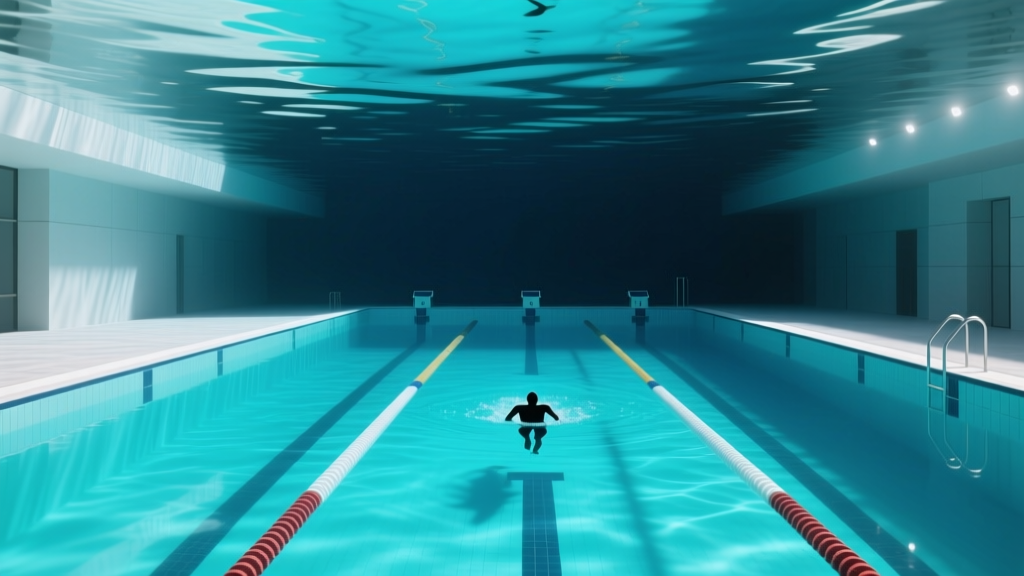
Olympic Swimming Pool Depth: How Deep Are They?
How Deep Are Olympic Swimming Pools?
Olympic swimming pools are required to be at least 2 meters (6.56 feet) deep, with a recommended depth of 3 meters (9.84 feet) to minimize wave reflection and ensure optimal swimmer performance. This standard is mandated by the international governing body for aquatic sports, World Aquatics (formerly FINA), for all official competitions including the Olympic Games.
Why Depth Matters in Competitive Swimming
The depth of an Olympic pool plays a critical role in athlete safety, race fairness, and performance accuracy. A properly designed pool reduces turbulence and minimizes waves bouncing off the bottom, which can disrupt swimmers’ momentum.
Key Reasons for Minimum Depth Requirements
- Wave Dissipation: Deeper water absorbs more energy from strokes and turns, reducing surface chop.
- Swimmer Safety: Adequate depth prevents injury during dives and flip turns. \li>Consistent Conditions: Uniform depth ensures all lanes offer identical hydrodynamic conditions.
- Timing Accuracy: Reduced turbulence leads to more predictable swim times across heats.
World Aquatics Standards for Olympic Pools
World Aquatics sets strict guidelines for all competition pools used in Olympic events. These standards cover not only depth but also length, width, lane count, water temperature, and lighting.
| Pool Dimension | Standard Requirement | Notes |
|---|---|---|
| Length | 50 meters | Short course pools are 25 meters |
| Width | 25 meters | For 8 or 10 lanes depending on configuration |
| Lanes | 10 lanes (minimum 8) | Lanes 1 and 10 often used as buffers |
| Depth | Minimum 2.0 m (6.56 ft), recommended 3.0 m (9.84 ft) | Deeper pools reduce wave resonance |
| Water Temperature | 25–28°C (77–82.4°F) | Regulated for athlete comfort and performance |
| Lighting | Minimum 1500 lux | Ensures visibility and TV broadcast quality |
The data shows that depth is just one component of a highly engineered environment. Pools built to the recommended 3-meter depth, such as those used in the Tokyo 2020 and Paris 2024 Olympics, significantly improve racing conditions by minimizing underwater wave interference. Notably, the difference between minimum and recommended depth reflects advances in fluid dynamics research over the past two decades.
Historical Evolution of Pool Depth Standards
In the early 20th century, Olympic pools were often less than 1.5 meters deep, leading to increased drag and inconsistent race times. As scientific understanding of hydrodynamics improved, so did construction standards.
Milestones in Pool Design
- 1956 Melbourne Olympics: First use of standardized 50m pools, though depth varied widely.
- 1976 Montreal Olympics: Introduction of deeper pools (≥2m) began improving performance consistency.
- 2000 Sydney Olympics: Adoption of uniform depth standards across all lanes.
- 2008 Beijing Olympics: Use of 3m-deep pools contributed to 25 world records due to superior conditions.
Common Questions About Olympic Swimming Pool Depth
Are all Olympic pools exactly the same depth?
No, while all must meet the minimum 2-meter depth requirement set by World Aquatics, many modern venues exceed this with 3-meter depths for better performance conditions. Variations exist based on construction era and budget.
Why don’t Olympic pools have shallow ends?
Olympic competition pools do not have shallow ends because consistent depth ensures uniform water resistance and wave behavior across all lanes, which is essential for fair competition and record validity.
Does pool depth affect swimmer speed?
Yes, deeper pools reduce wave reflection from the bottom, decreasing turbulence. Studies show swimmers can be up to 1–2% faster in 3m-deep pools compared to 2m-deep ones under identical effort.
Can Olympic pools be deeper than 3 meters?
While not required, some training and competition facilities exceed 3 meters for specialized diving or research purposes. However, beyond 3 meters, the performance benefit plateaus and costs rise significantly.
How is pool depth measured and verified before the Olympics?
Official inspectors from World Aquatics conduct sonar and physical depth measurements at multiple points across each lane before certification. Any deviation beyond ±1 cm triggers mandatory adjustments.
More Articles
 Long Jump World Record: Men's & Women's All-Time Best
 Swimming and Data: The Precision Sport Shift
 Badminton Guide: Rules, Gear, and Strategy
 How High Did Ronaldo Jump? 2.93 Meters Revealed
 Where to Buy Swimming Caps: Best Retailers & Tips
 How Much Water in a Swimming Pool? By Size & Type
 Where to Buy Swimming Noodles in 2025
 What Muscles Does a Rower Work? Full-Body Breakdown
 Olympic Diving Pool Depth: How Deep Is It?
 How Many Meters Is an Olympic Swimming Pool?