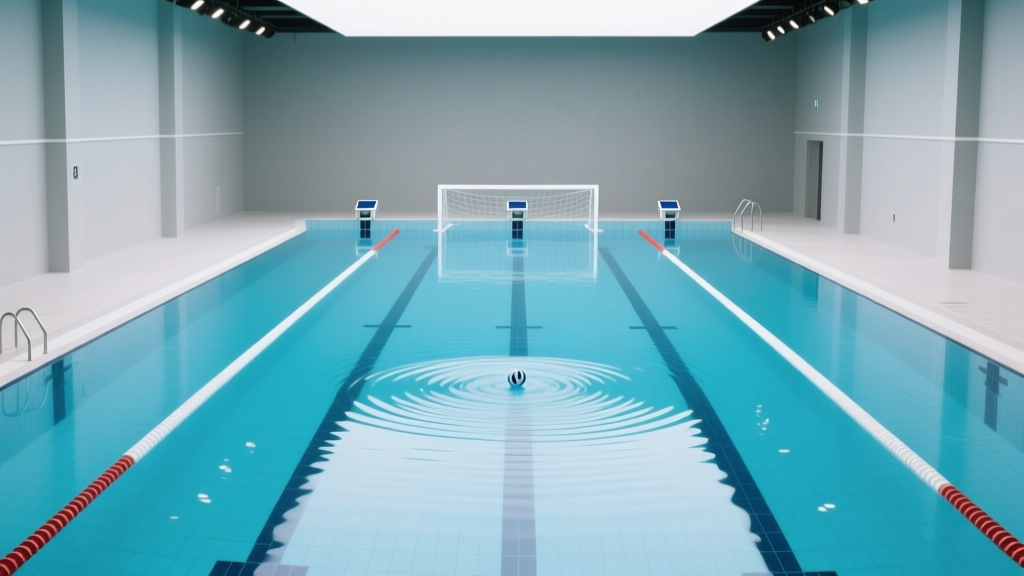
Olympic Water Polo Pool Depth: 2 Meters Explained
The official depth of an Olympic water polo pool is at least 2 meters (6.56 feet), as mandated by World Aquatics (formerly FINA) for all international competitions, including the Olympic Games. This standardized depth ensures fair play, athlete safety, and consistent performance conditions across venues.
Why Is Pool Depth Important in Olympic Water Polo?
Pool depth plays a crucial role in the dynamics of water polo, influencing player movement, game speed, and safety. A properly designed pool minimizes physical strain and allows athletes to perform at their peak.
Key Reasons for Standardized Depth
- Player Buoyancy and Treading Efficiency: A depth of 2 meters prevents players from touching the bottom, ensuring they rely on swimming and treading water, which maintains fairness.
- Reduced Risk of Injury: Deeper water minimizes contact with the pool floor during intense movements, reducing abrasions and impact injuries.
- Consistent Game Dynamics: Uniform depth across venues ensures predictable ball behavior and player positioning.
- Compliance with World Aquatics Regulations: All Olympic and world championship events must adhere to these standards for eligibility.
Olympic Water Polo Pool Specifications
Olympic water polo pools must meet strict dimensional and environmental standards set by World Aquatics. These regulations ensure optimal competition conditions and athlete performance.
| Parameter | Standard Requirement | Notes |
|---|---|---|
| Depth | Minimum 2.0 meters (6.56 ft) | Uniform depth across entire playing area |
| Length | 30 meters (98.4 ft) | Measured between goal lines |
| Width | 20 meters (65.6 ft) | Standard for all Olympic matches |
| Water Temperature | 25–28°C (77–82.4°F) | To prevent cramping and fatigue |
| Goal Dimensions | 3.0 x 1.0 m (9.8 x 3.3 ft) | Same as field hockey goals |
| Ball Circumference | 0.68–0.71 m (27–28 in) | Size 5 for men, Size 4 for women |
The data confirms that Olympic water polo pools are deeper than standard recreational pools (typically 1.2–1.8m). The 2-meter minimum depth prevents players from gaining leverage by pushing off the bottom, preserving the sport’s integrity. Consistent dimensions also allow teams to train under competition-like conditions worldwide.
Differences Between Water Polo, Swimming, and Diving Pools
While all aquatic disciplines use Olympic-sized pools, specifications vary slightly based on sport-specific needs.
Comparative Use of Depth
- Swimming Pools: Also 2.0m deep, but lane design and wave absorption are prioritized.
- Diving Pools: Must be at least 5.0m deep to accommodate high-dive entries safely.
- Water Polo Pools: Require 2.0m depth with marked zones and neutral areas for gameplay.
Despite similar depths to swimming pools, water polo pools include additional markings such as the 2-meter and 5-meter lines, critical for rule enforcement. The deeper diving pools highlight how depth requirements are tailored to athletic risk and movement patterns.
Frequently Asked Questions About Olympic Water Polo Pool Depth
How deep is an Olympic water polo pool?
An Olympic water polo pool must be at least 2 meters (6.56 feet) deep throughout the entire playing area, according to World Aquatics regulations. This depth ensures players cannot touch the bottom, maintaining fair and competitive gameplay.
Why is the water polo pool so deep?
The depth prevents players from standing or pushing off the bottom, forcing them to tread water continuously. This enhances athleticism, reduces physical advantage, and aligns with the sport’s rules requiring constant swimming motion.
Can water polo be played in shallow pools?
No, official competitions cannot be held in shallow pools. Recreational games may occur in shallower water, but this increases injury risk and violates World Aquatics rules. For Olympic and international events, a minimum 2-meter depth is mandatory.
Is the Olympic water polo pool deeper than a regular pool?
Yes, Olympic water polo pools (2.0m) are deeper than most public or recreational pools, which average 1.2–1.8 meters. The extra depth ensures safety and fairness during high-intensity matches.
Do men’s and women’s water polo use the same pool depth?
Yes, both men’s and women’s Olympic water polo competitions use pools with the same depth of at least 2 meters. While ball size and field dimensions differ slightly, the pool depth remains standardized across genders.
More Articles
 Best Soccer Cleats for Flat Feet Guide
 What Swimming Pools Are Open Now? Find Nearby Access
 Olympic Pool Depth: Official 2026 Standards
 How Much Do Formula 1 Drivers Get Paid in 2025?
 Can Swimming Help You Lose Weight? Science-Backed Facts
 Tennis Racket String Tension Guide
 Have Any Swimmers Died Crossing the English Channel?
 Which Behavior Is Task-Oriented Style Linked To?
 Olympic Water Polo Pool Depth: Exact Measurement
 How High Did Ronaldo Jump? 2.93 Meters Revealed