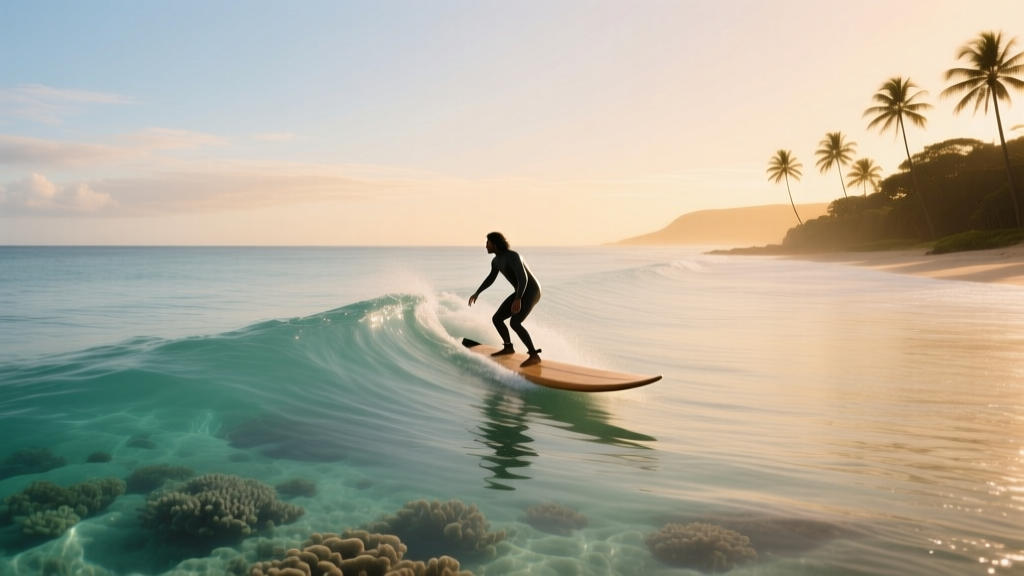
Where Was Surfing Invented? The True Origin
Surfing was invented in ancient Polynesia, with the earliest evidence pointing to Hawaii as the cultural birthplace of modern surfing.
The Origins of Surfing: A Cultural Legacy
Surfing traces its roots back over a thousand years to the Polynesian islands, where wave riding was more than recreation—it was a spiritual and social practice. While early forms of wave riding may have existed across the Pacific, Hawaii is widely recognized as the birthplace of organized surfing as we understand it today.
Historical Development Across Polynesia
- Polynesians brought basic surfboard craftsmanship and ocean knowledge to Hawaii around 400 AD.
- Hawaiians refined the art, developing distinct board types like the olo (long, heavy boards for chiefs) and alaia (shorter, agile boards).
- Surfing, or he'e nalu in Hawaiian, was deeply embedded in religious rituals, social hierarchy, and daily life.
- Early surfboards were carved from native woods such as koa, wiliwili, and ulu.
How Ancient Hawaiians Shaped Modern Surfing
Before Western contact, surfing in Hawaii was a central cultural activity. Chiefs and commoners alike participated, though access to certain beaches and board types reflected social status.
Key Aspects of Traditional Hawaiian Surfing
- Spiritual significance: Surfing was accompanied by chants, prayers, and offerings to ensure safety and success.
- Community events: Entire villages gathered to watch elite surfers demonstrate skill on large waves.
- Board construction: The process of selecting wood and shaping boards involved ritual practices.
| Surfboard Type | Length (feet) | Weight (lbs) | User Class | Material |
|---|---|---|---|---|
| Olo | 14–18 | 80–150 | Ali'i (Chiefs) | Koa |
| Alaia | 7–12 | 25–50 | Commoners & Elite | Wiliwili |
| Kiko'o | 12–17 | 60–100 | Skilled Surfers | Ulu |
The table highlights the diversity of traditional Hawaiian surfboards, reflecting both functional design and social stratification. The olo boards, reserved for royalty, were longer and heavier, allowing smooth rides on open ocean swells. In contrast, alaia boards offered greater maneuverability and were accessible to a broader population.
Global Spread and Modern Evolution
Surfing remained largely confined to Polynesia until the late 18th century when European explorers, including Captain James Cook, documented the practice in Hawaii. By the early 20th century, Hawaiian surfers like Duke Kahanamoku helped popularize the sport worldwide through demonstrations in Australia, California, and beyond.
- Duke Kahanamoku, an Olympic swimmer, became surfing’s most influential ambassador in the 1910s–1930s.
- Post-World War II advancements in board materials (e.g., foam and fiberglass) revolutionized accessibility and performance.
- In 2020, surfing made its Olympic debut at the Tokyo Games, cementing its global status.
Frequently Asked Questions About Where Surfing Was Invented
Where was surfing invented?
Surfing was invented in ancient Polynesia, with Hawaii being the most significant cultural origin point for the sport as we know it today.
Did surfing originate in Hawaii or Tahiti?
While wave riding existed in various Polynesian cultures including Tahiti, Hawaii developed the most advanced and culturally embedded form of surfing, making it the recognized birthplace of the modern sport.
Who invented surfing?
No single person invented surfing. It evolved over centuries among Polynesian peoples, with Native Hawaiians refining and preserving the practice long before Western contact.
When did surfing become popular outside Hawaii?
Surfing gained international popularity in the early 20th century, especially after Duke Kahanamoku demonstrated it in Australia and the U.S. mainland during the 1910s.
Is surfing originally a Hawaiian tradition?
Yes, surfing is originally a Hawaiian tradition known as he'e nalu. It was a sacred activity tied to Hawaiian identity, spirituality, and social structure long before colonization.
More Articles
 Best Warm-Up Exercises Before Sports: Dynamic Stretching Routines for Athletes
 Who Made Skateboards? The Inventors and Evolution
 Top Exercises for Shoulder & Neck Strength
 Basketball Rebounding Techniques: 10 Drills and Tips to Dominate the Boards
 When Does Ski Season Begin? Opening Dates by Region
 12 Fun Sports Alternatives to Try
 Tennis Doubles Strategy: Positioning, Communication, and Shot Selection
 Who Owns Alo Yoga? Founders and Ownership Details
 How Long Does Hiking the Appalachian Trail Take?
 Where Can I Go Hiking Near Me? Find Trails Fast