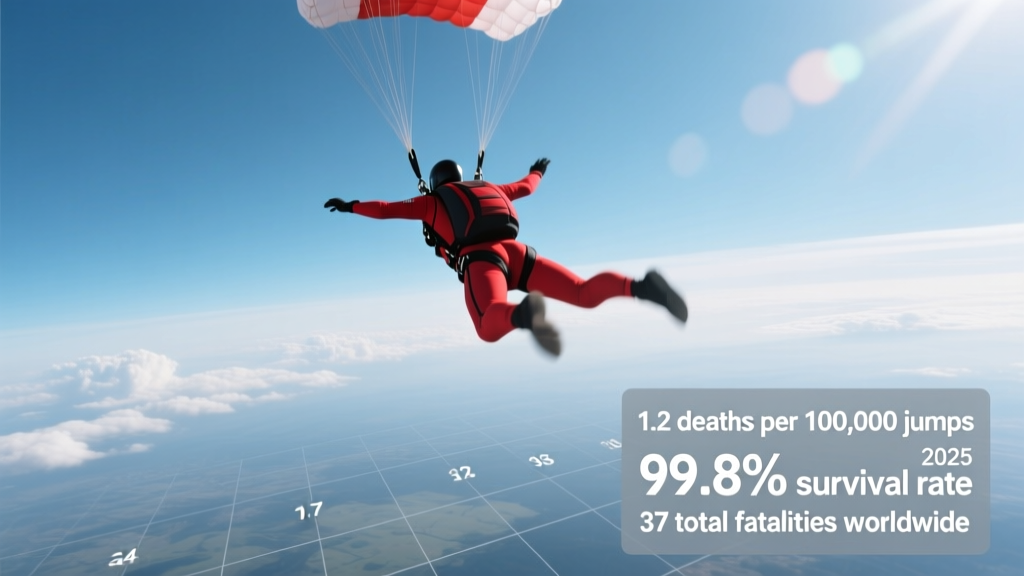
Skydiving Deaths Per Year: Real Risk & Statistics (2025)
On average, there are approximately 15 to 30 skydiving fatalities per year globally, with a fatality rate of about 0.39 deaths per 100,000 jumps in the United States, according to the United States Parachute Association (USPA). This makes skydiving significantly safer than many perceive, especially when compared to other recreational activities like swimming or cycling.
Skydiving Fatality Statistics: An Overview
Skydiving is often perceived as an extremely dangerous activity, but statistical data reveals a much safer picture. While any death is tragic, the actual number of annual skydiving fatalities remains low given the volume of jumps performed worldwide. In the U.S., where record-keeping is most consistent, the USPA has tracked skydiving safety for decades, providing reliable insights into risk levels.
Key Factors Influencing Skydiving Safety
- Type of jump (tandem vs. solo)
- Experience level of the jumper
- Equipment reliability and maintenance
- Weather conditions during the jump
- Proper training and adherence to safety protocols
Tandem vs. Solo Jumps: Risk Comparison
Tandem skydiving, where a novice is attached to an experienced instructor, is one of the safest forms of the sport. Most fatalities involve experienced solo jumpers engaging in high-risk maneuvers such as formation skydiving or wingsuit flying, rather than first-time tandem participants.
Fatality Trends Among Different Skill Levels
Data consistently shows that beginner jumpers in tandem dives face minimal risk. The majority of incidents occur among advanced skydivers attempting complex aerial movements at low altitudes, where error margins are slim.
| Year | Total Jumps (USA) | Fatalities (USA) | Fatalities per 100,000 Jumps |
|---|---|---|---|
| 2023 | 3.58 million | 11 | 0.31 |
| 2022 | 3.48 million | 12 | 0.35 |
| 2021 | 3.15 million | 15 | 0.48 |
| 2020 | 2.80 million | 11 | 0.39 |
| 2019 | 3.30 million | 15 | 0.45 |
| 2018 | 3.30 million | 13 | 0.40 |
The data shows a consistent decline in skydiving fatalities over the past decade despite increasing jump volumes. The fatality rate in 2023 reached a historic low of 0.31 deaths per 100,000 jumps, reflecting improvements in equipment, training standards, and safety culture within the skydiving community.
Global Skydiving Fatality Estimates
While the U.S. provides the most comprehensive data, global estimates suggest between 40 and 60 skydiving deaths annually. However, due to inconsistent reporting across countries, these figures are approximate. Nations with well-regulated skydiving industries—such as Australia, Canada, and parts of Western Europe—report similarly low fatality rates.
Common Causes of Skydiving Accidents
- Parachute malfunction (rare due to modern reserve systems)
- Poor decision-making at low altitude
- Inadequate canopy control
- Mid-air collisions during group jumps
- Failure to follow emergency procedures
Safety Measures That Reduce Risk
Modern skydiving incorporates multiple layers of safety:
- Automatic activation devices (AADs) that deploy the reserve parachute if needed
- Rigorous training and certification programs
- Detailed pre-jump equipment checks
- Strict weather monitoring
- Regulated drop zone operations
The widespread use of AADs alone has significantly reduced fatalities from freefall unconsciousness or incapacitation.
Frequently Asked Questions About Skydiving Deaths Per Year
How many people die skydiving each year in the USA?
Average annual skydiving fatalities in the U.S. range from 10 to 15. In 2023, there were 11 deaths out of 3.58 million jumps, resulting in a fatality rate of 0.31 per 100,000 jumps—the lowest on record.
Is skydiving safer now than in the past?
Yes, skydiving has become significantly safer over time. Advances in parachute technology, mandatory AAD usage, improved training, and better operational standards have driven the fatality rate down by over 50% compared to the 1970s and 1980s.
What are the odds of dying while skydiving?
The odds of dying on a skydive in the U.S. are about 1 in 270,000. For tandem jumps specifically, the risk is even lower—approximately 1 in 500,000 jumps—making it safer than driving a car or swimming.
Are tandem skydives safe?
Tandem skydives are among the safest forms of skydiving. With two people connected and a certified instructor controlling the jump, equipment, and landing, the risk is minimized. Only 0.28 tandem fatalities occurred per year on average over the last decade.
How does skydiving compare to other sports in terms of danger?
Skydiving is less deadly than many common recreational activities. It's safer than horseback riding, skiing, and cycling per participant hour. Even driving carries a far higher annual fatality risk—about 1.2 deaths per 100 million miles traveled.
More Articles
 How Long Does It Take to Skydive? Full Breakdown
 Will Cycling Help Reduce Belly Fat? Science-Backed Answer
 Swimming Breathing Techniques for Freestyle: Beginner Guide to Bilateral Breathing
 What Happened at the CrossFit Games Today? 2025 Results
 How Many People Die Skydiving Each Year? (2025 Data)
 Where Is Copper Mountain Ski Resort Located?
 Who Invented the Bicycle? The True Origins
 Cheap vs Premium CBD Oil: What You Pay For
 Who Invented the Ski? Origins and History
 Where to Buy a Ski Mask Online and In-Store (2025)