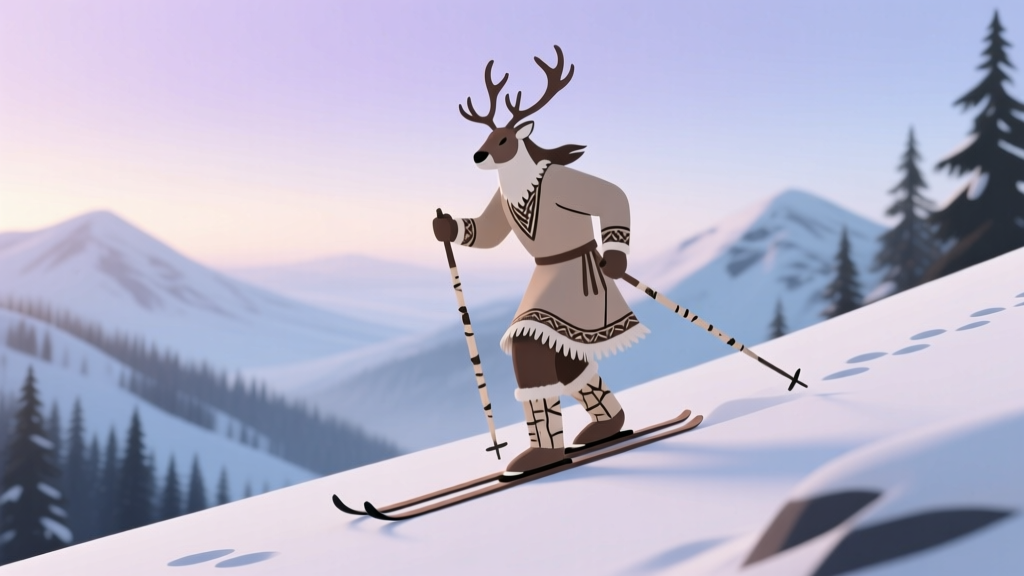
Where Did Skiing Originate? Ancient Roots and Evolution
Skiing originated in ancient Scandinavia over 5,000 years ago, with archaeological evidence and rock carvings from Norway and Sweden indicating its use for transportation, hunting, and military purposes during snowy winters.
Historical Origins of Skiing
The earliest evidence of skiing dates back to prehistoric times in northern Europe. Ancient peoples in Scandinavia developed skis as a practical solution for traversing deep snow across vast forested and mountainous regions.
Early Evidence and Archaeological Finds
- The oldest known ski remnants, the Komagfjord ski, were discovered in Norway and date to around 3500 BCE.
- Rock carvings in Trysil, Norway, depict figures on skis and are estimated to be over 4,000 years old.
- Historical texts from Chinese and Nordic sources reference ski-like devices used by hunters and warriors.
These findings confirm that skiing began as a utilitarian activity in Arctic and sub-Arctic climates before evolving into a recreational and competitive sport.
Evolution of Skiing Through the Centuries
From its roots in survival and mobility, skiing gradually transitioned into military training and eventually leisure and sport.
Medieval and Military Use
In medieval Norway and Sweden, skiers served as messengers and scouts. The Norwegian army held ski competitions as early as the 18th century to train troops. By the 1800s, formal ski jumping and cross-country races emerged.
Birth of Modern Skiing
- 1859: First recorded public ski race held in Tromsø, Norway.
- 1861: The first ski club, Trysil-Gausdal Alpine Club, founded in Norway.
- 1892: FIS (International Ski Federation) established to govern international competitions.
- 1936: Alpine skiing debuted at the Winter Olympics in Garmisch-Partenkirchen.
Geographic Spread and Cultural Impact
From Scandinavia, skiing spread across Europe, then to North America and globally, driven by immigration, tourism, and winter sports culture.
- Norwegian immigrants introduced skiing to the United States in the 1800s.
- Alpine regions of Austria, Switzerland, and France developed resort infrastructure in the early 20th century.
- Japan and South Korea adopted skiing in the mid-1900s, hosting Winter Olympics in 1972 and 2018.
| Country | First Known Ski Use (BCE/CE) | First Ski Club Founded | Olympic Host Year(s) | Current Skiers (Est.) |
|---|---|---|---|---|
| Norway | 3500 BCE | 1861 | 1952, 1994 | 2.8 million |
| Sweden | 2500 BCE | 1895 | None | 2.1 million |
| Finland | 3000 BCE | 1907 | 1952 | 1.7 million |
| United States | 1850 CE | 1872 | 1932, 1960, 1980, 2002 | 9.8 million |
| France | 500 BCE (estimated) | 1908 | 1924, 1936, 1948, 1968, 1992 | 14.5 million |
The data shows that while Scandinavia has the deepest historical roots in skiing, countries like France and the United States now lead in participation numbers due to extensive resort networks and cultural integration of winter sports. Norway remains central to skiing heritage, being both the birthplace and an Olympic host twice.
Types of Skiing and Their Development
Modern skiing includes several disciplines, each with distinct origins and growth patterns.
Cross-Country Skiing
Directly descended from original Scandinavian practices, it remains popular for fitness and competition. It was the only Olympic skiing event until 1936.
Alpine (Downhill) Skiing
Developed in the Alps in the early 20th century, combining elements of mountaineering and skiing. Innovations in bindings and ski design accelerated its popularity.
Freestyle and Backcountry Skiing
Emerging in the 1970s, freestyle includes aerials and moguls. Backcountry skiing appeals to adventurers seeking untouched terrain, reflecting a return to skiing’s exploratory roots.
Frequently Asked Questions About Where Skiing Originated
Where did skiing originate and why?
Skiing originated in ancient Scandinavia, primarily in modern-day Norway and Sweden, as a means of transportation and survival during harsh winters. With heavy snowfall and dense forests, early inhabitants crafted wooden skis to move efficiently across snow-covered landscapes for hunting and communication.
Who invented skiing first?
No single individual invented skiing—it evolved independently among several northern Eurasian cultures. However, the most well-documented early use comes from Norse peoples in Scandinavia, supported by archaeological finds and mythology, including the god Ullr, associated with skiing and hunting.
How did skiing spread from Scandinavia to other countries?
Skiing spread through military use, migration, and tourism. Norwegian soldiers trained on skis, influencing neighboring countries. In the 19th century, Norwegian immigrants brought skiing to North America, while European alpine nations developed ski resorts that attracted global visitors, promoting the sport internationally.
What is the oldest evidence of skiing?
The oldest physical evidence is the Komagfjord ski from Norway, dating to approximately 3500 BCE. Additionally, rock carvings in northern Norway depicting skiers are over 4,000 years old, providing visual proof of early skiing practices.
When did skiing become a sport?
Skiing became a formal sport in the 19th century. The first organized ski race occurred in Norway in 1859, and the first ski club was founded in 1861. International competitions grew rapidly, leading to the establishment of the FIS in 1924 and inclusion in the Winter Olympics in 1936.
More Articles
 Best Skateboards to Buy: Top Stores & Online (2026)
 How Much Does a Snowboard Cost in 2025?
 Beginner Guide to Heart Rate Training Zones for Cardio Fitness
 How Long Is a Triathlon in Miles?
 What Muscles Does Cycling Work? Key Muscle Groups Explained
 Who Invented the Skateboard? The True Origin Story
 How Much Is Better Me Pilates? Costs Explained
 How Much Is a Triathlon? Full Cost Breakdown 2025
 Training with Swim Fins: Benefits and Risks
 Where Is Chicago Bears Training Camp Held in 2025?