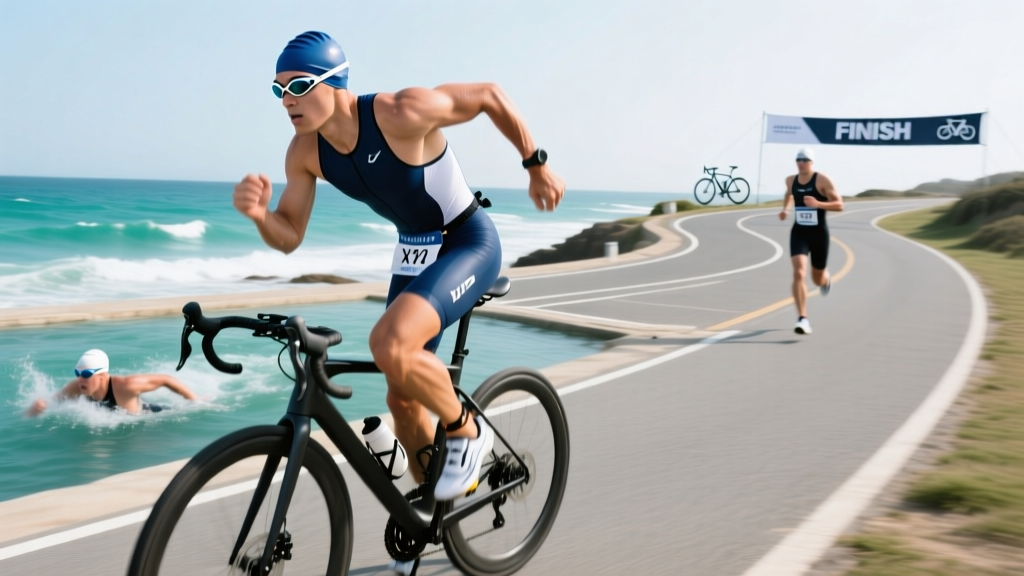
What Does the Ironman Triathlon Consist Of?
The Ironman Triathlon consists of a 3.8 km swim, followed by a 180 km bike ride, and finishes with a full marathon run of 42.2 km, totaling 226.2 kilometers completed in under 17 hours.
What Is the Ironman Triathlon?
The Ironman Triathlon is one of the most challenging one-day endurance events in the world. It tests athletes across three consecutive disciplines: swimming, cycling, and running—without stopping. The race begins with a mass open-water swim, transitions to a long-distance bicycle ride, and concludes with a marathon. Competitors must complete all segments within a strict 17-hour time limit.
Origins of the Ironman
Created in 1978 on the island of Oahu, Hawaii, the Ironman was born from a debate over which athletes were the fittest: swimmers, cyclists, or runners. The first event combined three existing endurance races: the Waikiki Roughwater Swim (3.8 km), the Around-Oahu Bike Race (180 km), and the Honolulu Marathon (42.2 km). Since then, it has evolved into a global phenomenon managed by the World Triathlon Corporation (WTC).
Ironman Race Structure Breakdown
An official Ironman triathlon follows a standardized distance recognized worldwide. Each segment is designed to push human endurance to its limits.
- Swim: 3.8 kilometers (2.4 miles) in open water
- Bike: 180 kilometers (112 miles) on a road-legal bicycle
- Run: 42.2 kilometers (26.2 miles)—a full marathon
- Total Distance: 226.2 kilometers (140.6 miles)
- Cut-off Time: 17 hours from start to finish
Transition Zones Explained
Transitions (T1 and T2) are critical parts of the race. T1 occurs after the swim and before the bike; athletes change from swim gear to cycling apparel. T2 follows the bike leg, where competitors switch to running shoes and gear. Efficient transitions can save valuable minutes.
Ironman vs. Other Triathlon Distances
While Ironman is the most well-known, several triathlon formats exist. Understanding the differences helps athletes choose appropriate challenges based on fitness and experience.
| Triathlon Format | Swim | Bike | Run | Total Distance | Average Completion Time |
|---|---|---|---|---|---|
| Sprint | 750 m | 20 km | 5 km | 25.75 km | 2–3 hours |
| Olympic | 1.5 km | 40 km | 10 km | 51.5 km | 3–4 hours |
| Half-Ironman (70.3) | 1.9 km | 90 km | 21.1 km | 113.1 km | 5–7 hours |
| Ironman (Full) | 3.8 km | 180 km | 42.2 km | 226.2 km | 10–14 hours (pros), up to 17 |
The data shows that the full Ironman is more than double the distance of a Half-Ironman and nearly four times longer than an Olympic-distance race. Elite athletes typically finish in around 8 hours, while age-group participants average between 12 and 14 hours. Only those who cross the finish line within 17 hours earn the title of Ironman.
Training Requirements for Ironman Athletes
Preparing for an Ironman requires a structured training plan spanning 6–12 months. Most successful athletes follow periodized programs that build aerobic capacity, strength, and sport-specific endurance.
Weekly Training Volume
During peak training weeks, athletes often log:
- Swim: 3–5 sessions (6,000–10,000 meters)
- Bike: 4–6 rides (8–12 hours, including long rides up to 140 km)
- Run: 4–5 runs (40–80 km weekly, with long runs up to 32 km)
- Strength & Mobility: 2–3 sessions
- Rest: At least one full recovery day
Nutrition and Hydration Strategy
Fueling during the race is crucial. Athletes must consume 60–90 grams of carbohydrates per hour during the bike and run. Common sources include gels, sports drinks, bananas, and energy bars. Electrolyte replacement prevents cramping and hyponatremia.
Notable Ironman Events Worldwide
While there are over 30 full Ironman events annually, some stand out due to difficulty, prestige, or history.
- Ironman World Championship – Kailua-Kona, Hawaii: The original and most prestigious race, held annually since 1978 (except 2020–2021 due to pandemic).
- Ironman European Championship – Frankfurt, Germany: Known for fast bike courses and elite competition.
- Ironman African Championship – South Africa: Features rugged terrain and high temperatures.
- Ironman Cozumel – Mexico: A tropical course with strong winds affecting the bike leg.
Frequently Asked Questions About the Ironman Triathlon
What does the Ironman triathlon consist of?
The Ironman triathlon consists of a 3.8 km swim, 180 km bike ride, and a 42.2 km marathon run, totaling 226.2 kilometers. All segments must be completed consecutively within a 17-hour time limit.
How long does it take to finish an Ironman?
Professional athletes typically finish in 8–9 hours, while amateur participants average 12–14 hours. The maximum allowed time is 17 hours from the start gun to crossing the finish line.
Do you have to qualify for an Ironman race?
No, qualification is not required for most Ironman events. However, entry is granted via direct registration or earning a slot at a qualifying race. The Ironman World Championship in Kona requires either a qualifying slot or entry through the lottery system.
What is an Ironman 70.3?
An Ironman 70.3, also known as a Half-Ironman, covers half the distance: 1.9 km swim, 90 km bike, and 21.1 km run (totaling 70.3 miles, hence the name). It’s a popular stepping stone toward the full Ironman.
Can anyone participate in an Ironman?
Yes, as long as participants meet the minimum age requirement (usually 18 years old) and register before slots fill. While no prior qualification is needed, most successful finishers spend 6–12 months preparing physically and mentally for the challenge.
More Articles
 Training with Swim Fins: Benefits and Risks
 Can Calisthenics Burn Fat? Science-Backed Answer
 When Does Ski Season End? By Region & Year
 What Body Build Am I? Find Your Somatotype
 When Is Ski Season? Dates by Region & Resort
 Where Is Jaws Surf Spot? Location & Facts
 Can Yoga Make You Taller? Science-Backed Truth
 Where to Buy Ski Gear: Best Stores & Deals 2025
 How Much Is a CrossFit Gym Membership? (2025 Rates)
 Long Jump World Record Progression: Every Record from 1901 to Present