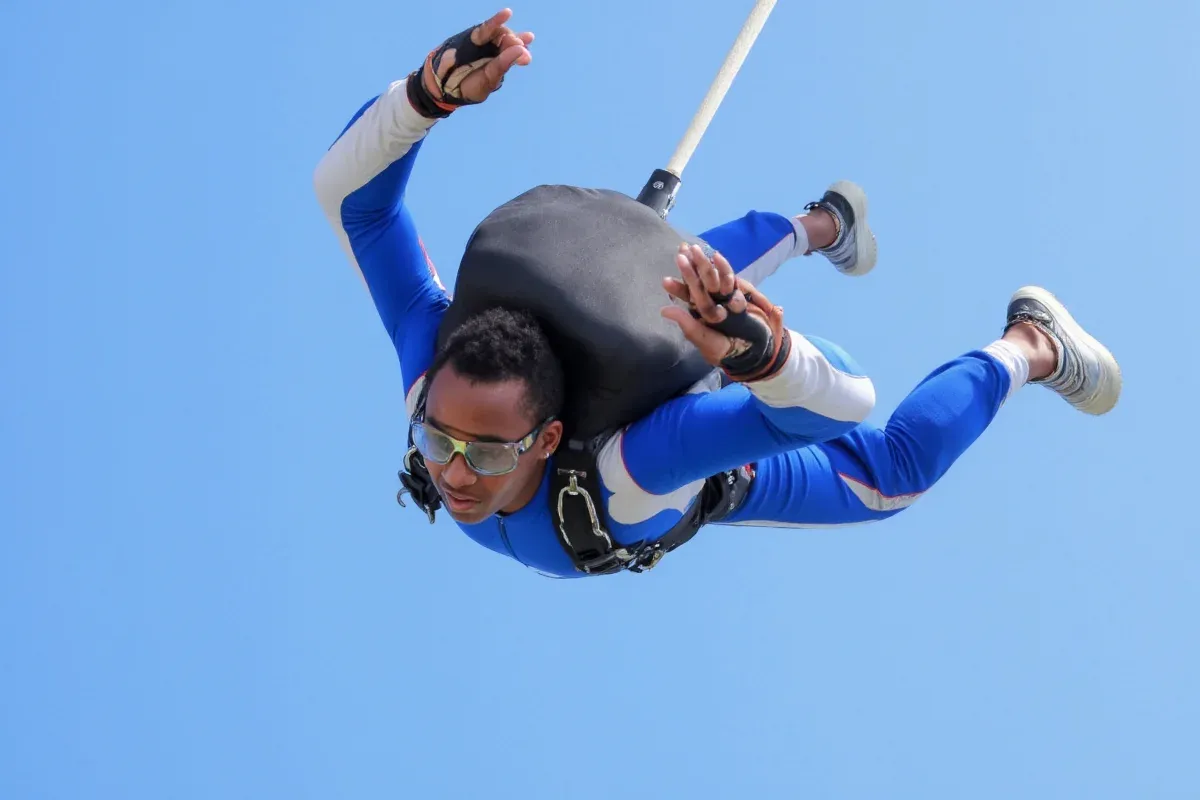
How Fast Do You Fall When Skydiving? Speed Explained
When skydiving, you typically fall at a speed of about 120 miles per hour (193 km/h) during a stable, belly-to-earth freefall. This terminal velocity can vary based on body position, weight, altitude, and air resistance.
Understanding Terminal Velocity in Skydiving
Terminal velocity is the constant speed a skydiver reaches when the force of gravity equals the air resistance. At this point, acceleration stops, and the person falls at a steady rate.
Factors Influencing Freefall Speed
- Body Position: A belly-down position maximizes air resistance, leading to ~120 mph. A head-down or feet-first dive reduces drag and increases speed.
- Body Mass and Size: Heavier jumpers with less surface area fall faster.
- Suit Design: Baggy clothing or specialized wingsuits alter drag significantly.
- Altitude and Air Density: Thinner air at higher altitudes allows slightly faster initial descent before stabilization.
Different Freefall Positions and Their Speeds
Skydivers adopt various postures to control their descent speed and perform aerial maneuvers.
| Freefall Position | Average Speed (mph) | Average Speed (km/h) | Typical Use Case |
|---|---|---|---|
| Belly-to-Earth (Stable) | 120 | 193 | Beginner jumps, formation skydiving |
| Head-Down | 150–180 | 241–290 | Advanced freeflying, speed skydiving |
| Feet-First | 130–160 | 209–257 | Transition posture, accuracy landings |
| Flying Squirrel (Arms/legs spread) | 100–110 | 161–177 | Wingsuit flying, glide optimization |
| Speed Skydiving (Vertical Dive) | 300+ | 480+ | Competition records, vertical wind tunnels |
The table illustrates how dramatically body orientation affects freefall speed. Competitive speed skydivers achieve over 300 mph by minimizing drag through aerodynamic positioning. In contrast, recreational jumpers maintain slower speeds for stability and safety.
How Long Does It Take to Reach Terminal Velocity?
After exiting the aircraft, it takes approximately 10 to 15 seconds to reach terminal velocity. During this time, the jumper accelerates rapidly due to gravity.
- First 3 seconds: Fall about 500 feet, reaching ~60 mph.
- By 5 seconds: Around 1,000 feet fallen, speed nears 90 mph.
- By 12 seconds: Most skydivers hit ~120 mph and stabilize.
The standard freefall from 10,000 to 15,000 feet lasts between 30 and 60 seconds before parachute deployment.
Safety and Equipment Impact on Descent
Modern skydiving gear ensures safe descents even at high speeds.
- Parachute Deployment: Typically occurs around 2,500–3,500 feet AGL, slowing descent to ~10–15 mph.
- Automatic Activation Device (AAD): Triggers reserve chute if needed, enhancing safety.
- Wingsuits: Increase lift and reduce vertical speed while enabling horizontal travel up to several hundred feet per second forward.
Common Questions About Skydiving Fall Speed
How fast do you fall when skydiving normally?
In a standard belly-to-earth position, most skydivers fall at an average speed of 120 miles per hour (193 km/h), which is considered terminal velocity for that posture.
Can you fall faster than 120 mph while skydiving?
Yes, advanced positions like head-down or vertical dives allow speeds of 150–180 mph or more. In competitive speed skydiving, divers exceed 300 mph using optimized suits and body alignment.
Does weight affect how fast you fall when skydiving?
Yes, heavier individuals tend to fall faster due to greater gravitational pull relative to air resistance. However, surface area and body position play equally important roles in determining terminal velocity.
How long does it take to fall 10,000 feet when skydiving?
From 10,000 feet, the freefall lasts roughly 30–35 seconds, assuming deployment at 3,500 feet. The first 12 seconds are spent accelerating to terminal velocity.
Do you feel like you're falling when skydiving?
Most people report feeling more like floating or flying rather than falling. The sensation of 'air support' creates a stable platform, especially in belly-down positions, reducing the typical stomach-drop feeling.
More Articles
 Games and Basketball Compared: Strategy, Psychology, and Performance Under Pressure
 How Old Is Shaun White the Snowboarder? Age & Career Facts
 Can Men Do Pilates? Yes – Here's Why It's Beneficial
 How Much Does It Cost to Become a Pilates Instructor?
 5K Training Program: Start Running Today!
 How Long Is an Olympic Triathlon? Full Distance Explained
 Female Surfer: Rise, Impact & Top Athletes 2025
 How To Match Evidence With Official: A Field-Tested Protocol for Compliance, Audits, and Dispute Resolution
 Beginners and MEAN Stack Compared: Practical Reality Check for New Developers
 How Long Is NFL Training Camp? Duration & Schedule Explained