How Fast Do Skydivers Fall? Average & Record Speeds
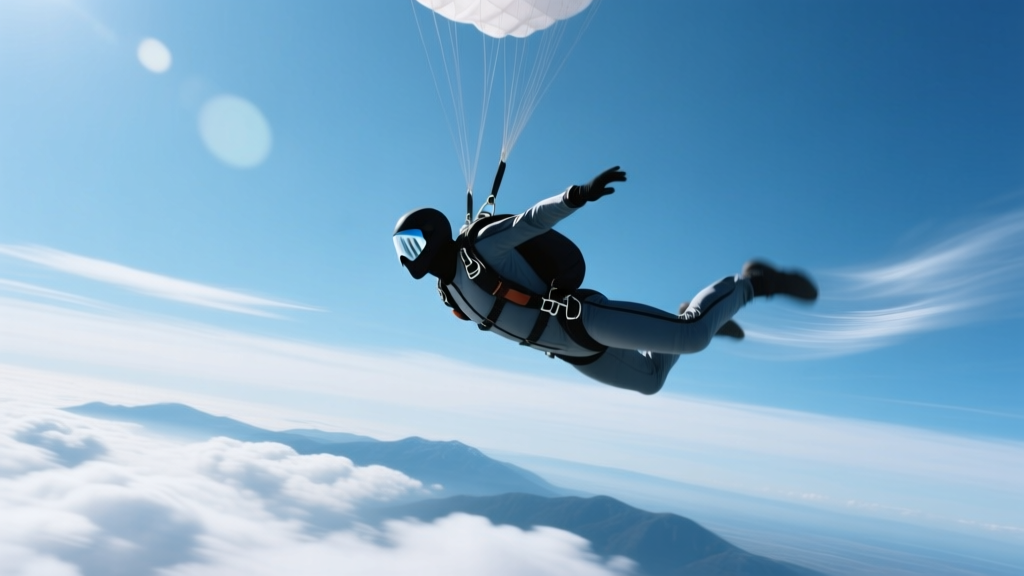
Skydivers typically fall at an average speed of 120 mph (193 km/h) in a stable, belly-to-earth position, though speeds can range from 90 to over 200 mph depending on body position, altitude, weight, and equipment.
Understanding Skydiving Freefall Speeds
When people ask "how fast do skydivers fall," the most common answer is around 120 miles per hour. This is the terminal velocity achieved during a standard belly-down skydive. Terminal velocity occurs when the force of gravity pulling the skydiver down is balanced by air resistance pushing up, resulting in a constant falling speed.
What Factors Influence Freefall Speed?
- Body Position: A horizontal, spread-eagle stance increases drag and slows descent, while a head-down or feet-first dive reduces surface area and increases speed.
- Weight and Size: Heavier skydivers generally fall faster due to greater gravitational pull, assuming similar body positions.
- Suit Design: Baggy clothing or specialized wingsuits alter airflow and can significantly affect speed.
- Altitude and Air Density: Thinner air at higher altitudes offers less resistance, allowing slightly higher speeds before air thickens during descent.
- Equipment: The type of parachute system and additional gear may influence aerodynamics.
Different Skydiving Positions and Their Speeds
Skydivers use various body orientations to control their descent rate and perform maneuvers. Each position results in different average speeds due to changes in air resistance.
| Skydiving Position | Average Speed (mph) | Average Speed (km/h) | Typical Use Case |
|---|---|---|---|
| Belly-to-Earth (Horizontal) | 120 | 193 | Beginner training, formation skydiving |
| Vertical (Head-Down) | 150–180 | 241–290 | Advanced freeflying, speed skydiving |
| Feet-First Vertical | 130–160 | 209–257 | Transition position, dynamic flying |
| Sit-Fly (Arms Extended) | 110–130 | 177–209 | Intermediate skill development |
| Wingsuit Flying | 90–110 (vertical), 150+ (horizontal glide) | 145–177 (vertical), 240+ (glide) | Glide performance, proximity flying |
| Speed Skydiving (Prone Record) | 373.6 (record) | 601.1 (record) | Competition discipline |
The table above illustrates how dramatically body orientation affects freefall velocity. While recreational jumpers average 120 mph, elite athletes in speed skydiving have exceeded 370 mph under controlled conditions. Wingsuit flyers trade vertical speed for horizontal distance, achieving forward speeds over 150 mph while descending slowly.
Terminal Velocity Explained for Skydivers
Terminal velocity is the maximum speed a skydiver reaches when air resistance equals gravitational force. For humans in freefall, this equilibrium happens after about 12 seconds, covering roughly 1,500 feet. At that point, acceleration stops and speed stabilizes.
Time to Reach Terminal Velocity
- 0–3 seconds: Rapid acceleration
- 4–8 seconds: Increasing air resistance
- 9–12 seconds: Approaching terminal velocity
- 12+ seconds: Stable freefall speed
From 15,000 feet, skydivers enjoy approximately 60 seconds of freefall before deploying their parachutes around 5,000 feet. Higher jumps extend this time but only marginally increase peak speed due to atmospheric limitations.
World Records and Extreme Speeds
The fastest recorded freefall was achieved by Joseph Kittinger in 1960 during Project Excelsior, reaching nearly 614 mph (988 km/h) from 102,800 feet. However, this occurred in near-vacuum conditions where air resistance was minimal.
In modern competitive skydiving, the Fédération Aéronautique Internationale (FAI) recognizes skydiver Ivan Nikolayevich from Russia with a record speed of 373.6 mph (601.1 km/h) in the speed skydiving discipline in 2023, measured over a 330-foot timing zone.
This highlights that while typical skydives involve speeds near 120 mph, specialized disciplines and extreme altitudes can produce velocities more than three times greater.
Frequently Asked Questions About Skydiver Fall Speed
How fast do skydivers fall in mph?
Most skydivers fall at an average speed of 120 mph in a belly-to-earth position. Advanced flyers in vertical orientations can reach 150–180 mph, while speed skydiving records exceed 370 mph.
What is the average terminal velocity of a skydiver?
The average terminal velocity for a skydiver in a stable, horizontal position is about 120 mph (193 km/h). This speed varies based on mass, posture, and atmospheric conditions.
Do heavier skydivers fall faster?
Yes, heavier skydivers tend to fall faster because they have more mass relative to surface area, requiring more air resistance to balance gravitational pull. They achieve higher terminal velocities unless adjusting body position to compensate.
How long does it take to reach terminal velocity when skydiving?
It takes approximately 12 seconds for a skydiver to reach terminal velocity, during which they fall about 1,500 feet. After this point, speed remains relatively constant until parachute deployment.
Can you feel like you're falling during a skydive?
No—during freefall, you don't feel like you're plummeting. Instead, it feels like floating or flying due to the air pressure supporting your body. There's no sensation of 'dropping' because there’s no nearby reference point like the ground moving rapidly beneath you.
More Articles
 Hiking Shoe Brands Not Made in China
 Best Places to Stay in Val Gardena for Skiing
 How Many Calories Do You Burn Snow Skiing?
 Where to Go Snowboarding: Top Global Destinations
 Where to Buy a Ski Mask Online and In-Store (2025)
 Seasonal Wardrobe Alignment for Athletes
 How Far Do You Swim in a Triathlon? Distances by Event
 When Does Ski Season End in Colorado?
 Will Cycling Help Reduce Belly Fat? Science-Backed Answer
 Team Alternatives to Dimensions: Practical, Scalable, and Cost-Effective Options for Engineering Teams