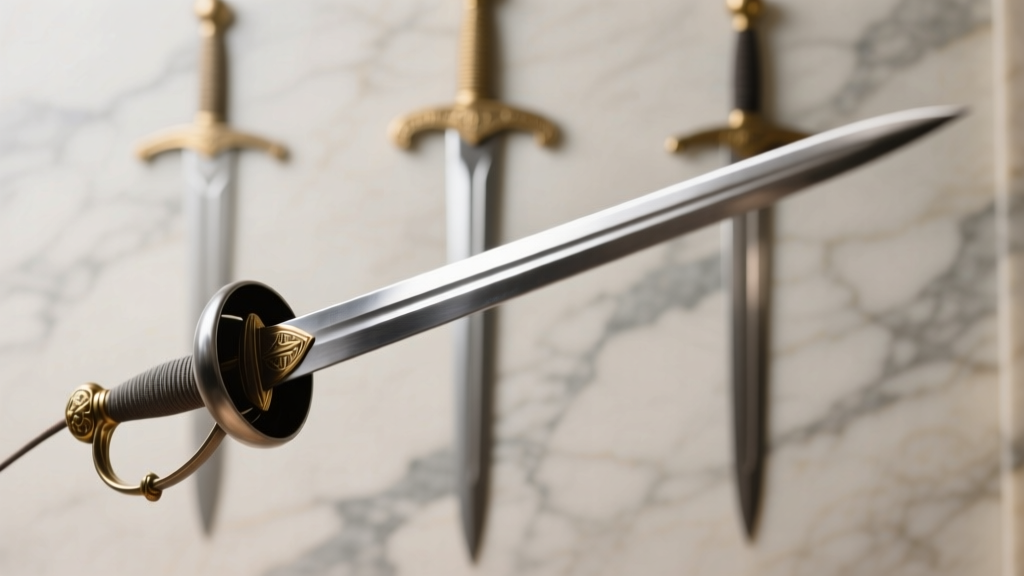
Who Invented Fencing? The Origin of Modern Fencing
Fencing, as a formalized sport, was not invented by a single person but evolved over centuries; however, Domenico Angelo is widely credited with transforming fencing into a modern sport through his 1763 publication *L'École des Armes*, which standardized techniques and training methods.
The Origins of Fencing: From Duel to Sport
Fencing traces its roots back to ancient civilizations, where sword fighting was essential for combat and self-defense. Over time, these martial practices evolved into disciplined systems of combat, eventually becoming the competitive sport we recognize today.
Early Sword Fighting Traditions
- Ancient Egypt and Rome had forms of swordplay for military training.
- Medieval Europe saw the rise of dueling culture, especially among nobility. \li>By the Renaissance, masters of defense began codifying techniques in detailed manuscripts.
Domenico Angelo: The Father of Modern Fencing
In 1763, Italian-born fencing master Domenico Angelo published L'École des Armes (The School of Fencing), a comprehensive guide illustrated with precise engravings. This work shifted fencing from lethal dueling to a regulated physical discipline emphasizing posture, precision, and safety.
Key Contributions of Domenico Angelo
- Established fencing as a gentleman's sport rather than purely combat training.
- Introduced standardized positions, footwork, and bladework still used today.
- Taught at elite institutions in England, influencing aristocratic education.
- His school in London became a model for future fencing academies.
Evolution of Fencing Equipment and Rules
The transition from deadly duels to safe competition required innovation in gear and regulation. The development of protective masks, lighter weapons, and scoring systems enabled fencing to become an Olympic sport.
Milestones in Fencing Technology
| Year | Innovation | Impact |
|---|---|---|
| 1780 | Wire mesh fencing mask invented by La Boëssière | Allowed safer practice and faster bouts |
| 1896 | Fencing included in first modern Olympics | Established international competitive standards |
| 1933 | Electrical scoring introduced for épée | Improved accuracy in judging touches |
| 1956 | Electrified foil blades adopted | Reduced subjectivity in scoring |
| 1988 | Electrical sabre implemented | Completed full electrification of all three weapons |
Global Development of Competitive Fencing
| Country | Total Medals | Gold | Silver | Bronze |
|---|---|---|---|---|
| Italy | 49 | 13 | 15 | 21 |
| France | 44 | 13 | 14 | 17 |
| Russia / Soviet Union | 40 | 18 | 11 | 11 |
| Hungary | 38 | 9 | 13 | 16 |
| Germany | 31 | 8 | 10 | 13 |
| United States | 17 | 1 | 5 | 11 |
Italy and France dominate Olympic fencing history, combining for over 90 medals. Russia leads in golds due to strong Soviet-era programs. The U.S., while historically behind Europe, has increased competitiveness since 2000, particularly in women’s events.
Fencing Today: A Global Olympic Sport
Modern fencing features three disciplines—foil, épée, and sabre—each with distinct rules and strategies. Governed by the Fédération Internationale d'Escrime (FIE), it is practiced in over 150 countries and remains one of the original Olympic sports.
Modern Fencing Disciplines
- Foil: A light thrusting weapon targeting the torso; follows right-of-way rules.
- Épée: Heavier thrusting weapon; entire body is target; no priority rules.
- Sabre: Cutting and thrusting weapon; targets everything above the waist.
FAQ About Who Invented Fencing
Who is considered the inventor of modern fencing?
Domenico Angelo is regarded as the founder of modern fencing due to his 1763 instructional manual that systematized training and elevated fencing to a scientific sport.
When was fencing first included in the Olympics?
Fencing was part of the inaugural modern Olympic Games in 1896 in Athens, making it one of the few sports featured at every Summer Olympics since.
Where did fencing originate historically?
Fencing originated in ancient combat systems, but developed into a formal practice in Renaissance Europe, particularly in Italy and France during the 14th to 16th centuries.
What country invented fencing as a sport?
While swordplay existed globally, France and Italy were central to developing fencing as a codified sport, with France playing a leading role in standardizing rules in the 19th century.
How has fencing changed over time?
Fencing evolved from deadly duels to a safe, athletic competition through innovations like masks, electrical scoring, and global governance under the FIE, enhancing fairness and accessibility.
More Articles
 Lions Super Bowl History: Have They Ever Made It?
 What Time Is the Boxing Fight Tonight? Schedule & Updates
 Was Rocky a Real Boxer? The Truth Revealed
 What Does SO Mean in Baseball? Strikeout Explained
 How Long Is a Bowling Alley? Full Dimensions Explained
 Where Is the Orange Bowl Played? Venue & History
 Was Michael Jordan Good at Baseball? Stats & Facts
 Who Made Baseball? The Real Inventor Revealed
 When Does Volleyball Season End? By Level & League
 How Many Golf Majors Has Tiger Woods Won? 15 Wins