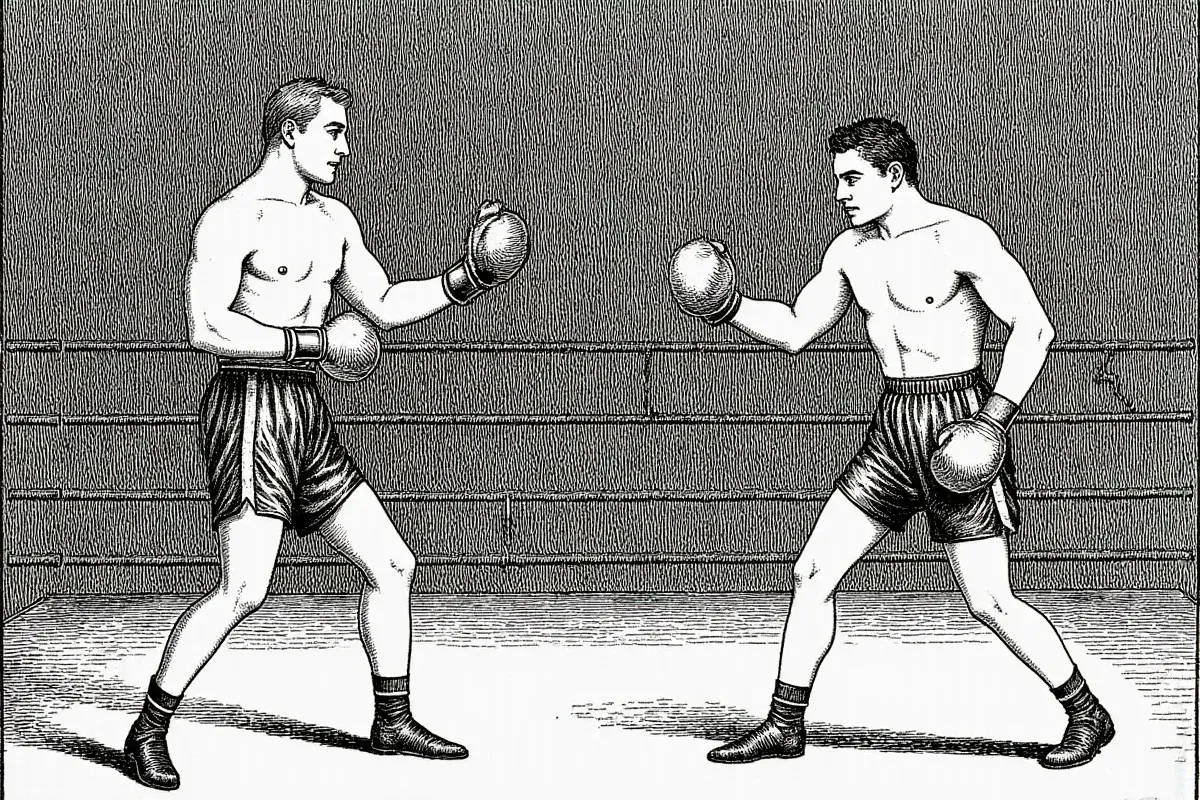
Who Invented Boxing? The True Origins Explained
There is no single inventor of boxing, as it is one of the oldest combat sports in human history. However, James Figg, an Englishman, is widely credited as the “father of modern boxing” for formalizing the sport in 1719 with regulated bare-knuckle bouts in London.
The Origins of Boxing
Boxing traces its roots to ancient civilizations, long before formal rules or global recognition. Evidence suggests that early forms of fist fighting existed in Mesopotamia, Egypt, and Minoan Crete over 5,000 years ago. These primitive contests laid the foundation for what would evolve into a globally recognized sport.
Ancient Beginnings
- Prehistoric Era: Cave paintings from around 3000 BCE depict men engaging in hand-to-hand combat resembling boxing.
- Ancient Greece: Boxing was introduced as an Olympic event in 688 BCE during the 23rd Olympiad. Fighters used leather straps (himantes) to protect their hands.
- Roman Empire: The sport evolved with more brutality; fighters wore metal-studded gloves called cestus, often leading to fatal outcomes.
James Figg and the Birth of Modern Boxing
In 1719, James Figg opened an amphitheater in London and began promoting organized bare-knuckle prizefighting. He claimed the title of Champion of England and taught fencing, wrestling, and boxing—but his greatest legacy was establishing boxing as a legitimate public spectacle.
Why James Figg Matters
- First recorded boxing master in England
- Promoted regulated matches under informal rules
- Laid groundwork for future codification of the sport
The Evolution of Boxing Rules
While Figg started the movement, standardized rules came later through key figures and milestones:
| Year | Milestone | Key Figure(s) | Impact |
|---|---|---|---|
| 1743 | Figg's successor Jack Broughton introduces first official rules | Jack Broughton | Introduced mufflers (early gloves), banned hitting a downed opponent |
| 1838 | Publishing of the London Prize Ring Rules | Sir Thomas Beevor | Defined ring size, rounds, and fouls; allowed wrestling holds |
| 1867 | Marquess of Queensberry Rules established | John Graham Chambers | Mandated gloves, 3-minute rounds, 10-second count; basis of modern boxing |
| 1882 | First world heavyweight championship under Queensberry Rules | John L. Sullivan vs. Paddy Ryan | Legitimized gloved boxing over bare-knuckle tradition |
| 1901 | National Sporting Club adopts Queensberry Rules in Britain | NSC Officials | Standardized professional boxing regulations across UK |
| 1980 | Association of Boxing Commissions formed | U.S.-based regulators | Global coordination of safety and competition standards |
The timeline shows a clear progression from unregulated violence to a structured sport. The adoption of the Marquess of Queensberry Rules in the late 19th century was pivotal, transforming boxing into the disciplined, timed, and safety-conscious sport seen today. These rules laid the foundation for amateur and professional organizations worldwide.
Global Spread and Institutionalization
From England, boxing spread rapidly across the British Empire and into the United States. By the early 20th century, it had become a major spectator sport. Key developments include:
- Establishment of weight classes to ensure fair competition
- Introduction of timekeepers, referees, and judges
- Olympic inclusion since 1904 (except 1912)
- Growth of international governing bodies like WBC, WBA, IBF, and WBO
Frequently Asked Questions About Who Invented Boxing
Who is considered the father of modern boxing?
James Figg is widely regarded as the father of modern boxing for organizing the first formal bouts in 1719 and promoting the sport publicly in London.
Was boxing an ancient sport?
Yes, boxing dates back to at least 3000 BCE, with evidence found in Sumerian carvings and later inclusion in the Ancient Greek Olympics in 688 BCE.
When were gloves first used in boxing?
Gloves were first introduced by Jack Broughton in 1747 as “mufflers” for training and sparring. They became mandatory under the Marquess of Queensberry Rules in 1867.
What are the Marquess of Queensberry Rules?
These rules, published in 1867, established three-minute rounds, ten-second knockdown counts, mandatory use of gloves, and defined legal conduct, forming the basis of modern boxing.
Is boxing still evolving today?
Yes, boxing continues to evolve with improved safety protocols, instant replay reviews, gender inclusion, and technological advancements in scoring and athlete monitoring.
More Articles
 Sports Equipment Care and Maintenance
 What Does WHIP Mean in Baseball? Definition & Stats
 How Much Do Ring Girls Make in Boxing? (2025 Data)
 Was Michael Jordan Good at Baseball? Stats & Facts
 How Much Does a Boxing Referee Get Paid?
 How Much Is a Mickey Mantle Baseball Card Worth?
 What Network Is the Super Bowl On? Full 2025 Schedule
 Which QB Has the Most Super Bowl Wins?
 Boxing Fight Tonight: Schedule & How to Watch
 How Much Does a Beer Cost at the Super Bowl 2025?