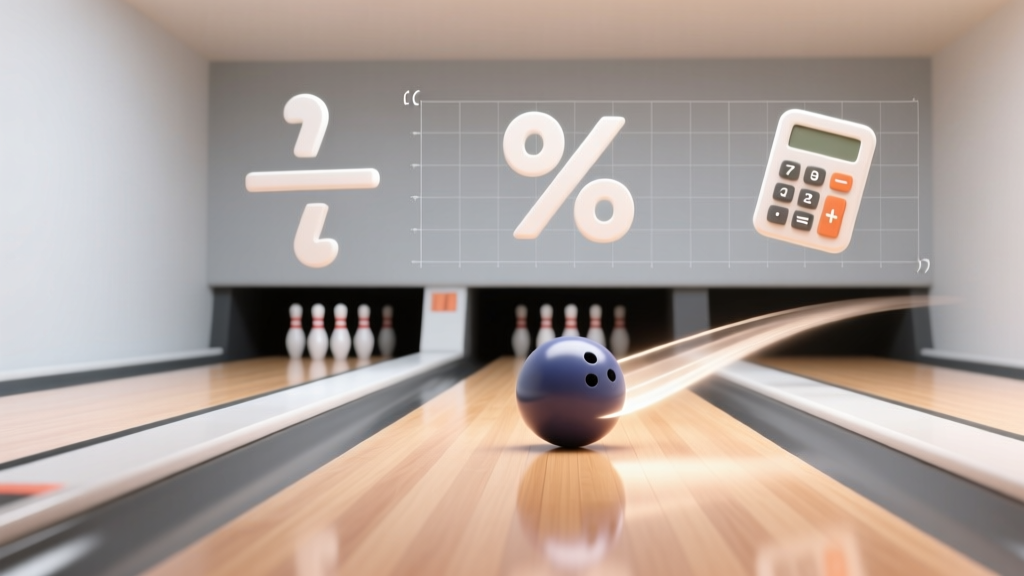
How Is Bowling Handicap Calculated? Formula & Examples
Bowling handicap is calculated using a formula that levels the playing field by giving less experienced bowlers a higher score advantage. The standard method is: (Basis Score – Average) × Handicap Percentage = Handicap. For example, if the basis score is 200, your average is 150, and the league uses 90%, your handicap is (200 – 150) × 0.9 = 45 pins.
Understanding Bowling Handicap Basics
Bowling handicaps allow players of varying skill levels to compete fairly. Leagues use them to balance competition so that a beginner has a realistic chance against an expert. The handicap system adjusts each player's total score by adding extra pins based on their historical performance.
Why Use a Handicap System?
- To promote fair competition across different skill levels
- To encourage participation from new or recreational bowlers
- To maintain long-term engagement in leagues and tournaments
- To reduce discouragement due to large score gaps
How Is Bowling Handicap Calculated Step-by-Step?
The calculation involves three key components: basis score, individual average, and handicap percentage. Here’s how it works:
Key Components of the Formula
- Basis Score: A reference score set by the league (commonly 200, 210, or 220)
- Average: Your rolling average over a set number of games (e.g., last 10–12 games)
- Handicap Percentage: Typically between 80% and 100%, often 90%
Calculation Example
If your league uses a basis score of 200, you have a current average of 165, and the handicap rate is 90%:
(200 – 165) × 0.9 = 35 × 0.9 = 31.5, rounded down to 31 pins added per game.
Common Handicap Systems Across Leagues
Different bowling organizations and leagues may apply variations of the handicap formula. While the core math remains consistent, parameters like basis score and percentage can vary.
| League Type | Basis Score | Handicap % | Scoring Example (Avg 140) | Resulting Handicap |
|---|---|---|---|---|
| USBC Recreational League | 200 | 90% | (200 - 140) × 0.9 | 54 |
| Professional Tournament | 220 | 100% | (220 - 140) × 1.0 | 80 |
| Youth Bowling Program | 180 | 100% | (180 - 140) × 1.0 | 40 |
| Senior Bowling Association | 210 | 80% | (210 - 140) × 0.8 | 56 |
| Corporate Office League | 200 | 85% | (200 - 140) × 0.85 | 51 |
The table shows how different league settings significantly affect handicap values. A higher basis score or percentage increases the advantage for lower-average bowlers. Leagues tailor these values to fit competitive balance goals.
Factors That Influence Your Handicap
Your handicap isn't static—it evolves as your performance changes. Understanding what affects it helps you plan improvement strategies.
Primary Influencing Factors
- Rolling Average Updates: Most leagues update averages weekly or monthly, which directly impacts your handicap.
- Minimum Game Requirements: Some leagues require a minimum number of games before a new average is recognized.
- Ceiling Rules: Certain leagues cap the maximum allowable average (e.g., 220), even if a bowler scores higher.
- Initial Provisional Average: New bowlers may receive a temporary average until enough games are played.
Advanced Tips for Maximizing Fair Play
While the system is designed for fairness, understanding nuances ensures transparency and trust among competitors.
Best Practices for League Organizers
- Clearly communicate the handicap formula at the start of the season
- Provide regular updates of player averages and calculated handicaps
- Audit calculations periodically to prevent errors
- Allow appeals for incorrect data entry
For Players: How to Track Your Progress
- Use mobile apps or spreadsheets to monitor your average trend
- Compare your actual scores vs. expected handicap-adjusted outcomes
- Adjust practice focus based on consistency, not just peak scores
Frequently Asked Questions About Bowling Handicap Calculation
What is a typical basis score used in bowling handicap calculations?
The most common basis score is 200, though some leagues use 210 or 220 to increase the spread. Youth or recreational leagues may use lower values like 180 to keep scoring realistic.
Can my bowling handicap be zero?
Yes. If your average meets or exceeds the basis score, your handicap becomes zero. For example, with a 200 basis score and a 205 average, (200 – 205) × 0.9 results in a negative value, which is capped at zero.
How often is a bowler's average updated for handicap purposes?
Most leagues update averages weekly after league play. Some update monthly or after every series. Check your league's rules for specific timing and rounding methods.
Is the handicap percentage always 90%?
No. While 90% is common, leagues may use 80%, 85%, or even 100%. Higher percentages increase compensation for lower averages, making competition more balanced in mixed-skill groups.
Do professional bowling tours use handicaps?
No. Professional tours like the PBA do not use handicaps; they compete straight-up. Handicaps are primarily used in amateur, recreational, and local league play to ensure inclusivity and fun.
More Articles
 When Did Babe Ruth Play Baseball? Career Timeline & Facts
 How Much Does a Bowling Pin Weigh? Official Weight Explained
 What Year Did the Dallas Cowboys Win the Super Bowl?
 How Many Super Bowls Do the Raiders Have? 3 Wins Explained
 Why Cricket Is Not in the Olympics
 How Long Do Tennis Matches Last? By Format & Event
 How Much Do Golf Balls Cost in 2025?
 What Size Baseball Bat Should I Use?
 How Golf Balls Are Made: Inside Manufacturing
 When Did World Wrestling Federation Start? Key Facts