Who Played in Super Bowl I? Teams, Stats & Winner
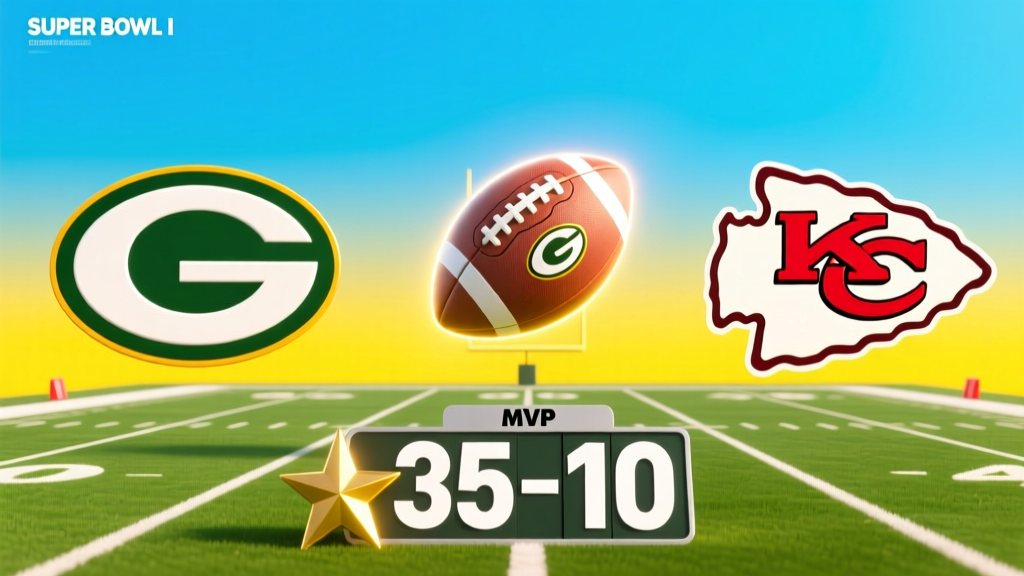
The two teams that played in Super Bowl I were the Green Bay Packers and the Kansas City Chiefs. The game took place on January 15, 1967, at the Los Angeles Memorial Coliseum, with the Packers defeating the Chiefs 35–10.
Overview of Super Bowl I
Super Bowl I marked the first championship game between the National Football League (NFL) and the American Football League (AFL), following the merger agreement announced in 1966. Although it was not originally called the “Super Bowl,” the name eventually stuck in popular culture. The official title at the time was the “AFL-NFL World Championship Game.”
Key Facts About the Game
- Date: January 15, 17967
- Location: Los Angeles Memorial Coliseum, Los Angeles, California
- Teams: Green Bay Packers (NFL) vs. Kansas City Chiefs (AFL)
- Final Score: Green Bay Packers 35, Kansas City Chiefs 10
- MVP: Bart Starr, Quarterback, Green Bay Packers
- Attendance: 61,946
Team Profiles: Who Played in Super Bowl I?
The matchup featured the reigning NFL champions, the Green Bay Packers, led by legendary coach Vince Lombardi, against the AFL champion Kansas City Chiefs, coached by Hank Stram.
Green Bay Packers
The Packers entered the game after a dominant 12–2 regular season. They were known for their powerful running game and disciplined defense. Key players included:
- Bart Starr (Quarterback)
- Paul Hornung (Halfback)
- Jim Taylor (Fullback)
- Ray Nitschke (Linebacker)
Kansas City Chiefs
The Chiefs finished the AFL season with an 11–2 record. They were one of the strongest teams in the AFL, led by quarterback Len Dawson and a tough defense. Notable players included:
- Len Dawson (Quarterback)
- Abner Haynes (Running Back)
- Bobby Bell (Linebacker)
- Emmitt Thomas (Defensive Back)
Game Highlights and Performance
The Packers took control early, leading 14–0 at halftime. Bart Starr threw two touchdown passes, and the Packers' defense stifled the Chiefs' offense in the second half. Despite a strong AFL showing during the regular season, the Chiefs were outmatched in key areas.
Critical Moments
- Bart Starr connected with Max McGee for a 37-yard touchdown on the Packers’ second drive.
- McGee, who had not expected to play, finished with 2 catches for 138 yards and 2 touchdowns.
- Willie Wood intercepted a Len Dawson pass, setting up a Packers scoring drive.
- The Chiefs scored their only touchdown late in the fourth quarter via Mike Garrett.
| Statistic | Green Bay Packers | Kansas City Chiefs |
|---|---|---|
| First Downs | 19 | 15 |
| Total Yards | 338 | 279 |
| Rushing Yards | 132 | 75 |
| Passing Yards | 206 | 204 |
| Passes Completed-Attempted | 16–23 | 13–25 |
| Interceptions | 1 | 3 |
| Punts-Average | 5–40.4 | 6–38.2 |
| Fumbles Lost | 1 | 2 |
The statistical breakdown shows Green Bay's superior ball control and defensive pressure. The Packers gained more first downs and rushing yards while forcing three crucial interceptions. Kansas City struggled with turnovers, which proved decisive in the outcome.
Legacy and Significance
Super Bowl I set the stage for what would become the biggest annual sporting event in the United States. Though broadcast on two networks (CBS and NBC) and not sold out, it demonstrated the potential of inter-league competition. The Packers’ victory helped establish NFL dominance in the early years of the merger.
Common Questions About Super Bowl I
Who won Super Bowl I?
The Green Bay Packers won Super Bowl I, defeating the Kansas City Chiefs 35–10 on January 15, 1967.
Where was Super Bowl I held?
Super Bowl I was played at the Los Angeles Memorial Coliseum in Los Angeles, California.
Who was the MVP of Super Bowl I?
Bart Starr, quarterback of the Green Bay Packers, was named Most Valuable Player of Super Bowl I after throwing for 250 yards and two touchdowns.
Were there any notable performances in Super Bowl I?
Max McGee had a standout performance with two touchdown receptions for 138 yards, despite not being a starter and reportedly having a late night before the game.
Why was Super Bowl I important?
Super Bowl I was the first championship game between the NFL and AFL, symbolizing the beginning of their merger and laying the foundation for the modern NFL as we know it today.
More Articles
 Where to Buy Used Golf Clubs in 2025 | Top Trusted Sites
 When Was Super Bowl 50? Date, Winner, and Highlights
 How Many Times Has Dallas Won the Super Bowl?
 Who Won the Super Bowl 2013? Full Recap & Stats
 How Old Is Jordan Spieth? Age & Career Stats in 2025
 Where Was the Sugar Bowl Played? Full Venue History
 How Many Years Did Michael Jordan Play Baseball?
 When Was Cricket Originated? History & Key Facts
 What's Inside Olympic Medal Boxes?
 Where Does the Super Bowl Take Place? Host Cities Explained