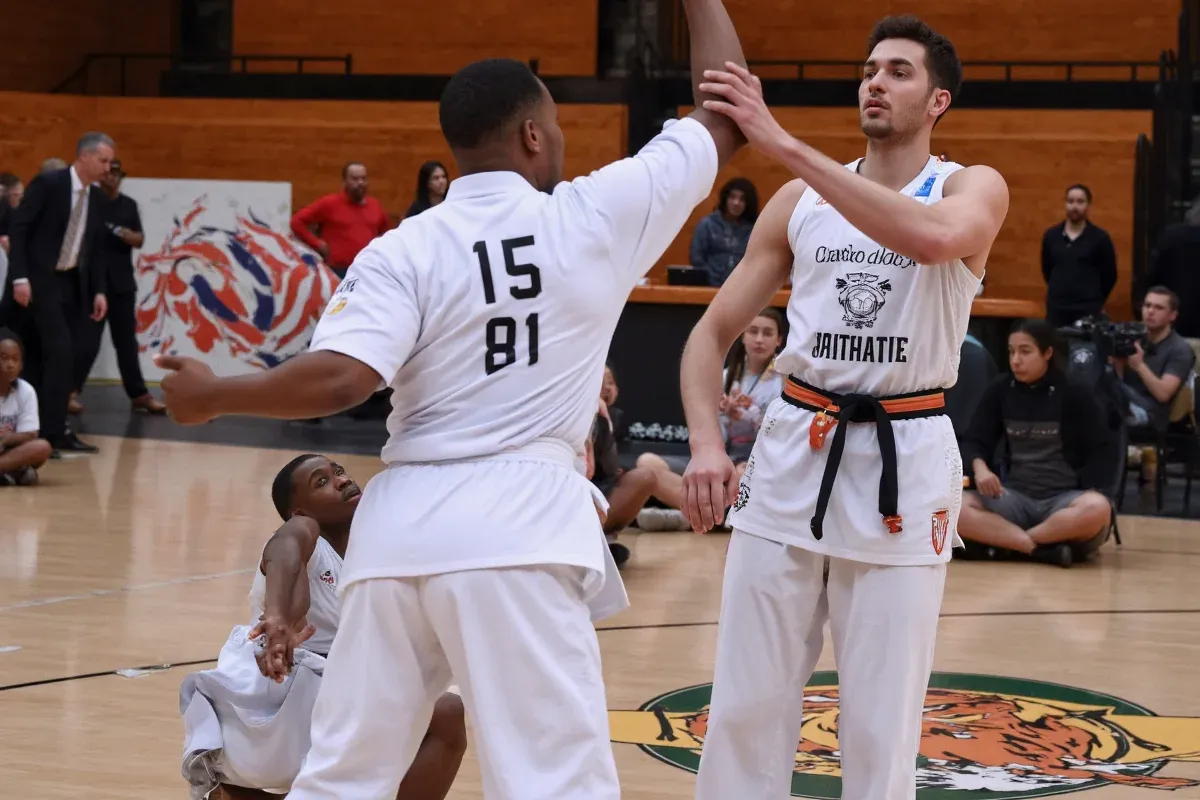
Where Does Karate Originate? History & Origins Explained
Where Does Karate Originate?
Karate originated in the Ryukyu Kingdom, now modern-day Okinawa, Japan. It evolved from indigenous martial arts influenced by Chinese kung fu, particularly Fujian White Crane, during the 14th to 17th centuries. Over time, Okinawan masters systematized the art, and in the early 20th century, karate was introduced to mainland Japan and later spread globally as a popular martial art and Olympic sport.
The Historical Roots of Karate
Karate’s origins trace back to the Ryukyu Islands, a chain stretching between Japan and Taiwan. The region’s strategic location made it a hub for trade, especially with China. This cultural exchange played a crucial role in shaping early forms of karate.
Key Influences on Early Karate
- Chinese Martial Arts: Traders and envoys from Fujian province brought kung fu styles, which merged with local Okinawan fighting techniques.
- Ryukyu Kingdom's Weapon Bans: After invasions by the Satsuma clan (1609), weapons were restricted, leading to the development of empty-hand combat.
- Te and Tode: Indigenous Okinawan systems known as "te" (hand) or "tode" (China hand) formed the foundation of what would become karate.
Evolution into Modern Karate
In the late 19th and early 20th centuries, Okinawan masters like Anko Itosu and Gichin Funakoshi refined and codified karate, making it accessible for physical education in schools.
Milestones in Karate's Global Spread
- 1922: Gichin Funakoshi demonstrated karate in Tokyo, marking its official introduction to mainland Japan.
- 1930s–1950s: Japanese and Okinawan instructors established dojos worldwide, especially in the U.S., Europe, and Southeast Asia.
- 2020 Tokyo Olympics: Karate made its Olympic debut, highlighting its global recognition.
Regional Styles and Their Origins
Different regions of Okinawa developed distinct styles based on local traditions and influences.
| Style | Region | Founder(s) | Year Developed | Key Influence |
|---|---|---|---|---|
| Shorin-ryu | Shuri, Okinawa | Anko Itosu | 1870 | Fujian White Crane |
| Goju-ryu | Naha, Okinawa | Chojun Miyagi | 1930 | Chinese Nanpa Shorin-ryu |
| Shotokan | Mainland Japan | Gichin Funakoshi | 1936 | Okinawan Shorin-ryu |
| Wado-ryu | Mainland Japan | Hironori Otsuka | 1938 | Jujutsu and Shindō Yōshin-ryū |
| Kyokushin | Japan | Masutatsu Oyama | 1957 | Full-contact training |
The table illustrates how karate diversified geographically and stylistically. Early styles like Shorin-ryu and Goju-ryu remained rooted in Okinawa, while Shotokan and Wado-ryu emerged in Japan with adaptations for broader instruction. Kyokushin reflects post-war innovations emphasizing physical toughness and competition.
Global Expansion and Recognition
Post-World War II, U.S. military presence in Okinawa exposed many service members to karate, accelerating its international popularity. Today, millions practice karate worldwide, supported by organizations like the World Karate Federation (WKF).
Frequently Asked Questions About Karate’s Origin
Was karate originally from China or Japan?
Karate was formally developed in Okinawa, Japan, but it was heavily influenced by Chinese martial arts, especially from the Fujian province. While its techniques have Chinese roots, its systematization and naming occurred in Japan, making Okinawa the birthplace of karate as we know it today.
Why did karate develop in Okinawa?
Karate developed in Okinawa due to a combination of cultural exchange with China and political restrictions on weapons imposed by occupying forces, particularly the Satsuma clan in 1609. These conditions encouraged the development of unarmed combat methods, which evolved into karate.
Who is considered the father of modern karate?
Gichin Funakoshi is widely regarded as the father of modern karate. He introduced karate to mainland Japan in 1922 and helped standardize training methods, terminology, and etiquette, laying the foundation for its global spread.
Is karate a traditional Japanese martial art?
While karate is now considered a Japanese martial art, it originated specifically in Okinawa, which was historically a separate kingdom. It became part of mainstream Japanese culture in the 20th century and is now taught alongside judo and kendo in schools and universities.
When did karate become an Olympic sport?
Karate made its Olympic debut at the 2020 Tokyo Summer Olympics, held in 2021 due to the pandemic. It featured kata (forms) and kumite (sparring) events, although it was not included in the 2024 Paris Games, reflecting ongoing discussions about its permanent Olympic status.
More Articles
 Was Jason Momoa a Wrestler? Facts & Career Details
 When Was the First Super Bowl? Facts & History
 What Channel Is the PGA Golf On Today? (October 2025)
 Which Boxer Has Been Knocked Out the Most?
 Who Won the Super Bowl 2013? Full Recap & Stats
 How Many Karate Kid Movies Are There? Full List & Timeline
 How Far Are Baseball Bases? Official MLB Distance Explained
 Super Bowl Start Time This Sunday: What Time Is It?
 When Was Bowling Invented? Origins & History
 Why Does Chicago Have 2 Baseball Teams?