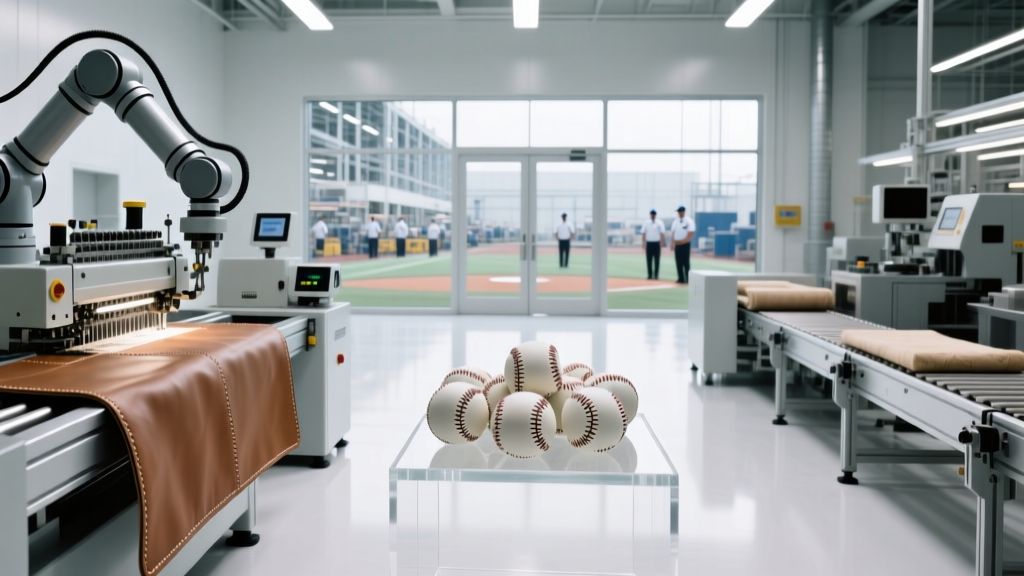
Where Are Baseballs Made? MLB Factories Revealed
Baseballs used in Major League Baseball (MLB) are primarily manufactured in Costa Rica at Rawlings’ factory in the city of Turrialba, a facility that has produced official MLB game balls since 1977. While some minor league and practice balls are made in China, Pakistan, and other countries, the official MLB baseball is hand-stitched and assembled in Costa Rica using U.S.-sourced materials including cowhide from Tennessee and cork from Portugal.
History of Baseball Manufacturing Locations
The production of baseballs has evolved significantly since the sport’s inception in the 19th century. Initially, baseballs were handmade by players or local craftsmen with inconsistent quality. As the sport professionalized, standardized manufacturing became essential.
Early Production Methods
- Before 1850: Players wound rubber cores from old shoes and wrapped them in yarn and leather.
- 1850s–1870s: Companies like H. Harwood & Sons began mass-producing baseballs, improving consistency.
- 1870s–1900s: The introduction of the “figure-eight” stitching pattern revolutionized ball durability and flight.
Shift to Centralized Manufacturing
By the mid-20th century, Spalding and Rawlings dominated baseball production. Rawlings, acquired by Spalding in 1955 and later by Adidas, established centralized facilities to ensure quality control for professional leagues.
Where Are Official MLB Baseballs Made?
Since 1977, all official Major League Baseballs have been produced at Rawlings’ factory in Turrialba, Costa Rica. This facility is the exclusive manufacturer of MLB’s game-day balls under strict supervision.
Why Costa Rica?
- Skilled Labor: Generations of artisans specialize in hand-stitching baseballs with precision.
- Quality Control: Proximity to U.S. oversight while maintaining lower labor costs than domestic production.
- Stability: Political and economic stability compared to other potential offshore locations.
Materials Sourcing for MLB Baseballs
Despite being assembled in Costa Rica, the raw materials for MLB baseballs come from multiple countries, with key components sourced from the United States and Europe.
| Component | Material Source | Country | Notes |
|---|---|---|---|
| Cork Center | Natural Cork Granules | Portugal | Compressed into sphere for core |
| Rubber Layer | Synthetic Rubber | United States | Encases cork for resilience |
| Yarn Windings | Wool & Cotton Blends | United States | Multiple layers for consistency |
| Leather Cover | Steerhide | United States (Tennessee) | Tanned and cut in the U.S., shipped to Costa Rica |
| Stitching Thread | Polyester-Cotton Blend | United States | Hand-stitched with 108 stitches per ball |
The table highlights that while final assembly occurs in Costa Rica, the majority of raw materials originate in the U.S., ensuring consistent quality and supporting American suppliers. The leather from Tennessee is especially critical, providing a durable, water-resistant cover ideal for varied playing conditions.
Production Process of an MLB Baseball
Each official MLB baseball undergoes a meticulous, multi-step process involving over 200 manual operations.
Step-by-Step Assembly
- Core Formation: A cork-rubber center is compressed and layered with rubber.
- Yarn Wrapping: Eight layers of wool and cotton yarn are precisely wound around the core.
- Leather Cutting: Two saddle-shaped pieces of leather are cut and prepared.
- Stitching: Skilled workers hand-stitch the leather using 108 stitches of red thread.
- Inspection & Testing: Each ball is measured for weight, circumference, and seam height before approval.
Approximately 500,000 baseballs are produced annually at the Costa Rica plant, enough to supply all 30 MLB teams through the regular season and postseason.
Other Baseball Manufacturing Locations
While MLB uses only Costa Rica-made balls, other leagues and training facilities source baseballs globally.
- China: Produces lower-cost baseballs for youth leagues and practice use.
- Pakistan: Known for hand-stitched training balls exported worldwide.
- Dominican Republic: Some local production for amateur leagues.
- United States: Limited experimental or custom batches, but no large-scale production.
These non-MLB balls often use synthetic leather and machine stitching, reducing cost but sacrificing performance and durability.
Frequently Asked Questions About Where Baseballs Are Made
Are all baseballs made in Costa Rica?
No, only official Major League Baseballs are made in Costa Rica. Baseballs for amateur leagues, training, and international markets are produced in China, Pakistan, and other countries using different materials and methods.
Why doesn't MLB make baseballs in the USA?
While materials are U.S.-sourced, labor-intensive hand-stitching is more cost-effective in Costa Rica. Additionally, Rawlings has maintained its specialized workforce there since 1977, ensuring consistent craftsmanship without the high labor costs of domestic manufacturing.
How many baseballs are made each year for MLB?
Approximately 500,000 official baseballs are produced annually at the Rawlings factory in Costa Rica to meet MLB’s needs for games, testing, and backups.
Who makes the official MLB baseball?
The official MLB baseball is made by Rawlings, a company owned by adidas and licensed by Major League Baseball. The balls are manufactured at their facility in Turrialba, Costa Rica.
Are baseballs still hand-stitched?
Yes, every official MLB baseball is hand-stitched by skilled artisans in Costa Rica. Each ball requires exactly 108 stitches, done manually using a needle and waxed thread to ensure durability and consistent aerodynamics.
More Articles
 How Long Is Halftime at the Super Bowl?
 Has Jalen Hurts Won a Super Bowl? Full Breakdown
 How Many Times Has Buffalo Been to the Super Bowl?
 When Did Baseball Begin? Origins & First Game
 Who Invented the Golf Tee? The True Story
 How Long Is a Volleyball Game? Match Duration Explained
 How Many Games in World Series Baseball? Explained
 Where Is Left Field in Baseball? Location & Role Explained
 When Is the Volleyball Season? 2025 Schedule Guide
 How Long Does a Professional Baseball Game Last?