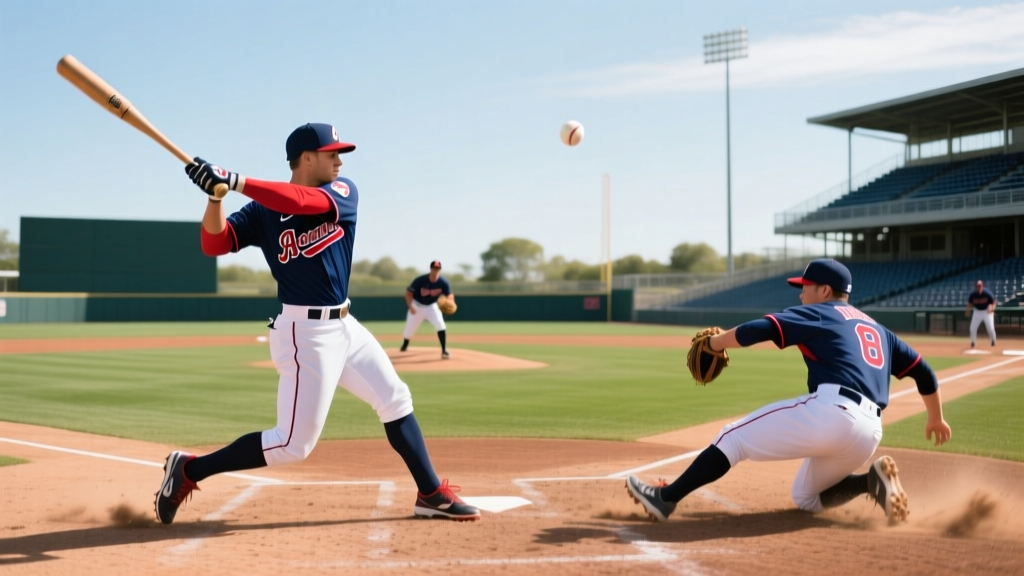
How Many Players on a Major League Baseball Team?
Major League Baseball (MLB) teams have 26 players on their active roster during most of the regular season, with a temporary increase to 28 players from September 1 through the end of the regular season. Additionally, MLB allows up to 40 players on the reserve list, who are eligible for promotion to the active roster.
Roster Rules in Major League Baseball
The number of players allowed on an MLB team varies depending on the time of year and specific league rules set by Major League Baseball. Understanding these limits is crucial for fans, fantasy baseball players, and those analyzing team strategies.
Standard Active Roster Size
- From Opening Day through August 31: 26 players
- September 1 to end of regular season: 28 players
- Prior to 2020, the standard was 25 players; the change to 26 was part of new pace-of-play initiatives.
40-Man Reserve List
Beyond the active roster, each team maintains a 40-man reserve list. This list includes:
- Players on the active 26- or 28-man roster
- Injured players on various injured lists (IL)
- Minor league players protected from being drafted in the Rule 5 Draft
- Pitchers on the 7-day or 15-day injured list
- Players serving suspensions
Breakdown of Player Positions on a Team
A typical 26-man active roster is strategically composed across key position groups. While exact numbers can vary slightly based on team needs, most rosters follow a general structure.
| Position Group | Typical Number on Roster | Key Roles |
|---|---|---|
| Starting Pitchers | 5 | Primary rotation members; start games every 5th day |
| Relief Pitchers | 7–8 | Includes closers, setup men, middle relievers, left-handed specialists |
| Catchers | 2–3 | Starters, backups, defensive specialists |
| Outfielders | 4–5 | Left, center, right fielders; often includes extra outfielders for defense or speed |
| Infielders | 5–6 | First base, second base, shortstop, third base; includes utility players |
| Designated Hitter (DH) | 0–1 | Used only in American League parks; may double as pinch hitter |
| Two-Way Players | 0–1 | Rare; player who both pitches and hits regularly (e.g., Shohei Ohtani) |
The table illustrates how MLB teams balance specialized roles across pitching and hitting positions. Relief pitchers now occupy nearly one-third of active rosters, reflecting modern bullpen usage trends. The inclusion of two catchers and multiple utility infielders ensures coverage for injuries and strategic matchups.
Injured Lists and Roster Management
MLB provides mechanisms to replace injured players without removing them from the 40-man roster:
- 10-Day Injured List (IL): For position players and pitchers with minor injuries.
- 15-Day IL: Used specifically for pitchers in some cases (though 10-day is more common).
- 60-Day IL: Frees up a 40-man roster spot but requires the player to miss at least 60 days.
Players on the IL do not count against the active 26-man roster but still occupy space on the 40-man reserve list unless moved to the 60-day IL.
Postseason Roster Rules
During the MLB playoffs, teams must submit a postseason roster of exactly 26 players. Unlike the regular season, there is no 28-player expansion in October.
- Rosters are submitted before each round and cannot be changed unless due to injury (with league approval).
- At least 12 pitchers must be included.
- Teams often prioritize health, versatility, and recent performance over depth.
Frequently Asked Questions About MLB Team Rosters
How many players are on an MLB active roster?
During most of the regular season, MLB teams carry 26 players on their active roster. This expands to 28 players from September 1 onward.
What is the 40-man roster in MLB?
The 40-man roster includes all players eligible to play in the major leagues for a team. It covers active players, those on injured lists, and protected minor leaguers. Being on the 40-man roster shields a player from the Rule 5 Draft.
Why does the roster expand in September?
Since 1981, MLB has allowed teams to expand their active rosters to 28 players in September. This lets teams promote prospects, reward strong minor league performances, and manage pitcher workloads late in the season. However, proposed rule changes could limit future expansions.
Can MLB teams carry more than 13 pitchers?
Yes, though a maximum of 13 pitchers was briefly enforced from 2020–2021, current rules allow more than 13 as long as the total active roster does not exceed 26 (or 28 in September). Most teams carry 12–14 pitchers depending on strategy.
Who qualifies as a two-way player in MLB?
A two-way player is someone who both pitches and bats regularly. Shohei Ohtani of the Los Angeles Angels is the most prominent example. Special roster rules apply, allowing teams to option such players without using a full roster spot if they meet performance thresholds.
More Articles
 Who Invented Billiards? Origins and Evolution Explained
 Who Won Super Bowl 1977? Raiders Beat Vikings 32-14
 How Fast Can the Average Person Throw a Baseball?
 When Does the Super Bowl End? Final Time Explained
 What Boxing Fight Is On Tonight? October 25, 2025 Schedule
 Who Did Deion Sanders Play Baseball For?
 LIV Golf Format, Teams & Prize Money Explained
 What Channel Is the Super Bowl on Spectrum?
 Coach with Most Super Bowl Wins: Bill Belichick's Legacy
 Who Won Super Bowl III? Jets' Historic Win