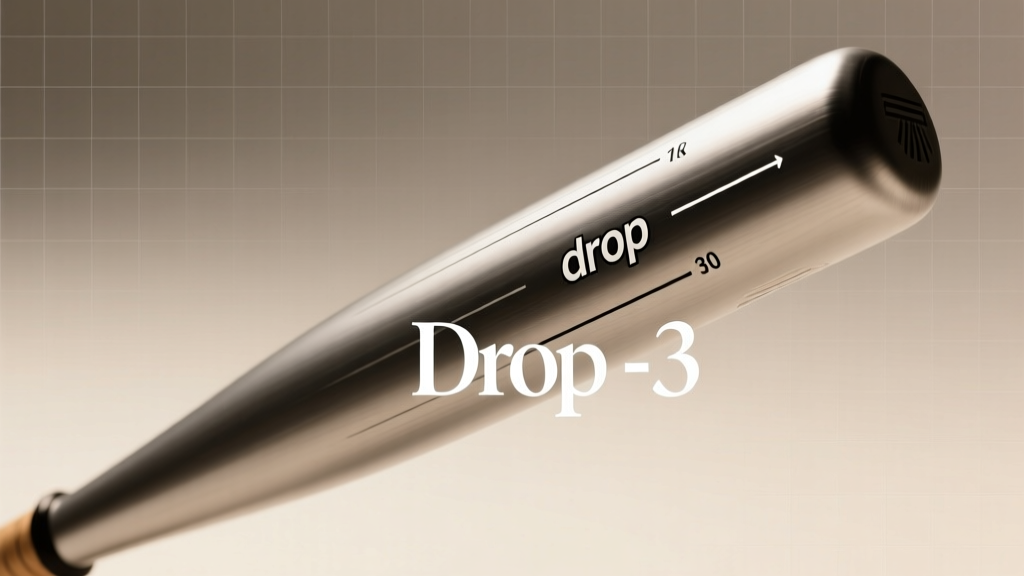
What Does Drop Mean on a Baseball Bat? Explained
In baseball, ‘drop’ refers to the difference between a bat’s length in inches and its weight in ounces. For example, a 32-inch bat weighing 22 ounces has a drop of -10. This measurement helps players choose bats that balance swing speed and power, with lower (more negative) drops indicating heavier bats for stronger hitters and higher (less negative) drops favoring faster swings for contact hitters.
Understanding Bat Drop: A Key Factor in Performance
The term ‘drop’ is central to selecting the right baseball bat. It directly influences how the bat feels during the swing and impacts a player’s ability to generate bat speed and control. The formula is simple: Drop = Length (in) – Weight (oz). While the result is typically expressed as a negative number (e.g., -10), it’s commonly referred to as “drop 10.”
Why Bat Drop Matters
- Sweet spot optimization: Bats with appropriate drop weights help position the sweet spot effectively for different hitting styles.
- Youth vs. adult play: Younger players often use higher drop bats (-13 or -12) for better control, while professionals may prefer lower drops (-3) for power.
- League regulations: Organizations like USSSA, USA Baseball, and BBCOR have standards affecting allowable drop weights.
- Injury prevention: Using a bat with improper drop can strain wrists and shoulders due to excessive weight or poor balance.
How Drop Affects Different Types of Hitters
Hitting mechanics vary widely among players, and bat drop plays a crucial role in matching equipment to style.
Contact Hitters
Players focused on precision and quick swings benefit from higher drop bats (e.g., -13 to -10). These lighter bats allow faster bat speed, improving timing and consistency when making contact.
Power Hitters
Stronger players aiming for home runs often choose lower drop bats (e.g., -5 to -3). The added mass increases momentum on impact, translating to harder-hit balls and greater exit velocity.
Balanced Hitters
Those who blend both styles might opt for mid-range drops (-8 to -5), offering a compromise between speed and mass for versatile performance.
Comparative Analysis of Bat Drop Across Age Groups
| Age Group | Average Length (in) | Average Weight (oz) | Common Drop | Typical Use Case |
|---|---|---|---|---|
| 6–10 years | 26–29 | 14–17 | -13 to -11 | Youth leagues (USA Baseball) |
| 11–13 years | 29–31 | 19–22 | -11 to -9 | Intermediate leagues |
| 14–18 years | 31–34 | 26–30 | -5 to -3 | High school, BBCOR standards |
| Adult Amateur | 32–34 | 29–31 | -3 | Wood & BBCOR composite bats |
| Professional | 33–34.5 | 30–33 | -3 | MLB regulation bats |
The data shows a clear trend: as players age and gain strength, the allowable drop decreases, reflecting a shift from control to power. Youth bats prioritize lighter weights for development, while high school and professional standards cap drop at -3 to maintain fairness and safety in competitive play.
Frequently Asked Questions About Bat Drop
What does a drop 10 bat mean?
A drop 10 bat means the difference between its length in inches and weight in ounces is 10. For example, a 32-inch bat weighing 22 ounces has a drop of -10. This is common in intermediate youth and high school preparatory leagues.
Is a higher or lower drop better?
It depends on the player. A higher drop (like -13) means a lighter bat, which benefits younger or contact hitters needing faster swings. A lower drop (like -3) means a heavier bat, ideal for stronger players seeking power.
What drop bat do most MLB players use?
Most Major League Baseball players use a drop 3 bat, as required by BBCOR standards for adult wood and composite bats. These bats typically range from 33 to 34.5 inches long and weigh 30 to 33 ounces.
Can you use a drop 5 bat in high school baseball?
No, high school baseball governed by NFHS rules requires BBCOR-certified bats with a maximum drop of -3. Drop 5 bats are generally used in youth or non-regulated leagues and do not meet high school compliance standards.
Does bat drop affect swing speed?
Yes, bat drop significantly affects swing speed. Lighter bats (higher drop) allow faster swings, improving reaction time and contact rates. Heavier bats (lower drop) reduce swing speed but increase momentum and potential batted ball distance.
More Articles
 Who Is the Best Boxer Right Now? Top P4P Fighter in 2025
 When Was the First World Series in Baseball?
 Which NFL Team Has Won the Most Super Bowls?
 DIY Golf Simulator: Build Your Own at Home
 When Was Super Bowl 2023? Date, Winner, and Highlights
 What Does Baseball Ops Stand For? Explained
 How Wide Is a Golf Hole? Official Size Explained
 Olympic Swimming Pool Dimensions: FINA Official Standards and Specifications
 Types of Squash: Variants Explained
 Who Is the Greatest Baseball Player of All Time?