Is Softball Harder Than Baseball? Expert Analysis
Softball is generally considered harder than baseball due to faster pitch speeds relative to reaction time, shorter distances between pitcher and batter, and quicker defensive play—making split-second decisions more critical.
Key Differences Between Baseball and Softball
While both baseball and softball share fundamental similarities—such as innings, strikes, outs, and the use of a bat and ball—their differences significantly impact the difficulty level. Many assume baseball is more challenging due to its professional prominence, but biomechanical and timing factors often make softball more demanding.
Core Factors That Influence Game Difficulty
- Pitching distance and speed
- Ball size and weight
- Reaction time for hitters and fielders
- Field dimensions
- Underhand vs. overhand pitching mechanics
- Game pace and defensive response windows
Pitching: Where Reaction Time Matters Most
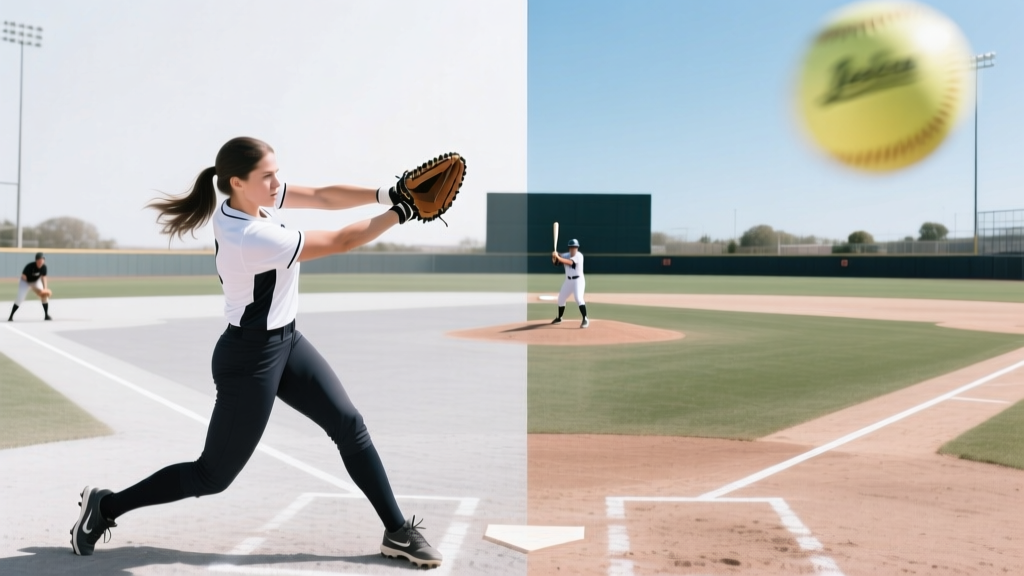
The most significant factor in determining which sport is harder lies in the pitcher-to-batter dynamics. In fastpitch softball, pitchers throw underhand with a windmill motion, achieving high velocities from a much shorter distance than in baseball.
A college softball pitcher can throw at speeds up to 70 mph from just 43 feet away. In contrast, a professional baseball pitcher throws around 93 mph—but from 60 feet 6 inches. Because of the reduced distance, batters in softball have drastically less time to react.
| Sport | Level | Avg. Pitch Speed (mph) | Pitching Distance (ft) | Reaction Time (sec) |
|---|---|---|---|---|
| Baseball | MLB | 93 | 60.5 | 0.42 |
| Softball | NCAA Women | 68 | 43 | 0.35 |
| Baseball | High School | 80 | 60.5 | 0.46 |
| Softball | High School | 60 | 43 | 0.39 |
Data shows that despite lower pitch speeds, softball batters face a reaction time of approximately 0.35 seconds—about 0.07 seconds faster than MLB hitters. This 17% reduction forces quicker visual processing and motor responses, increasing cognitive and physical demands.
Hitting Mechanics and Timing Challenges
Hitting in softball requires exceptional hand-eye coordination. The underhand pitch allows for greater movement on the ball—including rise balls, drop balls, and curveballs—that are harder to predict than typical baseball breaking pitches.
Why Softball Hitting Is More Technically Demanding
- Rise balls can defy gravity, moving upward as they approach the plate
- Shorter swing windows due to reduced reaction time
- Higher spin rates relative to ball size increase deception
- Larger ball (12-inch circumference) creates different contact dynamics
Defensive Play and Field Dynamics
Although baseball fields are larger, softball’s compressed layout means less time to react to line drives and ground balls. Outfielders cover less ground, but infielders must process plays faster.
At the elite level, a well-hit ball in softball gives infielders roughly 0.8 seconds to react, position, and throw—compared to about 1.1 seconds in baseball. This tighter window increases error risk and demands superior reflexes.
Comparative Defensive Metrics
- Time to first base on a hard ground ball: ~2.8 sec (softball) vs. ~3.5 sec (baseball)
- Average double-play execution time: 3.9 sec (softball) vs. 4.7 sec (baseball)
- Throwing distance from shortstop to first: similar, but less reaction time in softball
Physical and Biomechanical Considerations
Softball players often face unique physical challenges:
- Female athletes dominate fastpitch, leading to misconceptions about strength and speed
- Windmill pitching places high stress on shoulders and elbows
- Smaller margins for error due to game compression
- Greater reliance on precision over raw power
Despite perceptions, studies show elite female softball players exhibit reaction times and hand speed comparable to male professional baseball players.
Frequently Asked Questions About Baseball vs Softball Difficulty
Is softball harder than baseball?
Yes, in terms of reaction time, pitch movement, and defensive decision-making, softball is generally harder. Although baseball features higher pitch speeds and larger fields, the compressed mechanics of softball demand quicker responses and greater precision.
Why do people think baseball is harder than softball?
Many believe baseball is harder due to its cultural prominence, higher pitch velocities, and longer history. However, this overlooks the shorter reaction times and advanced pitch movements in softball, which create equal or greater challenges for athletes.
Do softball pitchers have faster pitch speeds than baseball pitchers?
No, baseball pitchers throw faster in absolute terms—up to 100+ mph in MLB. But because softball pitchers release from 43 feet away, their 60–70 mph pitches reach batters faster relative to reaction time, making them effectively "faster" in cognitive processing terms.
Which sport requires better hand-eye coordination?
Softball requires superior hand-eye coordination due to the combination of a larger ball, shorter reaction time, and complex pitch movement like rise balls and drop balls that are rare in baseball.
Can baseball players play softball easily?
Not necessarily. While some skills transfer, baseball players often struggle with timing against underhand pitching, adjusting to faster game节奏, and handling the larger 12-inch ball. Transitioning requires significant adaptation in swing timing and fielding technique.
More Articles
 Who Owns Pebble Beach Golf Course? Full Ownership Breakdown
 Beach Volleyball Net Height: Official Measurements
 Who Has Won the Most Super Bowls? Top Teams & Records
 Rose Bowl Game Time Tomorrow: What You Need to Know
 What Season Is Volleyball? Key Dates by Level & Region
 What Time Golf Today? Tee & TV Times Explained
 Who Played in the First Super Bowl Game?
 Did Reggie Bush Win a Super Bowl? Full Career Breakdown
 How Much Does Building a Tennis Court Cost?
 How Old Is Phil Mickelson? Age, Career & Stats in 2025